Ashton Remote Basecamp & Crew Accommodation Rentals
An Ashton assignment may need sleeping accommodation, showers, restrooms, and laundry planned as one site. East Idaho Equipment Rental coordinates temporary sleeper trailers and remote workforce housing for projects in Fremont County, with delivery and utility requirements reviewed before dispatch. Call 888 385-5513 for 24/7 support and emergency deployment coordination. Tell us the crew size, rental dates, and site access so the camp plan can be reviewed together.
Explore Ashton workforce projects ↓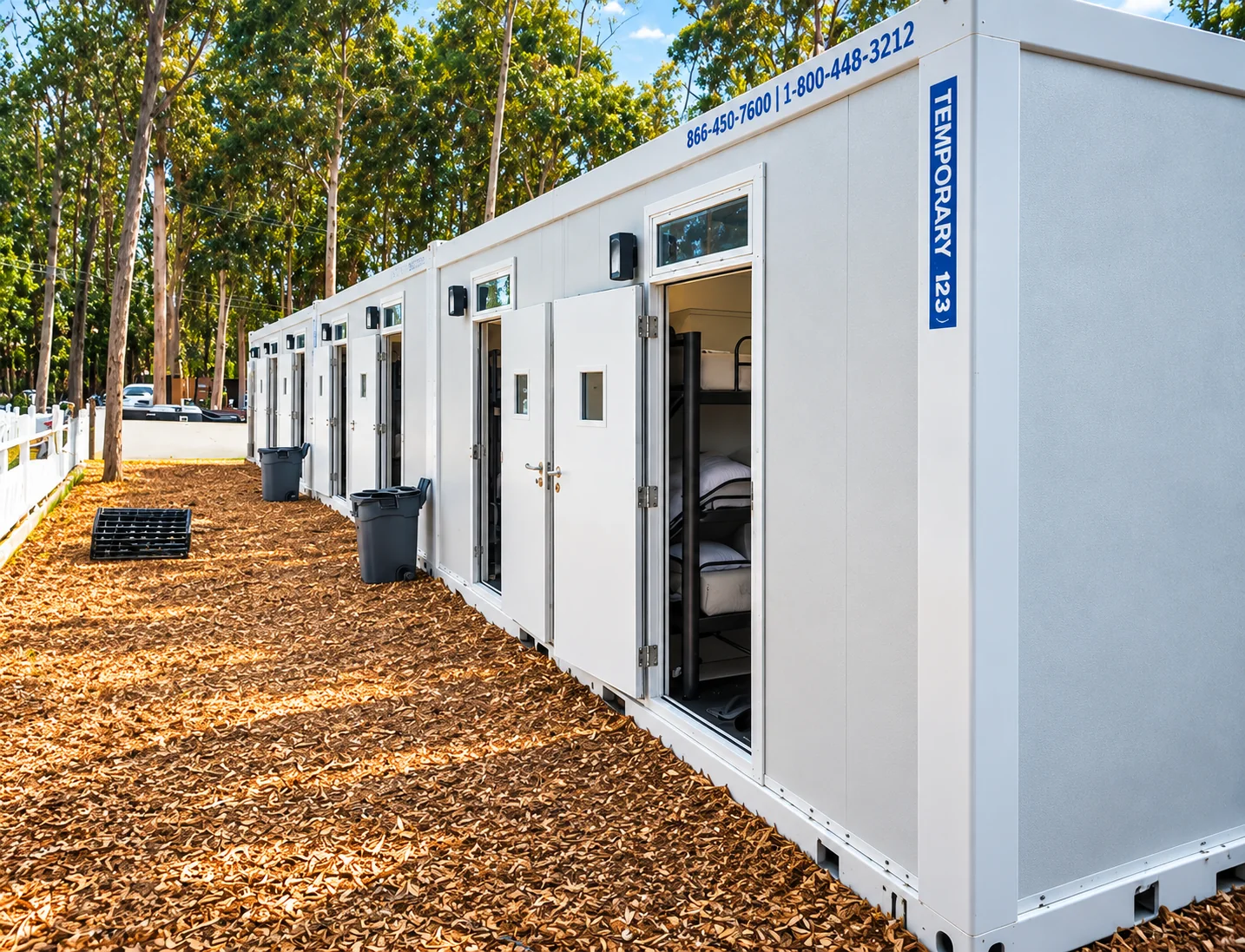
- Sleeper trailer starting price
- Starting at $2,195/month · extended term
- Delivery planning
- Delivery schedule confirmed in your quote
A camp plan for Ashton.
Start with the sleeping layout, then connect the shower, restroom, laundry, and handwashing facilities needed at the site in Fremont County.
20ft Contractor Accommodation
Bring temporary sleeping accommodation closer to the project. This 20ft contractor option supports crew lodging plans for construction assignments, remote work, and extended field operations.
View model details ↗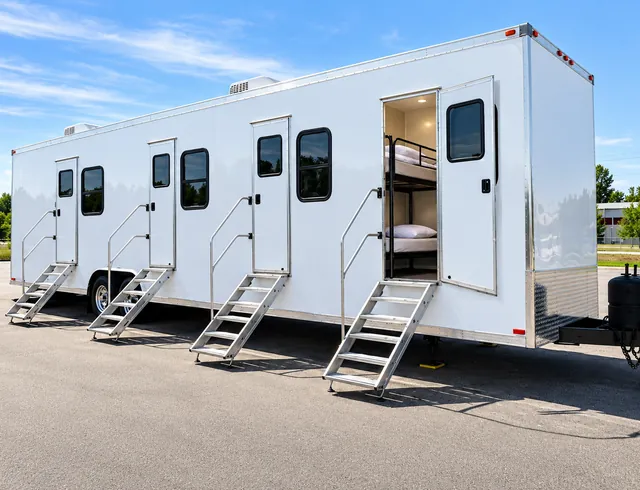
20ft VIP Accommodation
Arrange temporary accommodation for visiting project leads, production personnel, or staff staying at the site. Specify the room arrangement and furnishings that matter for the assignment.
View model details ↗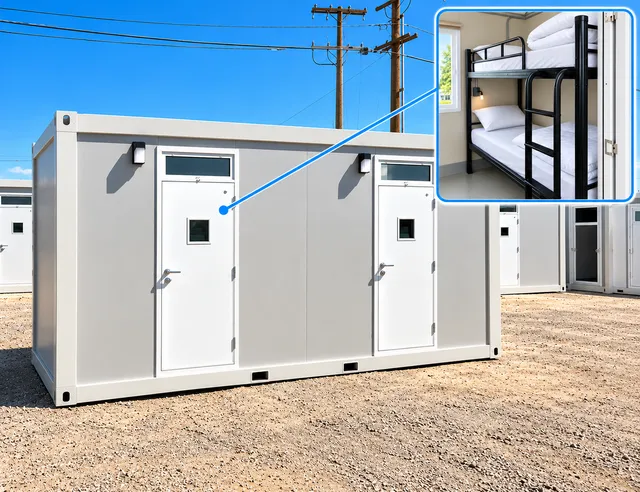
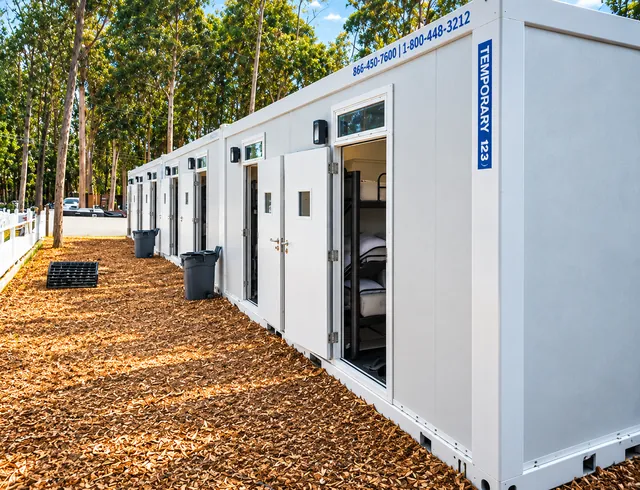
2-Stall Sleeper Trailer
Plan separate sleeping areas for a small crew or assigned staff. The 2-stall sleeper option can form part of a temporary camp without committing to a large shared sleeping hall.
View model details ↗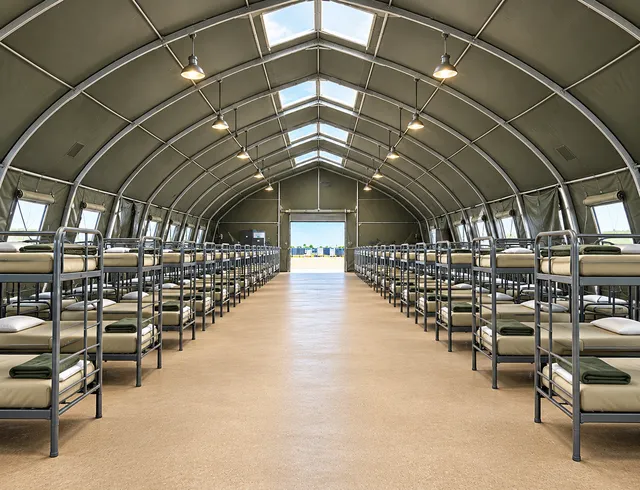
Temporary Sleeping Facilities
Create a shared sleeping area for a larger temporary workforce. Bunkhouse-style sleeping facilities help organize crew accommodation alongside a separate kitchen, dining area, and hygiene facilities.
View model details ↗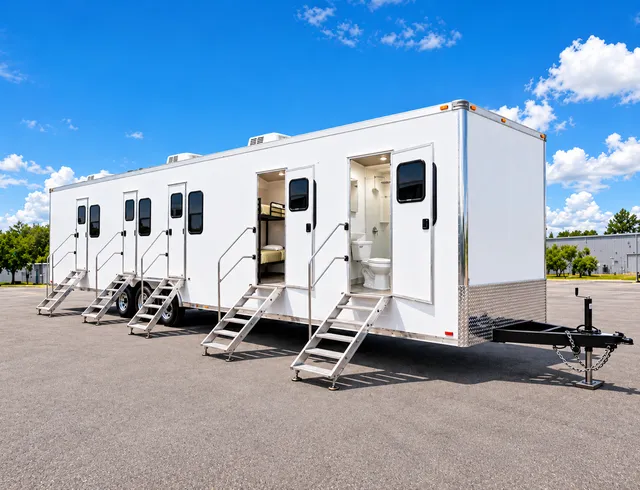
Office, Sleeper, Shower & Restroom Trailer
Bring working, resting, and personal-care functions into one crew-support location. This combination trailer is an option for projects that need more than a stand-alone office or sleeping unit.
View model details ↗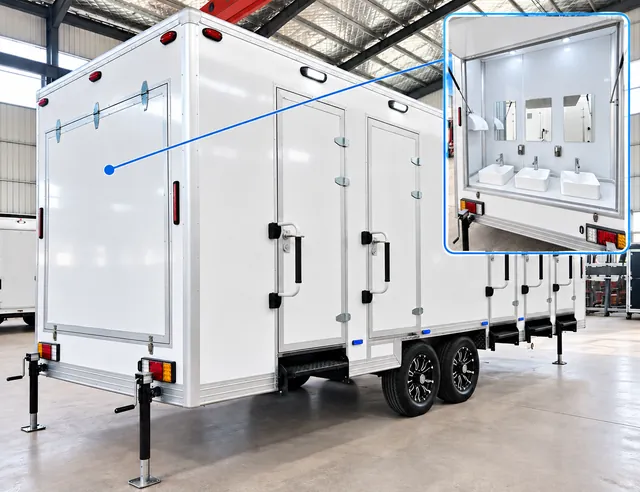
20ft Shower Trailer, 5 Stalls with Handwashing Sink
Add five shower stalls and a handwashing sink in a nominal 20ft shower trailer. Plan temporary bathing facilities for workforce accommodation, building repairs, or extended field operations around shower schedules, water supply, and wastewater service.
View model details ↗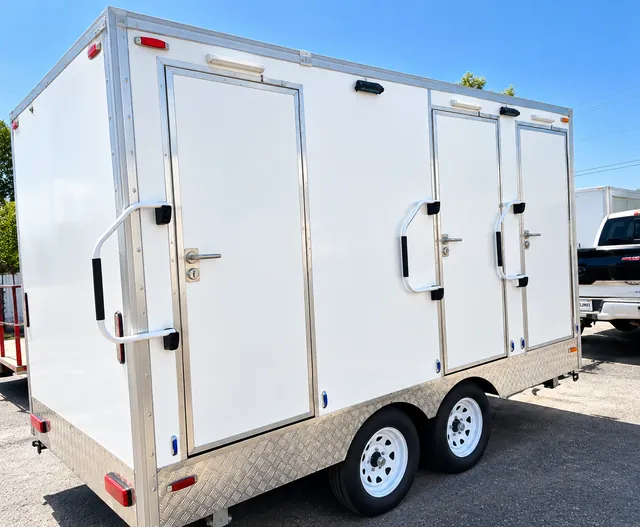
13ft Luxury Shower-Restroom Combination Trailer, 3 Stalls
Provide shower and restroom facilities together in a nominal 13ft trailer with three individual combination stalls. This configuration gives a smaller temporary site one facility to consider for both daily washing and bathroom access.
View model details ↗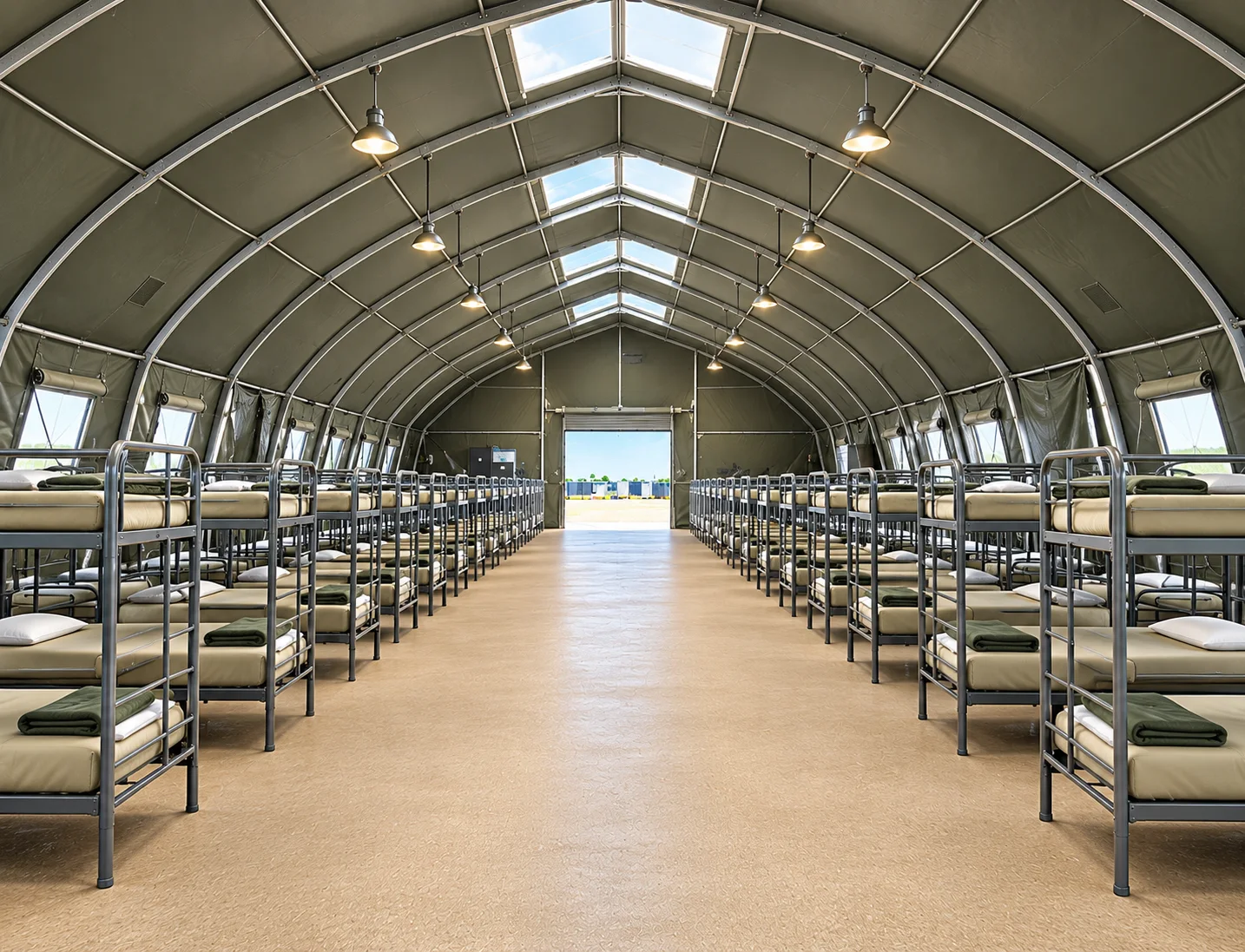
Parker community events: workforce and shift planning
Parker community events is one of the local settings tied to Parker's visitor, event, and hospitality settings. Local organizers, vendors, and out-of-town crews often overlap during the same short season. Visitors, vendors, and seasonal staff tend to arrive in a short window, which can compress parking, deliveries, and shift changes. A project team reviewing temporary accommodation would start with the approved site, delivery route, work window, and the number of people who need to stay nearby. That early review keeps the camp plan tied to the work rather than to a generic unit count.
Seasonal harvest crews and agricultural housing
Sugar City’s agricultural economy depends on seasonal labor for planting, irrigation, harvest, and hauling. The work is weather-driven, and crews may move between fields as conditions change. Local housing is limited, and workers sometimes commute from Rexburg, Idaho Falls, or smaller surrounding communities. Early coordination with the property owner and local jurisdiction can resolve access, noise, lighting, and placement questions before mobilization. A practical next step is to map sleeping units, support facilities, parking, and pedestrian routes against the approved site plan.
City of Dubois public services: site and access planning
For Dubois, City of Dubois public services sits inside a broader pattern of healthcare, education, and public institutions. Staff and contractors may need short-term accommodation during facility projects or peak periods. Staff, contractors, and visiting teams may need short-term accommodation during projects, peak periods, or facility work. A project team reviewing temporary accommodation would start with the approved site, delivery route, work window, and the number of people who need to stay nearby. That early review keeps the camp plan tied to the work rather than to a generic unit count.
Seasonal ranch and tourism crews: site and access planning
Seasonal ranch and tourism crews is a useful entry point into Spencer's seasonal, remote, and shift workforce patterns. Housing demand rises when local lodging is full or the job site is outside town. Workers often arrive for a defined harvest, recreation season, or construction window when local lodging is limited. A project team reviewing temporary accommodation would start with the approved site, delivery route, work window, and the number of people who need to stay nearby. That early review keeps the camp plan tied to the work rather than to a generic unit count.

Roberts agriculture and food processing: workforce and shift planning
Roberts agriculture and food processing shows how Roberts's construction, energy, and industrial settings can concentrate demand. Farms and processors support a seasonal and shift workforce. Contractor schedules can move with weather, materials, and plant windows, so accommodation has to follow the actual work plan. A project team reviewing temporary accommodation would start with the approved site, delivery route, work window, and the number of people who need to stay nearby. That early review keeps the camp plan tied to the work rather than to a generic unit count.
Bingham County agriculture and food processing: workforce and shift planning
Bingham County agriculture and food processing shows how Basalt's construction, energy, and industrial settings can concentrate demand. That work follows harvest, weather, and project schedules rather than a fixed office calendar. Contractor schedules can move with weather, materials, and plant windows, so accommodation has to follow the actual work plan. A project team reviewing temporary accommodation would start with the approved site, delivery route, work window, and the number of people who need to stay nearby. That early review keeps the camp plan tied to the work rather than to a generic unit count.
Harvest crews and agricultural shift housing
Potato, grain, and hay harvests create short, intense periods when workers and equipment move through the Firth area. Crews may start before daylight, work through weather delays, and stay near the fields until the job is finished. Local lodging is limited, and a daily commute to Idaho Falls or Blackfoot can cut into rest and maintenance time. Early coordination with the property owner and local jurisdiction can resolve access, noise, lighting, and placement questions before mobilization.
Compare sleeper and man camp configurations.
Start with how many people need to sleep on site, how rooms should be assigned, and whether the assignment needs private or shared accommodation. Then plan showers, restrooms, laundry, dining, power, and water as one camp layout for Ashton.
Scroll across the table to compare configurations.
| Model | Sleeping layout | Typical project role | Planning note | Starting at |
|---|---|---|---|---|
| 20ft Contractor Accommodation | Bunk-room configuration | Crew accommodation on construction, utility, and remote assignments | Separate entry doors; confirm beds and room assignment | $2,195/month on extended terms |
| 20ft VIP Accommodation | Private-room configuration | Project leads, visiting specialists, and supervisory staff | Confirm room privacy, furnishings, and bed arrangement | $2,195/month on extended terms |
| 2-Stall Sleeper Trailer | Two sleeping areas | Smaller crews or assigned staff within a larger camp | Sleeping areas, not necessarily two beds; confirm layout | Configuration quote |
| Temporary Sleeping Facilities | Shared bunkhouse hall | Larger temporary workforce requiring a central sleeping building | Coordinate dining, showers, restrooms, and laundry nearby | Configuration quote |
Sleeping capacity is confirmed per selected unit and room plan; model names do not guarantee a bed count. Temporary sleeping facilities can be paired with a mobile kitchen, shower, restroom, and laundry plan where the camp brief requires them.
Grain, potato and hay operations around Ashton
Ashton sits in a farming area where grain, potatoes, hay, and other crops move through local storage and processing channels. Harvest windows can concentrate truck traffic, equipment repairs, and seasonal labor into a few intense weeks. A farm or processor that needs extra hands may find that local rental housing is already full during the same period. Utility capacity, winter access, and surface conditions deserve a separate check when the camp will operate through a shoulder season.
A temporary sleeper trailer or small man camp could supplement an employer-provided housing plan when the property owner approves the location. The camp should be separated from grain handling, fuel storage, and equipment movement, with a clear pedestrian route and controlled lighting. Showers, restrooms, and laundry are practical for harvest crews, and handwashing should be available before meals. Confirm the actual occupancy and duration before selecting a unit mix. A written site-contact and escalation plan helps the camp operate smoothly when shifts change or weather affects access.
Local background sources
Fremont County Joint School District 215 facilities
Fremont County Joint School District 215 serves Ashton and nearby communities through its schools and district programs. Facility upgrades, maintenance projects, and seasonal staffing can bring contractors and support teams onto campuses during breaks or after hours. School sites have specific security, parking, and delivery rules that shape when work can occur. The camp brief should also record the expected occupancy, shift pattern, delivery window, and the site contact who can approve utility connections.
A sleeper trailer could support an approved project crew when the district provides a controlled staging area away from student circulation. The camp plan should address background-check requirements, delivery hours, separation from play areas and bus routes, and quiet periods during classes. Showers, restrooms, handwashing, and laundry should be sized to the crew, and the district's facilities and security staff remain the authority on what is permitted. A practical next step is to map sleeping units, support facilities, parking, and pedestrian routes against the approved site plan.
Local background sources
Compare sleeper and camp facilities.
Starting monthly rates for sleeper trailers and supporting facilities in Ashton. Review the equipment details and camp requirements with our team.
| Configuration | Starting monthly rate | Model |
|---|---|---|
| 20ft Contractor Accommodation | Starting at $2,195 / month on extended terms | Review model details ↗ |
| 20ft VIP Accommodation | Starting at $2,195 / month on extended terms | Review model details ↗ |
| 2-Stall Sleeper Trailer | Configuration quote | Review model details ↗ |
| Temporary Sleeping Facilities | Configuration quote | Review model details ↗ |
| Office, Sleeper, Shower & Restroom Trailer | Configuration quote | Review model details ↗ |
Supporting facility starting prices
| Facility | Configuration | Starting monthly rate |
|---|---|---|
| 20ft Shower Trailer, 5 Stalls with Handwashing Sink | Shower Trailers | Starting at $3,995 / month |
| 13ft Luxury Shower-Restroom Combination Trailer, 3 Stalls | Shower & Restroom Combinations | Starting at $2,495 / month |
| 22ft Luxury Shower-Restroom Combination Trailer, 6 Stalls | Shower & Restroom Combinations | Starting at $4,995 / month |
| Handwashing Sink Trailer | Handwashing Facilities | Starting at $2,995 / month |
Starting prices reflect the lowest published rate for the selected configuration, typically on extended terms. Short-term rates, delivery, setup, site work, taxes, minimum duration, and current availability are confirmed in the project quote.
Need help now? Call 888 385-5513 for 24/7 support and current availability.
Tetonia agriculture and recreation: site and access planning
A crew looking at Tetonia agriculture and recreation would be working within Tetonia's construction, energy, and industrial settings. Farms, outfitters, and building work support a seasonal workforce. Contractor schedules can move with weather, materials, and plant windows, so accommodation has to follow the actual work plan. A project team reviewing temporary accommodation would start with the approved site, delivery route, work window, and the number of people who need to stay nearby. That early review keeps the camp plan tied to the work rather than to a generic unit count.
Rexburg water repairs and after-hours response
The City of Rexburg says its water staff operate and repair the municipal distribution system and provides an after-hours emergency number. Its construction page also notes that water or sewer ruptures may be flagged on the city project map. An extended main break or planned replacement can keep a repair crew working across several shifts, which is the kind of assignment where temporary sleeper trailers could reduce travel time.
Agriculture and Idaho Falls metro construction: workforce and shift planning
Agriculture and Idaho Falls metro construction shows how Ucon's construction, energy, and industrial settings can concentrate demand. Farms and nearby construction support a commuter workforce. Contractor schedules can move with weather, materials, and plant windows, so accommodation has to follow the actual work plan. A project team reviewing temporary accommodation would start with the approved site, delivery route, work window, and the number of people who need to stay nearby. That early review keeps the camp plan tied to the work rather than to a generic unit count.
Swan Valley recreation and ranch work: workforce and shift planning
Swan Valley recreation and ranch work shows how Swan Valley's construction, energy, and industrial settings can concentrate demand. That work follows harvest, weather, and project schedules rather than a fixed office calendar. Contractor schedules can move with weather, materials, and plant windows, so accommodation has to follow the actual work plan. A project team reviewing temporary accommodation would start with the approved site, delivery route, work window, and the number of people who need to stay nearby. That early review keeps the camp plan tied to the work rather than to a generic unit count.
Ashton Hill snowmobile access and winter visitors
Ashton Hill is a local winter recreation area known for snowmobiling, sledding, and access to the surrounding Fremont County backcountry. Winter weekends and holiday periods can bring trailers, riders, and support crews into town, while weather can close roads and delay travel. Businesses that serve those visitors may need temporary staff housing when the season is short and the commute is difficult. That review should include rental dates, peak crew count, utility connections, and the inspections required before occupancy.
For a defined seasonal assignment, a remote basecamp could be planned near an approved staging area with room for trailer parking and snow removal. Sleeping units need reliable heat and power, and the camp plan should include showers, restrooms, laundry for winter gear, and a place to dry clothing. Confirm road access and emergency-vehicle clearance with the county before delivery, and treat the camp as temporary accommodation rather than public lodging.
Local background sources
Fremont County winter road and utility response
Fremont County's winter conditions can close rural roads, interrupt power, and make travel between Ashton and outlying communities slow or unsafe. County road crews, utility line teams, and contractors may work long shifts to reopen access and restore service. When the work stretches across several days, a temporary base near the affected corridor can reduce travel time and keep crews available for the next callout. Early coordination with the property owner and local jurisdiction can resolve access, noise, lighting, and placement questions before mobilization.
An emergency portable sleeper trailer could support a defined response assignment when the county and incident command approve the site. The layout should keep sleeping areas away from equipment, fuel, and traffic, with generator power, potable water, wastewater handling, and lighting confirmed in advance. Showers, restrooms, handwashing, and laundry help crews rotate through extended shifts, and the camp should never be presented as a public shelter. The site plan should show where crews will park, how they will reach the work area, and how support facilities will be serviced.
Local background sources
Driggs Police Department and winter response staging
The Driggs Police Department is the city's local law-enforcement agency and works alongside Teton County services during winter storms, road closures, and community emergencies. Prolonged response periods can bring mutual-aid personnel and utility crews into the valley when local lodging is already full. A staging plan that keeps responders near the incident area can reduce travel on snow-covered roads. Early coordination with the property owner and local jurisdiction can resolve access, noise, lighting, and placement questions before mobilization.
Fremont County emergency services: site and access planning
Island Park's emergency, utility, and continuity settings includes Fremont County emergency services. Response teams may need to stay close when roads close or an incident runs overnight. Response planning separates sleeping areas from command posts, equipment, and public access so the camp does not interfere with the incident. A project team reviewing temporary accommodation would start with the approved site, delivery route, work window, and the number of people who need to stay nearby. That early review keeps the camp plan tied to the work rather than to a generic unit count.
Ririe School District: workforce and shift planning
Local work around Ririe School District connects to Ririe's healthcare, education, and public institutions. The district anchors family and staff routines in town. Staff, contractors, and visiting teams may need short-term accommodation during projects, peak periods, or facility work. A project team reviewing temporary accommodation would start with the approved site, delivery route, work window, and the number of people who need to stay nearby. That early review keeps the camp plan tied to the work rather than to a generic unit count.
Winter storms, power outages and rural road access
Winter storms can drift snow across open roads between Iona and nearby communities, while ice and wind can bring down lines and interrupt power. Utility and road crews often work long shifts until the route is clear and service is restored. When the repair area is outside town, a temporary place to rest can reduce travel time and keep the crew available for the next call during a multi-day restoration. The city and county may also restrict where equipment can be staged during a storm response.
Irwin recreation and ranch work: workforce and shift planning
Irwin recreation and ranch work shows how Irwin's construction, energy, and industrial settings can concentrate demand. That work follows harvest, weather, and project schedules rather than a fixed office calendar. Contractor schedules can move with weather, materials, and plant windows, so accommodation has to follow the actual work plan. A project team reviewing temporary accommodation would start with the approved site, delivery route, work window, and the number of people who need to stay nearby. That early review keeps the camp plan tied to the work rather than to a generic unit count.
Seasonal recreation and hospitality staffing
Ashton's proximity to snowmobile trails, the Henry's Fork, and Yellowstone-area travel gives local hospitality businesses a seasonal rhythm. Guides, lodge staff, repair shops, and restaurants may add workers for a few months and then scale back. When employees come from outside the area, housing can become the constraint that limits how many people a business can hire. Early coordination with the property owner and local jurisdiction can resolve access, noise, lighting, and placement questions before mobilization.
A mancamp trailer or small sleeper layout could supplement an employer's approved seasonal housing plan, with privacy and room assignments matched to the crew. Winter operations need reliable heat, snow removal, and insulated water connections, while summer operations need shade and ventilation. Showers, restrooms, laundry, and handwashing should be part of the same plan, and the site owner should confirm that temporary accommodation is allowed. The site plan should show where crews will park, how they will reach the work area, and how support facilities will be serviced.
Local background sources
Henry's Fork water and irrigation infrastructure planning
The Henry's Fork supports irrigation, recreation, and local water systems as it moves through Fremont County. Repair or improvement work along diversions, ditches, and related infrastructure can require equipment operators, technicians, and inspectors to stay near remote reaches of the river. Access can be seasonal, and some work areas are far from Ashton's limited lodging. Confirm the delivery path and staging area separately from the sleeping layout so large units do not block active operations.
A remote bunkbed trailer could house a compact crew at an approved staging yard, with the number of beds matched to the actual rotation rather than the full project roster. Showers, restrooms, and handwashing should be planned before crews arrive, and laundry may be useful for multi-week assignments. Confirm landowner permission, floodplain conditions, and utility connections with the county and project sponsor before positioning any unit. The rental team can review the unit mix against the crew count, room assignment, and expected duration before the quote is finalized.
Local background sources
Warm River community events and river recreation: site and access planning
Planning around Warm River community events and river recreation reflects Warm River's visitor, event, and hospitality settings. Local organizers, vendors, and out-of-town crews often overlap during the same short season. Visitors, vendors, and seasonal staff tend to arrive in a short window, which can compress parking, deliveries, and shift changes. A project team reviewing temporary accommodation would start with the approved site, delivery route, work window, and the number of people who need to stay nearby. That early review keeps the camp plan tied to the work rather than to a generic unit count.
Drummond agriculture and ranch work: site and access planning
A crew looking at Drummond agriculture and ranch work would be working within Drummond's construction, energy, and industrial settings. That work follows harvest, weather, and project schedules rather than a fixed office calendar. Contractor schedules can move with weather, materials, and plant windows, so accommodation has to follow the actual work plan. A project team reviewing temporary accommodation would start with the approved site, delivery route, work window, and the number of people who need to stay nearby. That early review keeps the camp plan tied to the work rather than to a generic unit count.
Fremont County emergency coordination and responder staging
Fremont County's sheriff and emergency services coordinate response across a large rural county that includes St. Anthony and smaller communities. Winter storms, flooding, wildfire, and remote road incidents can require deputies, fire crews, and mutual-aid teams to work extended shifts away from home. The county may need a controlled staging area when an incident runs beyond a single operational period. Early coordination with the property owner and local jurisdiction can resolve access, noise, lighting, and placement questions before mobilization.
City Hall, library and civic services
Rigby City Hall and the city library anchor local government services, from utility billing and permits to public programs and community meetings. Staff training, records projects, and civic events can bring visiting teams or temporary workers into Rigby for several days. These facilities sit within the city's core, where parking and public access are already shared with residents and businesses. That review should include rental dates, peak crew count, utility connections, and the inspections required before occupancy.
City of Menan public services: workforce and shift planning
Local work around City of Menan public services connects to Menan's healthcare, education, and public institutions. City crews maintain water, streets, and community facilities. Staff, contractors, and visiting teams may need short-term accommodation during projects, peak periods, or facility work. A project team reviewing temporary accommodation would start with the approved site, delivery route, work window, and the number of people who need to stay nearby. That early review keeps the camp plan tied to the work rather than to a generic unit count.
Teton Pass travel and Wyoming-border recreation traffic
Teton Pass carries local commuters and recreation traffic between Victor and Jackson, Wyoming, and winter closures or heavy travel days can reshape the schedule for anyone working on either side of the border. Hospitality, guiding, and maintenance crews may need to stay close to the pass rather than commute through variable road conditions. A temporary camp can be one way to keep an approved crew near the work without depending on distant lodging.
Youth tournaments and Bonneville school facilities
Bonneville School District 93 serves Ammon and the surrounding Idaho Falls area, and its fields, gyms, and auditoriums host youth tournaments, community programs, and school events. A regional tournament can bring teams, officials, vendors, and family members into the area for several days. When multiple events overlap, nearby hotels may be stretched and event staff may need a separate place to stay. That review should include rental dates, peak crew count, utility connections, and the inspections required before occupancy.
Freedom Celebration production at Snake River Landing
The Melaleuca Freedom Celebration has grown into one of Idaho Falls' largest annual gatherings, with the 2026 event expected to draw more than 220,000 spectators at Snake River Landing. Organizers have said the 2026 program may be the final year at that venue unless a new location is secured. That scale of event requires staging, vendor coordination, security, and cleanup crews working before and after the public arrives.
Plan around the Ashton address.
A project in Ashton starts with the same practical questions: how many people need to sleep on site, how the units can reach their approved placement, and how power, water, and wastewater will connect.
- Scope the crew and schedule
Confirm how many people need accommodation, the shift pattern, and how long the camp must operate.
- Review the sleeping and support layout
Match private, shared, or bunkhouse sleeping units to the occupancy, then plan showers, restrooms, laundry, and handwashing.
- Review the site
Confirm access, approved placement, power, potable water, wastewater, and any local approvals before delivery.
- Coordinate deployment
Schedule delivery, setup, and handover around mobilization dates and site readiness.
- Plan the transition
Adjust unit counts or demobilize as the project phases change, with the rental team informed in advance.
Ashton City Hall, library and civic services
Ashton's city offices and public services handle utilities, permits, parks, and community programs for residents and surrounding rural areas. A facility project, records transition, or seasonal public-works push can require additional staff or contractors for a defined period. Temporary accommodation may be worth reviewing when the work schedule leaves little time for a daily commute. That review should include rental dates, peak crew count, utility connections, and the inspections required before occupancy.
Any camp plan should start with the city's approved placement, utility connections, and access rules. A remote crew accommodation layout could use compact sleeping units with shared showers, restrooms, laundry, and handwashing, provided the site has reliable power and water. Delivery routes should avoid public counters, parking areas, and emergency access. Confirm the responsible city contact and the removal date before mobilizing. The project team should also confirm how the units will be serviced, resupplied, and removed when the assignment ends.
Local background sources
U.S. 20 gateway traffic and Yellowstone-season services
Ashton's position on the route toward Yellowstone and Island Park makes it a service stop for travelers, freight, and recreation traffic. Seasonal business peaks can increase demand for fuel, food, repairs, and staffing at the same time that local housing is stretched. A business owner may need a temporary crew base while a facility is expanded or a seasonal operation is staffed. The final scope should distinguish temporary accommodation from permanent housing and identify the date the camp will be removed.
For a defined commercial assignment, a remote lodging trailer could be placed on an approved private lot with room for deliveries and employee parking. The site plan should confirm power, water, wastewater, and snow storage, and it should keep sleeping units away from highway noise and customer traffic. Restrooms, showers, and laundry can be included in the camp scope, with a dining or common area planned separately from the business floor.
Local background sources
Harvest and commuter crews: site and access planning
Harvest and commuter crews is a useful entry point into Newdale's seasonal, remote, and shift workforce patterns. Housing demand rises when local lodging is full or the job site is outside town. Workers often arrive for a defined harvest, recreation season, or construction window when local lodging is limited. A project team reviewing temporary accommodation would start with the approved site, delivery route, work window, and the number of people who need to stay nearby. That early review keeps the camp plan tied to the work rather than to a generic unit count.
Harvest and commuter crews: workforce and shift planning
Any review of Harvest and commuter crews touches Teton's seasonal, remote, and shift workforce patterns. Harvest and Rexburg commuting shape housing demand. Workers often arrive for a defined harvest, recreation season, or construction window when local lodging is limited. A project team reviewing temporary accommodation would start with the approved site, delivery route, work window, and the number of people who need to stay nearby. That early review keeps the camp plan tied to the work rather than to a generic unit count.
Jefferson County emergency services: site and access planning
Lewisville's emergency, utility, and continuity settings includes Jefferson County emergency services. Response teams may need to stay close when roads close or an incident runs overnight. Response planning separates sleeping areas from command posts, equipment, and public access so the camp does not interfere with the incident. A project team reviewing temporary accommodation would start with the approved site, delivery route, work window, and the number of people who need to stay nearby. That early review keeps the camp plan tied to the work rather than to a generic unit count.
Jefferson County emergency services: workforce and shift planning
Work tied to Jefferson County emergency services falls within Hamer's emergency, utility, and continuity settings. Response teams may need to stay close when roads close or an incident runs overnight. Response planning separates sleeping areas from command posts, equipment, and public access so the camp does not interfere with the incident. A project team reviewing temporary accommodation would start with the approved site, delivery route, work window, and the number of people who need to stay nearby. That early review keeps the camp plan tied to the work rather than to a generic unit count.
Mud Lake community events and nearby recreation: site and access planning
Planning around Mud Lake community events and nearby recreation reflects Mud Lake's visitor, event, and hospitality settings. Local organizers, vendors, and out-of-town crews often overlap during the same short season. Visitors, vendors, and seasonal staff tend to arrive in a short window, which can compress parking, deliveries, and shift changes. A project team reviewing temporary accommodation would start with the approved site, delivery route, work window, and the number of people who need to stay nearby. That early review keeps the camp plan tied to the work rather than to a generic unit count.
Shelley Police and public-safety response staging
The Shelley Police Department is listed among the city’s public-safety services and works alongside Bingham County agencies on local incidents. A prolonged winter storm, structure fire, or traffic incident can bring additional officers, deputies, and support personnel into the area. When the response runs beyond a single shift, incident supervisors may need a controlled place for relief staff to rest away from the public scene. Early coordination with the property owner and local jurisdiction can resolve access, noise, lighting, and placement questions before mobilization.
Ashton community events and downtown gathering space
Ashton's community calendar brings residents and visitors into the small downtown for seasonal celebrations, local fundraisers, and public gatherings. Events of this scale rely on volunteers, vendors, and city staff who may work early setup and late cleanup shifts. When an event grows beyond the capacity of local lodging, a project team might review temporary accommodation for the people producing or supporting the program. The camp brief should also record the expected occupancy, shift pattern, delivery window, and the site contact who can approve utility connections.
A small sleeper trailer layout could support an approved event assignment on private or city-controlled land, provided the organizer confirms placement, parking, delivery access, and quiet hours. Showers, restrooms, handwashing, and laundry should be planned for the crew rather than added after arrival. A remote mancamp facility can be scaled to the event footprint, with the final layout reviewed by the property owner and the city before units are positioned.
Local background sources
Harvest and agricultural shift crews
Potato, grain, and hay harvests can create early starts, late finishes, and short-term labor needs across the Ashton area. Crews may move between fields, storage sites, and processing locations, so the accommodation plan has to follow the actual work sequence rather than a single address. A fixed camp can still work if the staging yard is central to the day's routes. Confirm the delivery path and staging area separately from the sleeping layout so large units do not block active operations.
An emergency remote mancamp could be reviewed when a grower or processor faces a short-notice labor surge and local lodging is unavailable. Sleeping units should be kept away from equipment traffic and dust, with restrooms, handwashing, showers, and laundry sized for the crew. Confirm the expected occupancy, duration, and site approval before delivery, and plan how the units will be serviced and removed at the end of the season. The rental team can review the unit mix against the crew count, room assignment, and expected duration before the quote is finalized.
Local background sources
Ashton workforce housing rental FAQs.
How much does temporary workforce housing cost in Ashton?
Sleeper trailer accommodation starts at $2,195 per month on extended terms. Short-term rates, delivery, setup, site work, taxes, minimum duration, and the complete camp scope are confirmed in the final quote.
Can sleeper trailers be delivered to a Ashton site?
Share the Ashton address, desired start date, crew count, placement area, and access conditions. The team confirms availability and a workable delivery schedule in the quote; this page does not publish a fixed arrival time.
What supporting facilities should be planned?
Showers, restrooms, laundry, handwashing, and dining facilities can be reviewed with the sleeping layout. The right mix depends on occupancy, shift patterns, and how long the crew will be on site.
Are man camps available for remote Idaho projects?
Remote workforce housing can combine sleeping units with showers, restrooms, laundry, and handwashing facilities. Share the site location, expected occupancy, utility plan, and duration so the camp components and delivery path can be reviewed together.
What should I prepare for a Fremont County site?
Bring the address, approved placement area, delivery access, electrical supply, potable water and wastewater arrangements, crew count, shift schedule, dates, and site contact. Confirm any applicable permit and inspection requirements before dispatch.
House the Ashton crew.
Share the site, dates, crew count, and camp needs. We’ll review the sleeper trailer and supporting facility plan for your Idaho project.