Remote man camp and sleeper trailer rentals in Clayton, Idaho.
Keep a crew close to the work in Clayton with temporary sleeper trailers and remote man camp facilities from East Idaho Equipment Rental. We support construction, utility, healthcare, education, government, and disaster-response teams that need accommodation near a Custer County site. Call 888 385-5513 for 24/7 support and emergency deployment coordination. Showers, restrooms, laundry, and handwashing stations can be planned alongside the sleeping units.
Explore Clayton workforce projects ↓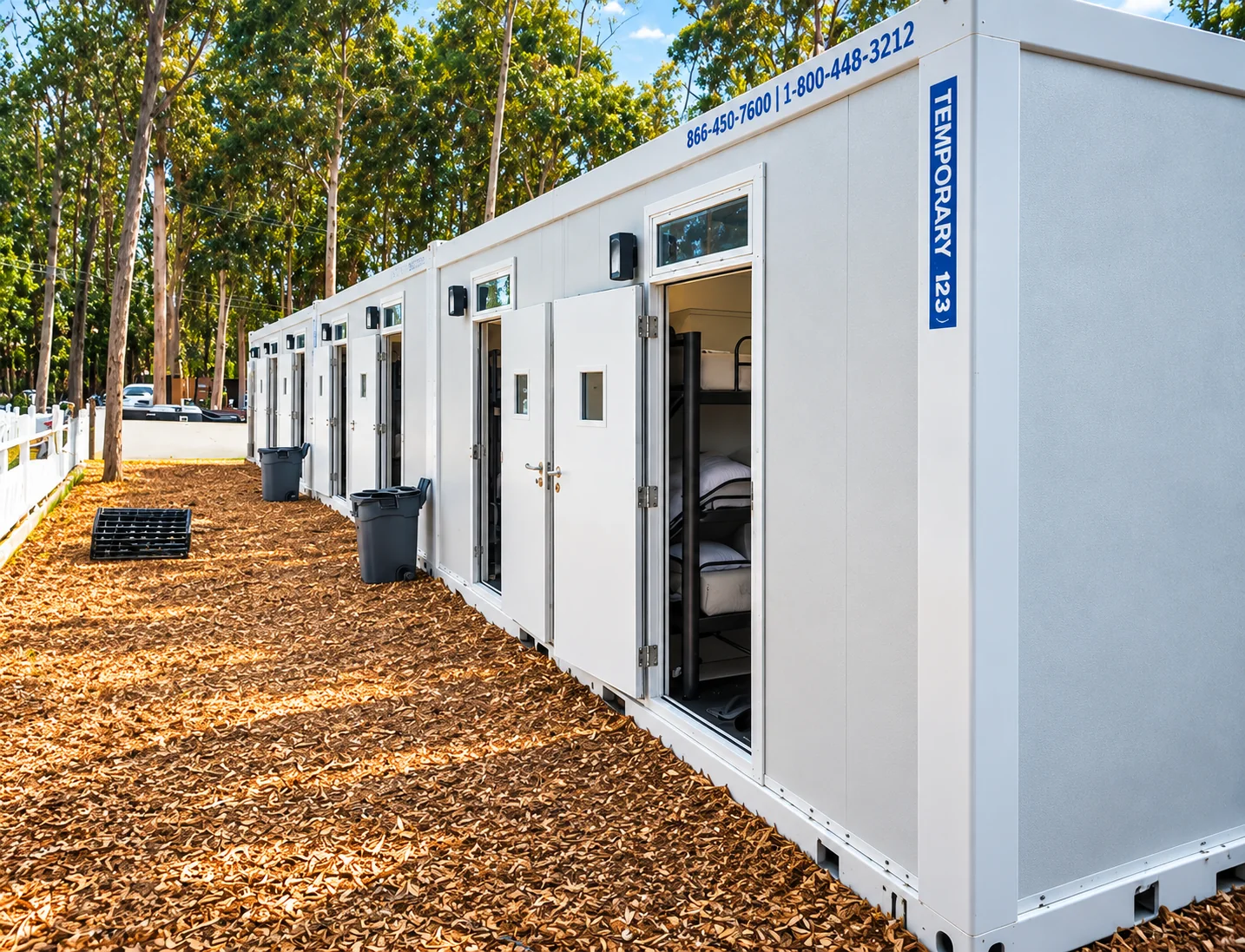
- Sleeper trailer starting price
- Starting at $2,195/month · extended term
- Delivery planning
- Delivery schedule confirmed in your quote
A camp plan for Clayton.
Start with the sleeping layout, then connect the shower, restroom, laundry, and handwashing facilities needed at the site in Custer County.
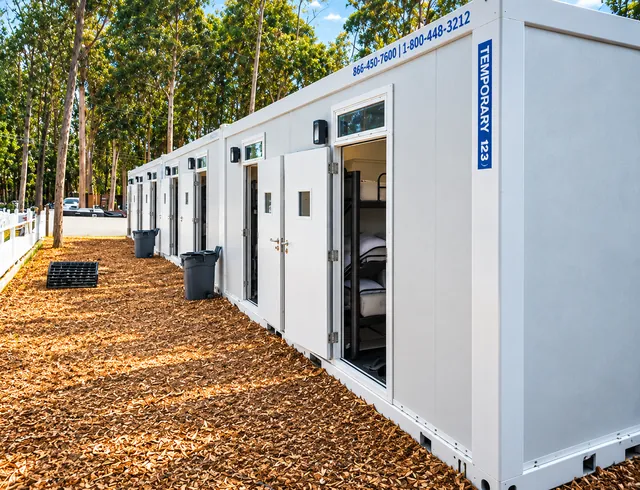
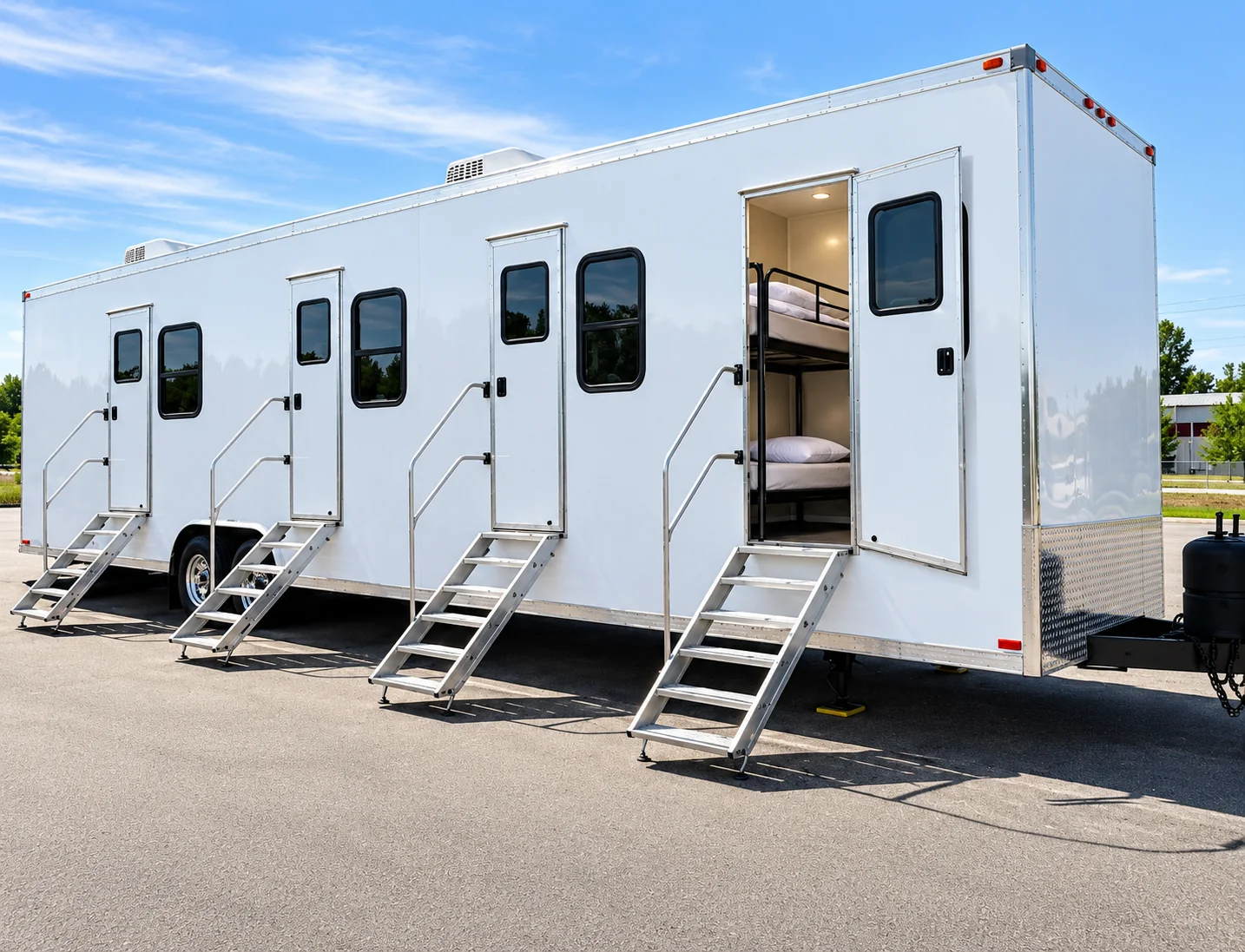
20ft Contractor Accommodation
Bring temporary sleeping accommodation closer to the project. This 20ft contractor option supports crew lodging plans for construction assignments, remote work, and extended field operations.
View model details ↗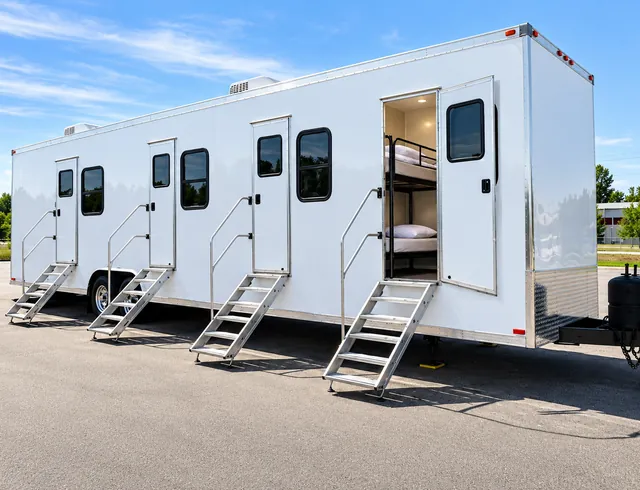
20ft VIP Accommodation
Arrange temporary accommodation for visiting project leads, production personnel, or staff staying at the site. Specify the room arrangement and furnishings that matter for the assignment.
View model details ↗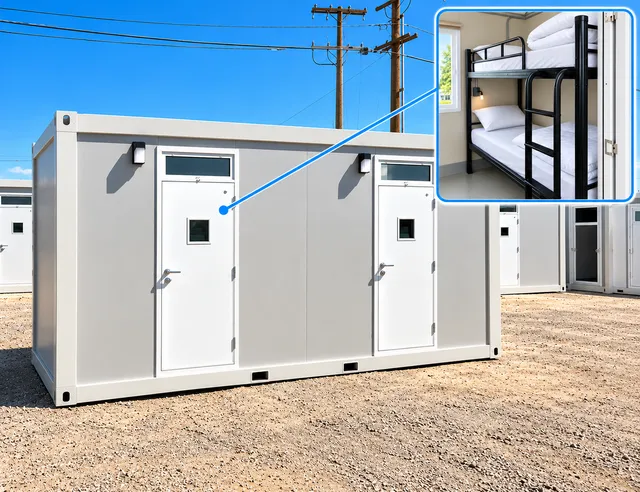
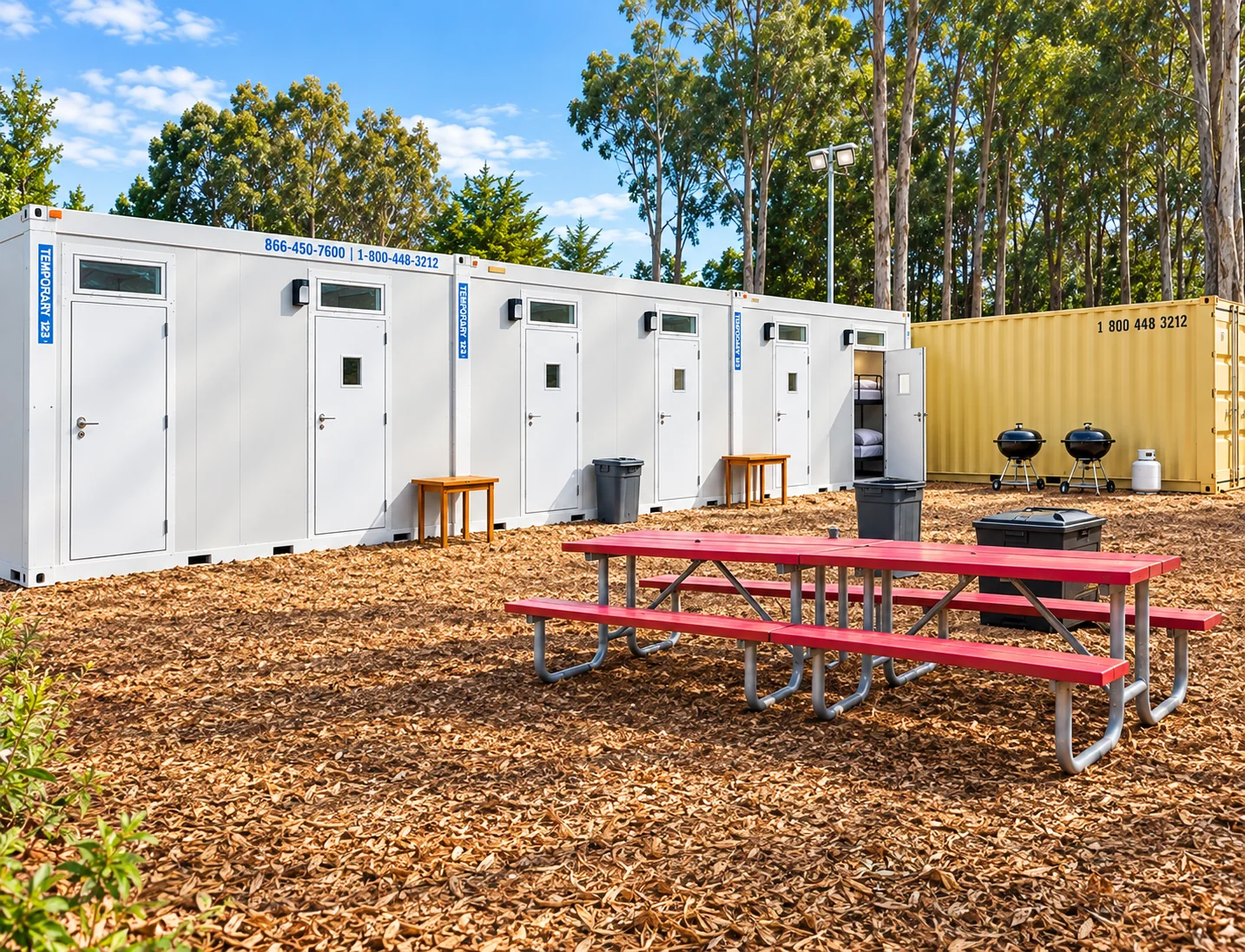
2-Stall Sleeper Trailer
Plan separate sleeping areas for a small crew or assigned staff. The 2-stall sleeper option can form part of a temporary camp without committing to a large shared sleeping hall.
View model details ↗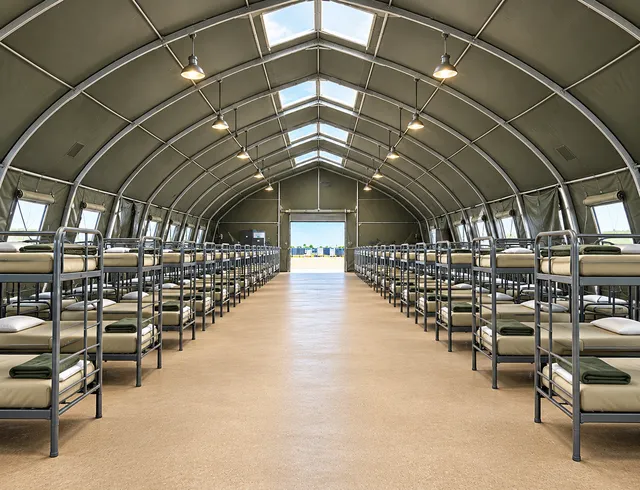
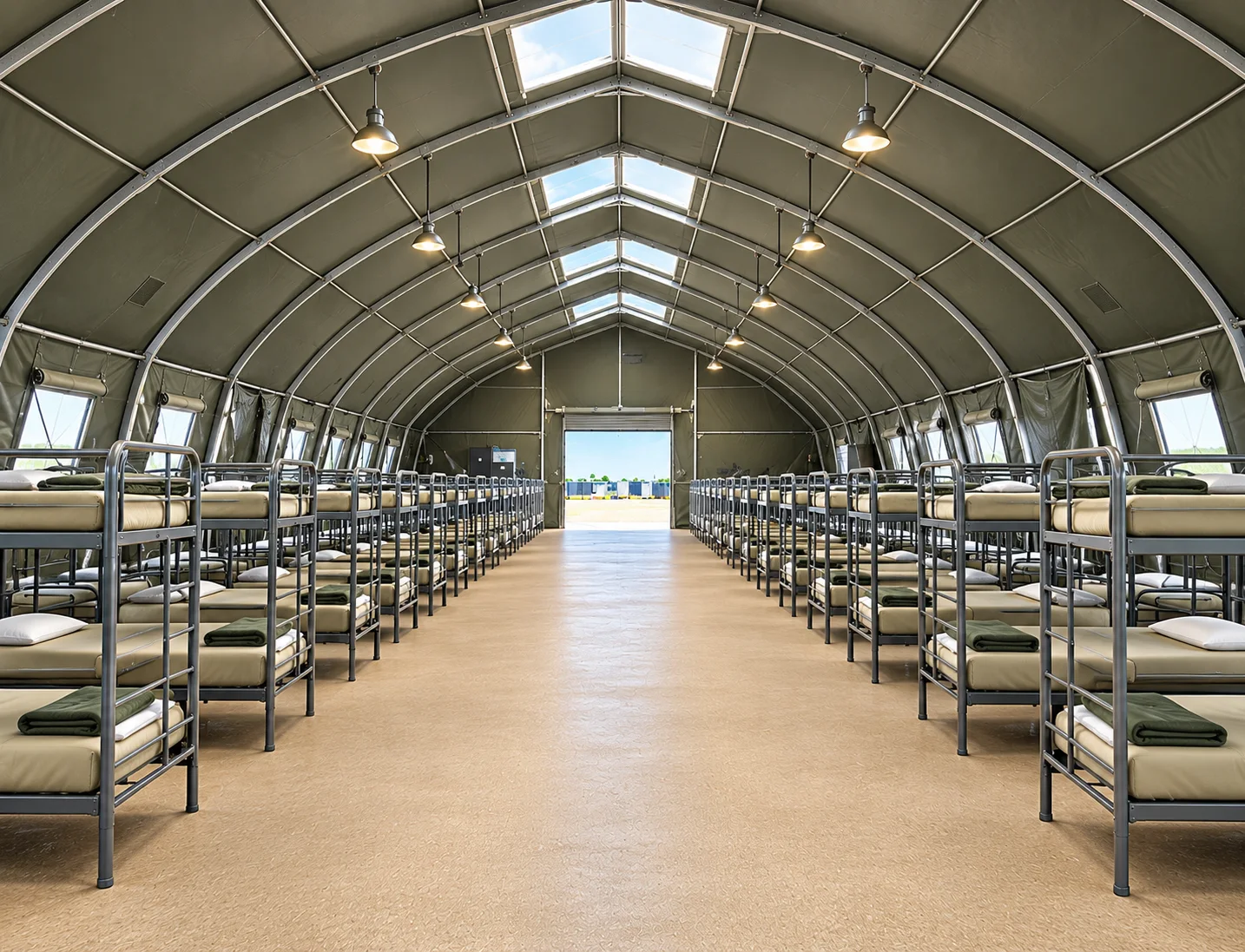
Temporary Sleeping Facilities
Create a shared sleeping area for a larger temporary workforce. Bunkhouse-style sleeping facilities help organize crew accommodation alongside a separate kitchen, dining area, and hygiene facilities.
View model details ↗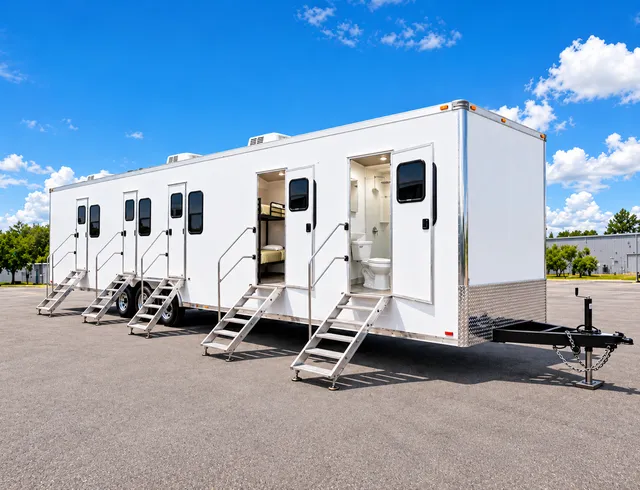
Office, Sleeper, Shower & Restroom Trailer
Bring working, resting, and personal-care functions into one crew-support location. This combination trailer is an option for projects that need more than a stand-alone office or sleeping unit.
View model details ↗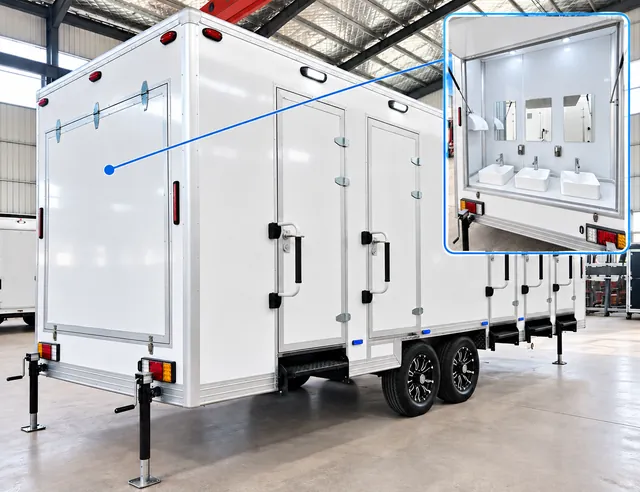
20ft Shower Trailer, 5 Stalls with Handwashing Sink
Add five shower stalls and a handwashing sink in a nominal 20ft shower trailer. Plan temporary bathing facilities for workforce accommodation, building repairs, or extended field operations around shower schedules, water supply, and wastewater service.
View model details ↗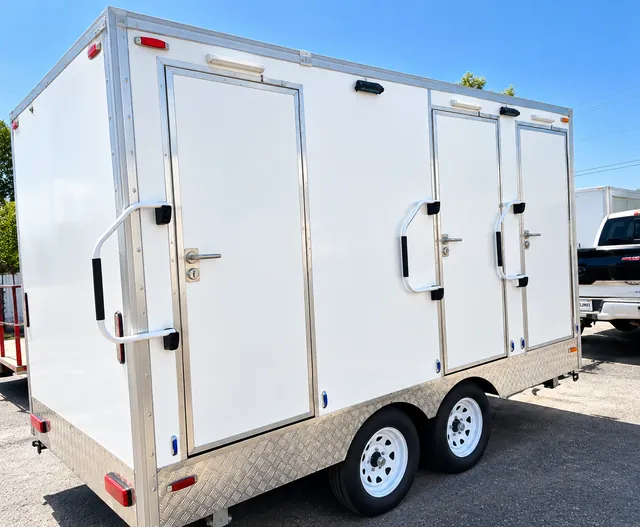
13ft Luxury Shower-Restroom Combination Trailer, 3 Stalls
Provide shower and restroom facilities together in a nominal 13ft trailer with three individual combination stalls. This configuration gives a smaller temporary site one facility to consider for both daily washing and bathroom access.
View model details ↗
Sun Valley Resort seasonal roles and employee housing
A resort or contractor could consider sleeper trailers only after reviewing the existing employee-housing plan and the approved site. Temporary units could supplement capacity during a defined peak, with showers, restrooms, and laundry planned around shift times. Because Sun Valley is a separate municipality from Ketchum, the project should confirm which jurisdiction's approvals, access, and utility rules apply. For planning purposes, emergency workforce housing can be compared with the other sleeping configurations before a unit is selected. A remote mancamp facility can be reviewed when seasonal staff housing is short and the property owner approves the placement.
Resort and hospitality workforce: site and access planning
Resort and hospitality workforce is a useful entry point into Sun Valley's seasonal, remote, and shift workforce patterns. Housing demand peaks with ski, event, and summer seasons. Workers often arrive for a defined harvest, recreation season, or construction window when local lodging is limited. A project team reviewing temporary accommodation would start with the approved site, delivery route, work window, and the number of people who need to stay nearby. That early review keeps the camp plan tied to the work rather than to a generic unit count.
Crouch community events and Payette River recreation: site and access planning
Planning around Crouch community events and Payette River recreation reflects Crouch's visitor, event, and hospitality settings. Local organizers, vendors, and out-of-town crews often overlap during the same short season. Visitors, vendors, and seasonal staff tend to arrive in a short window, which can compress parking, deliveries, and shift changes. A project team reviewing temporary accommodation would start with the approved site, delivery route, work window, and the number of people who need to stay nearby. That early review keeps the camp plan tied to the work rather than to a generic unit count.
Placerville recreation and construction: workforce and shift planning
Placerville recreation and construction shows how Placerville's construction, energy, and industrial settings can concentrate demand. That work follows harvest, weather, and project schedules rather than a fixed office calendar. Contractor schedules can move with weather, materials, and plant windows, so accommodation has to follow the actual work plan. A project team reviewing temporary accommodation would start with the approved site, delivery route, work window, and the number of people who need to stay nearby. That early review keeps the camp plan tied to the work rather than to a generic unit count.
Tamarack Resort seasonal workforce and shoulder-season staffing
Tamarack Resort and the broader Lake Cascade recreation economy rely on seasonal staff for hospitality, maintenance, food service, and outdoor operations. Housing pressure can peak during winter weekends and summer events, when local rentals are full and employees may commute long distances. Employers may need a temporary option that can be scaled up or down with the season. Early coordination with the property owner and local jurisdiction can resolve access, noise, lighting, and placement questions before mobilization.
Compare sleeper and man camp configurations.
Start with how many people need to sleep on site, how rooms should be assigned, and whether the assignment needs private or shared accommodation. Then plan showers, restrooms, laundry, dining, power, and water as one camp layout for Clayton.
Scroll across the table to compare configurations.
| Model | Sleeping layout | Typical project role | Planning note | Starting at |
|---|---|---|---|---|
| 20ft Contractor Accommodation | Bunk-room configuration | Crew accommodation on construction, utility, and remote assignments | Separate entry doors; confirm beds and room assignment | $2,195/month on extended terms |
| 20ft VIP Accommodation | Private-room configuration | Project leads, visiting specialists, and supervisory staff | Confirm room privacy, furnishings, and bed arrangement | $2,195/month on extended terms |
| 2-Stall Sleeper Trailer | Two sleeping areas | Smaller crews or assigned staff within a larger camp | Sleeping areas, not necessarily two beds; confirm layout | Configuration quote |
| Temporary Sleeping Facilities | Shared bunkhouse hall | Larger temporary workforce requiring a central sleeping building | Coordinate dining, showers, restrooms, and laundry nearby | Configuration quote |
Sleeping capacity is confirmed per selected unit and room plan; model names do not guarantee a bed count. Temporary sleeping facilities can be paired with a mobile kitchen, shower, restroom, and laundry plan where the camp brief requires them.
Custer County emergency services: workforce and shift planning
Work tied to Custer County emergency services falls within Clayton's emergency, utility, and continuity settings. Response teams may need to stay close when roads close or an incident runs overnight. Response planning separates sleeping areas from command posts, equipment, and public access so the camp does not interfere with the incident. A project team reviewing temporary accommodation would start with the approved site, delivery route, work window, and the number of people who need to stay nearby. That early review keeps the camp plan tied to the work rather than to a generic unit count.
A remote basecamp could support this kind of assignment, with sleeping and support units sized to the crew. Showers, restrooms, laundry, and handwashing should be planned as one layout, along with dining or a common area if the crew stays through meal periods. Confirm approved placement, power, potable water, wastewater, servicing, and local approvals before delivery. A servicing plan and a named site contact should be in place before the first unit arrives.
Local background sources
Clayton community events and Salmon River recreation: site and access planning
Planning around Clayton community events and Salmon River recreation reflects Clayton's visitor, event, and hospitality settings. Local organizers, vendors, and out-of-town crews often overlap during the same short season. Visitors, vendors, and seasonal staff tend to arrive in a short window, which can compress parking, deliveries, and shift changes. A project team reviewing temporary accommodation would start with the approved site, delivery route, work window, and the number of people who need to stay nearby. That early review keeps the camp plan tied to the work rather than to a generic unit count.
A remote mancamp facility could support this kind of assignment, with sleeping and support units sized to the crew. Showers, restrooms, laundry, and handwashing should be planned as one layout, along with dining or a common area if the crew stays through meal periods. Confirm approved placement, power, potable water, wastewater, servicing, and local approvals before delivery. A servicing plan and a named site contact should be in place before the first unit arrives.
Local background sources
Compare sleeper and camp facilities.
Starting monthly rates for sleeper trailers and supporting facilities in Clayton. Review the equipment details and camp requirements with our team.
| Configuration | Starting monthly rate | Model |
|---|---|---|
| 20ft Contractor Accommodation | Starting at $2,195 / month on extended terms | Review model details ↗ |
| 20ft VIP Accommodation | Starting at $2,195 / month on extended terms | Review model details ↗ |
| 2-Stall Sleeper Trailer | Configuration quote | Review model details ↗ |
| Temporary Sleeping Facilities | Configuration quote | Review model details ↗ |
| Office, Sleeper, Shower & Restroom Trailer | Configuration quote | Review model details ↗ |
Supporting facility starting prices
| Facility | Configuration | Starting monthly rate |
|---|---|---|
| 20ft Shower Trailer, 5 Stalls with Handwashing Sink | Shower Trailers | Starting at $3,995 / month |
| 13ft Luxury Shower-Restroom Combination Trailer, 3 Stalls | Shower & Restroom Combinations | Starting at $2,495 / month |
| 22ft Luxury Shower-Restroom Combination Trailer, 6 Stalls | Shower & Restroom Combinations | Starting at $4,995 / month |
| Handwashing Sink Trailer | Handwashing Facilities | Starting at $2,995 / month |
Starting prices reflect the lowest published rate for the selected configuration, typically on extended terms. Short-term rates, delivery, setup, site work, taxes, minimum duration, and current availability are confirmed in the project quote.
Need help now? Call 888 385-5513 for 24/7 support and current availability.
Custer County emergency services: workforce and shift planning
Work tied to Custer County emergency services falls within Mackay's emergency, utility, and continuity settings. County crews handle wildfire, winter, and remote medical response. Response planning separates sleeping areas from command posts, equipment, and public access so the camp does not interfere with the incident. A project team reviewing temporary accommodation would start with the approved site, delivery route, work window, and the number of people who need to stay nearby. That early review keeps the camp plan tied to the work rather than to a generic unit count.
Blaine County School District summer projects
Blaine County School District operates schools across Hailey, Ketchum, Sun Valley, and the surrounding communities. Facility upgrades, roof and mechanical work, and summer projects can bring contractors onto campuses when students are away. Winter weather and tight parking can complicate deliveries during the school year. Projects are often sequenced around the school calendar so that occupied buildings remain safe and usable. That review should include rental dates, peak crew count, utility connections, and the inspections required before occupancy.
Lost River ranching and recreation: workforce and shift planning
Lost River ranching and recreation shows how Lost River's construction, energy, and industrial settings can concentrate demand. That work follows harvest, weather, and project schedules rather than a fixed office calendar. Contractor schedules can move with weather, materials, and plant windows, so accommodation has to follow the actual work plan. A project team reviewing temporary accommodation would start with the approved site, delivery route, work window, and the number of people who need to stay nearby. That early review keeps the camp plan tied to the work rather than to a generic unit count.
Richfield community events: site and access planning
Planning around Richfield community events reflects Richfield's visitor, event, and hospitality settings. Local organizers, vendors, and out-of-town crews often overlap during the same short season. Visitors, vendors, and seasonal staff tend to arrive in a short window, which can compress parking, deliveries, and shift changes. A project team reviewing temporary accommodation would start with the approved site, delivery route, work window, and the number of people who need to stay nearby. That early review keeps the camp plan tied to the work rather than to a generic unit count.
Donnelly and Lake Cascade: workforce and shift planning
Donnelly and Lake Cascade is one of the local settings tied to Donnelly's visitor, event, and hospitality settings. The lake and nearby resort area drive seasonal visitation. Visitors, vendors, and seasonal staff tend to arrive in a short window, which can compress parking, deliveries, and shift changes. A project team reviewing temporary accommodation would start with the approved site, delivery route, work window, and the number of people who need to stay nearby. That early review keeps the camp plan tied to the work rather than to a generic unit count.
Seasonal ranch and recreation crews: workforce and shift planning
Any review of Seasonal ranch and recreation crews touches Clayton's seasonal, remote, and shift workforce patterns. Housing demand rises when local lodging is full or the job site is outside town. Workers often arrive for a defined harvest, recreation season, or construction window when local lodging is limited. A project team reviewing temporary accommodation would start with the approved site, delivery route, work window, and the number of people who need to stay nearby. That early review keeps the camp plan tied to the work rather than to a generic unit count.
Portable workforce housing with sleeper trailers could support this kind of assignment, with sleeping and support units sized to the crew. Showers, restrooms, laundry, and handwashing should be planned as one layout, along with dining or a common area if the crew stays through meal periods. Confirm approved placement, power, potable water, wastewater, servicing, and local approvals before delivery. A servicing plan and a named site contact should be in place before the first unit arrives.
Local background sources
City of Clayton public services: site and access planning
For Clayton, City of Clayton public services sits inside a broader pattern of healthcare, education, and public institutions. Staff and contractors may need short-term accommodation during facility projects or peak periods. Staff, contractors, and visiting teams may need short-term accommodation during projects, peak periods, or facility work. A project team reviewing temporary accommodation would start with the approved site, delivery route, work window, and the number of people who need to stay nearby. That early review keeps the camp plan tied to the work rather than to a generic unit count.
Emergency workforce housing using sleeper trailers could support this kind of assignment, with sleeping and support units sized to the crew. Showers, restrooms, laundry, and handwashing should be planned as one layout, along with dining or a common area if the crew stays through meal periods. Confirm approved placement, power, potable water, wastewater, servicing, and local approvals before delivery. A servicing plan and a named site contact should be in place before the first unit arrives.
Local background sources
Blaine County emergency services: site and access planning
Bellevue's emergency, utility, and continuity settings includes Blaine County emergency services. County agencies coordinate wildfire, winter, and medical response. Response planning separates sleeping areas from command posts, equipment, and public access so the camp does not interfere with the incident. A project team reviewing temporary accommodation would start with the approved site, delivery route, work window, and the number of people who need to stay nearby. That early review keeps the camp plan tied to the work rather than to a generic unit count.
City of Leadore public services: site and access planning
For Leadore, City of Leadore public services sits inside a broader pattern of healthcare, education, and public institutions. Staff and contractors may need short-term accommodation during facility projects or peak periods. Staff, contractors, and visiting teams may need short-term accommodation during projects, peak periods, or facility work. A project team reviewing temporary accommodation would start with the approved site, delivery route, work window, and the number of people who need to stay nearby. That early review keeps the camp plan tied to the work rather than to a generic unit count.
Seasonal ranch and tourism crews: site and access planning
Seasonal ranch and tourism crews is a useful entry point into Moore's seasonal, remote, and shift workforce patterns. Housing demand rises when local lodging is full or the job site is outside town. Workers often arrive for a defined harvest, recreation season, or construction window when local lodging is limited. A project team reviewing temporary accommodation would start with the approved site, delivery route, work window, and the number of people who need to stay nearby. That early review keeps the camp plan tied to the work rather than to a generic unit count.
Downtown commercial renovation and public works projects
Shoshone's downtown includes older commercial buildings, civic offices, and storefronts that periodically need renovation, roof work, and utility upgrades. A concentrated project can bring trades, inspectors, and equipment into a small downtown where parking and delivery space are limited. Contractors may need to stage materials nearby and keep crews close to the job rather than commuting from Twin Falls or the Wood River Valley. The final scope should distinguish temporary accommodation from permanent housing and identify the date the camp will be removed.
Downtown Gooding events and summer hospitality
Downtown Gooding serves as the county seat and a practical stop for travelers on the I-84 corridor. Community events, local retail, and hospitality businesses can create short bursts of demand for staff and support crews, especially during fair week and summer travel. A small event or vendor team may need a temporary base within a short drive of the downtown core. A short drive from the interstate also makes the city a practical base for event and travel staff.
Clayton ranching and river outfitting: workforce and shift planning
Clayton ranching and river outfitting shows how Clayton's construction, energy, and industrial settings can concentrate demand. That work follows harvest, weather, and project schedules rather than a fixed office calendar. Contractor schedules can move with weather, materials, and plant windows, so accommodation has to follow the actual work plan. A project team reviewing temporary accommodation would start with the approved site, delivery route, work window, and the number of people who need to stay nearby. That early review keeps the camp plan tied to the work rather than to a generic unit count.
A remote bunkhouse trailer could support this kind of assignment, with sleeping and support units sized to the crew. Showers, restrooms, laundry, and handwashing should be planned as one layout, along with dining or a common area if the crew stays through meal periods. Confirm approved placement, power, potable water, wastewater, servicing, and local approvals before delivery. A servicing plan and a named site contact should be in place before the first unit arrives.
Local background sources
Seasonal ranch and recreation crews: site and access planning
Seasonal ranch and recreation crews is a useful entry point into Clayton's seasonal, remote, and shift workforce patterns. Housing demand rises when local lodging is full or the job site is outside town. Workers often arrive for a defined harvest, recreation season, or construction window when local lodging is limited. A project team reviewing temporary accommodation would start with the approved site, delivery route, work window, and the number of people who need to stay nearby. That early review keeps the camp plan tied to the work rather than to a generic unit count.
A temporary sleeper trailer could support this kind of assignment, with sleeping and support units sized to the crew. Showers, restrooms, laundry, and handwashing should be planned as one layout, along with dining or a common area if the crew stays through meal periods. Confirm approved placement, power, potable water, wastewater, servicing, and local approvals before delivery. A servicing plan and a named site contact should be in place before the first unit arrives.
Local background sources
Camas County agriculture and recreation: site and access planning
A crew looking at Camas County agriculture and recreation would be working within Fairfield's construction, energy, and industrial settings. Ranches, farms, and seasonal visitors support a mixed workforce. Contractor schedules can move with weather, materials, and plant windows, so accommodation has to follow the actual work plan. A project team reviewing temporary accommodation would start with the approved site, delivery route, work window, and the number of people who need to stay nearby. That early review keeps the camp plan tied to the work rather than to a generic unit count.
Sacajawea Center programs and Fall Frolic
The Sacajawea Center interprets the Lewis and Clark expedition and the Shoshone guide’s role at a site along the Salmon River. Its grounds host educational programs, community gatherings, and the Fall Frolic, a seasonal event that can bring vendors, performers, and support crews into town. Event staff may arrive before the public program and stay through cleanup, especially when the schedule runs across a weekend. The camp brief should also record the expected occupancy, shift pattern, delivery window, and the site contact who can approve utility connections.
Boise County emergency services: site and access planning
Horseshoe Bend's emergency, utility, and continuity settings includes Boise County emergency services. County crews coordinate fire, medical, and river response across a rural area. Response planning separates sleeping areas from command posts, equipment, and public access so the camp does not interfere with the incident. A project team reviewing temporary accommodation would start with the approved site, delivery route, work window, and the number of people who need to stay nearby. That early review keeps the camp plan tied to the work rather than to a generic unit count.
City of Dietrich public services: site and access planning
For Dietrich, City of Dietrich public services sits inside a broader pattern of healthcare, education, and public institutions. Staff and contractors may need short-term accommodation during facility projects or peak periods. Staff, contractors, and visiting teams may need short-term accommodation during projects, peak periods, or facility work. A project team reviewing temporary accommodation would start with the approved site, delivery route, work window, and the number of people who need to stay nearby. That early review keeps the camp plan tied to the work rather than to a generic unit count.
Plan around the Clayton address.
A project in Clayton starts with the same practical questions: how many people need to sleep on site, how the units can reach their approved placement, and how power, water, and wastewater will connect.
- Scope the crew and schedule
Confirm how many people need accommodation, the shift pattern, and how long the camp must operate.
- Review the sleeping and support layout
Match private, shared, or bunkhouse sleeping units to the occupancy, then plan showers, restrooms, laundry, and handwashing.
- Review the site
Confirm access, approved placement, power, potable water, wastewater, and any local approvals before delivery.
- Coordinate deployment
Schedule delivery, setup, and handover around mobilization dates and site readiness.
- Plan the transition
Adjust unit counts or demobilize as the project phases change, with the rental team informed in advance.
Custer County emergency services: site and access planning
Clayton's emergency, utility, and continuity settings includes Custer County emergency services. Response teams may need to stay close when roads close or an incident runs overnight. Response planning separates sleeping areas from command posts, equipment, and public access so the camp does not interfere with the incident. A project team reviewing temporary accommodation would start with the approved site, delivery route, work window, and the number of people who need to stay nearby. That early review keeps the camp plan tied to the work rather than to a generic unit count.
A remote bunkbed trailer could support this kind of assignment, with sleeping and support units sized to the crew. Showers, restrooms, laundry, and handwashing should be planned as one layout, along with dining or a common area if the crew stays through meal periods. Confirm approved placement, power, potable water, wastewater, servicing, and local approvals before delivery. A servicing plan and a named site contact should be in place before the first unit arrives.
Local background sources
Clayton ranching and river outfitting: site and access planning
A crew looking at Clayton ranching and river outfitting would be working within Clayton's construction, energy, and industrial settings. That work follows harvest, weather, and project schedules rather than a fixed office calendar. Contractor schedules can move with weather, materials, and plant windows, so accommodation has to follow the actual work plan. A project team reviewing temporary accommodation would start with the approved site, delivery route, work window, and the number of people who need to stay nearby. That early review keeps the camp plan tied to the work rather than to a generic unit count.
An emergency remote mancamp could support this kind of assignment, with sleeping and support units sized to the crew. Showers, restrooms, laundry, and handwashing should be planned as one layout, along with dining or a common area if the crew stays through meal periods. Confirm approved placement, power, potable water, wastewater, servicing, and local approvals before delivery. A servicing plan and a named site contact should be in place before the first unit arrives.
Local background sources
City of Carey public services: site and access planning
For Carey, City of Carey public services sits inside a broader pattern of healthcare, education, and public institutions. Staff and contractors may need short-term accommodation during facility projects or peak periods. Staff, contractors, and visiting teams may need short-term accommodation during projects, peak periods, or facility work. A project team reviewing temporary accommodation would start with the approved site, delivery route, work window, and the number of people who need to stay nearby. That early review keeps the camp plan tied to the work rather than to a generic unit count.
Arco community events: workforce and shift planning
Arco community events is one of the local settings tied to Arco's visitor, event, and hospitality settings. Local gatherings and Craters of the Moon visitors shape the calendar. Visitors, vendors, and seasonal staff tend to arrive in a short window, which can compress parking, deliveries, and shift changes. A project team reviewing temporary accommodation would start with the approved site, delivery route, work window, and the number of people who need to stay nearby. That early review keeps the camp plan tied to the work rather than to a generic unit count.
Trailside McCall workforce housing as planning context
The City of McCall has published information about the Trailside McCall workforce-housing project, a local example of how the community is trying to address housing pressure. For a project team, the useful planning lesson is that construction labor, site access, and phasing all need to be considered together. A phased build may bring carpenters, utility crews, and specialty trades into McCall for weeks at a time. Utility capacity, winter access, and surface conditions deserve a separate check when the camp will operate through a shoulder season.
Bliss community events and Snake River recreation: workforce and shift planning
Bliss community events and Snake River recreation is one of the local settings tied to Bliss's visitor, event, and hospitality settings. Local organizers, vendors, and out-of-town crews often overlap during the same short season. Visitors, vendors, and seasonal staff tend to arrive in a short window, which can compress parking, deliveries, and shift changes. A project team reviewing temporary accommodation would start with the approved site, delivery route, work window, and the number of people who need to stay nearby. That early review keeps the camp plan tied to the work rather than to a generic unit count.
City of Clayton public services: workforce and shift planning
Local work around City of Clayton public services connects to Clayton's healthcare, education, and public institutions. Staff and contractors may need short-term accommodation during facility projects or peak periods. Staff, contractors, and visiting teams may need short-term accommodation during projects, peak periods, or facility work. A project team reviewing temporary accommodation would start with the approved site, delivery route, work window, and the number of people who need to stay nearby. That early review keeps the camp plan tied to the work rather than to a generic unit count.
A remote lodging trailer could support this kind of assignment, with sleeping and support units sized to the crew. Showers, restrooms, laundry, and handwashing should be planned as one layout, along with dining or a common area if the crew stays through meal periods. Confirm approved placement, power, potable water, wastewater, servicing, and local approvals before delivery. A servicing plan and a named site contact should be in place before the first unit arrives.
Local background sources
Clayton community events and Salmon River recreation: workforce and shift planning
Clayton community events and Salmon River recreation is one of the local settings tied to Clayton's visitor, event, and hospitality settings. Local organizers, vendors, and out-of-town crews often overlap during the same short season. Visitors, vendors, and seasonal staff tend to arrive in a short window, which can compress parking, deliveries, and shift changes. A project team reviewing temporary accommodation would start with the approved site, delivery route, work window, and the number of people who need to stay nearby. That early review keeps the camp plan tied to the work rather than to a generic unit count.
An emergency portable sleeper trailer could support this kind of assignment, with sleeping and support units sized to the crew. Showers, restrooms, laundry, and handwashing should be planned as one layout, along with dining or a common area if the crew stays through meal periods. Confirm approved placement, power, potable water, wastewater, servicing, and local approvals before delivery. A servicing plan and a named site contact should be in place before the first unit arrives.
Local background sources
Challis community events: site and access planning
Planning around Challis community events reflects Challis's visitor, event, and hospitality settings. Local gatherings and recreation draw residents and visitors. Visitors, vendors, and seasonal staff tend to arrive in a short window, which can compress parking, deliveries, and shift changes. A project team reviewing temporary accommodation would start with the approved site, delivery route, work window, and the number of people who need to stay nearby. That early review keeps the camp plan tied to the work rather than to a generic unit count.
Custer County emergency services: site and access planning
Stanley's emergency, utility, and continuity settings includes Custer County emergency services. County crews handle wildfire, winter, and remote medical response. Response planning separates sleeping areas from command posts, equipment, and public access so the camp does not interfere with the incident. A project team reviewing temporary accommodation would start with the approved site, delivery route, work window, and the number of people who need to stay nearby. That early review keeps the camp plan tied to the work rather than to a generic unit count.
City of Butte City public services: site and access planning
For Butte City, City of Butte City public services sits inside a broader pattern of healthcare, education, and public institutions. Staff and contractors may need short-term accommodation during facility projects or peak periods. Staff, contractors, and visiting teams may need short-term accommodation during projects, peak periods, or facility work. A project team reviewing temporary accommodation would start with the approved site, delivery route, work window, and the number of people who need to stay nearby. That early review keeps the camp plan tied to the work rather than to a generic unit count.
Boise County emergency services: workforce and shift planning
Work tied to Boise County emergency services falls within Idaho City's emergency, utility, and continuity settings. Response teams may need to stay close when roads close or an incident runs overnight. Response planning separates sleeping areas from command posts, equipment, and public access so the camp does not interfere with the incident. A project team reviewing temporary accommodation would start with the approved site, delivery route, work window, and the number of people who need to stay nearby. That early review keeps the camp plan tied to the work rather than to a generic unit count.
Clayton workforce housing rental FAQs.
How much does temporary workforce housing cost in Clayton?
Sleeper trailer accommodation starts at $2,195 per month on extended terms. Short-term rates, delivery, setup, site work, taxes, minimum duration, and the complete camp scope are confirmed in the final quote.
Can sleeper trailers be delivered to a Clayton site?
Share the Clayton address, desired start date, crew count, placement area, and access conditions. The team confirms availability and a workable delivery schedule in the quote; this page does not publish a fixed arrival time.
What supporting facilities should be planned?
Showers, restrooms, laundry, handwashing, and dining facilities can be reviewed with the sleeping layout. The right mix depends on occupancy, shift patterns, and how long the crew will be on site.
Are man camps available for remote Idaho projects?
Remote workforce housing can combine sleeping units with showers, restrooms, laundry, and handwashing facilities. Share the site location, expected occupancy, utility plan, and duration so the camp components and delivery path can be reviewed together.
What should I prepare for a Custer County site?
Bring the address, approved placement area, delivery access, electrical supply, potable water and wastewater arrangements, crew count, shift schedule, dates, and site contact. Confirm any applicable permit and inspection requirements before dispatch.
House the Clayton crew.
Share the site, dates, crew count, and camp needs. We’ll review the sleeper trailer and supporting facility plan for your Idaho project.