Eagle Man Camp & Sleeper Trailer Rentals
Plan temporary workforce housing in Eagle, Idaho, around the project address, crew count, and shift schedule. East Idaho Equipment Rental coordinates sleeper trailers, remote basecamp accommodation, and supporting facilities for work in Ada County. Call 888 385-5513 for 24/7 support and emergency deployment coordination, and plan showers, restrooms, laundry, and handwashing capacity with the sleeping units.
Explore Eagle workforce projects ↓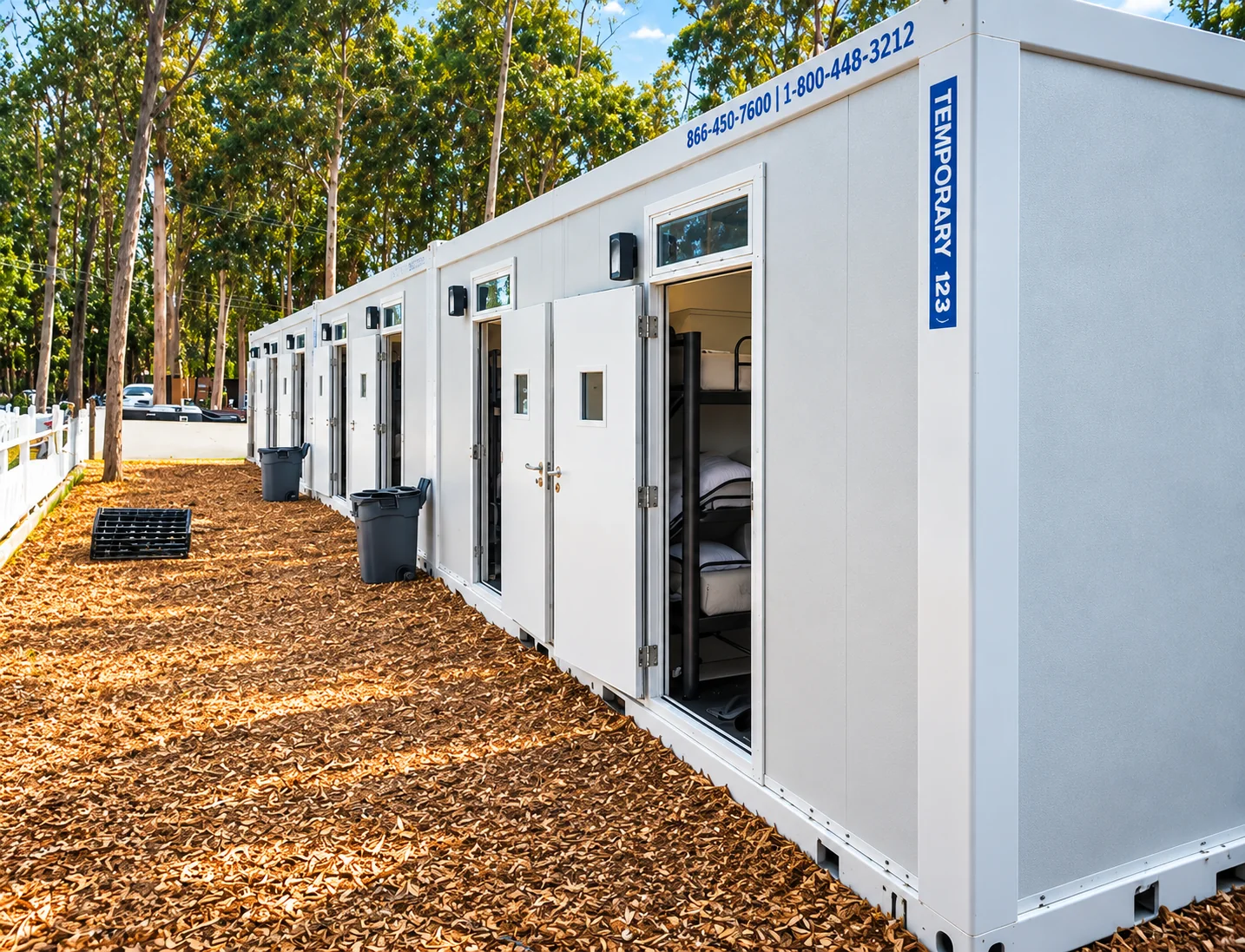
- Sleeper trailer starting price
- Starting at $2,195/month · extended term
- Delivery planning
- Delivery schedule confirmed in your quote
A camp plan for Eagle.
Start with the sleeping layout, then connect the shower, restroom, laundry, and handwashing facilities needed at the site in Ada County.
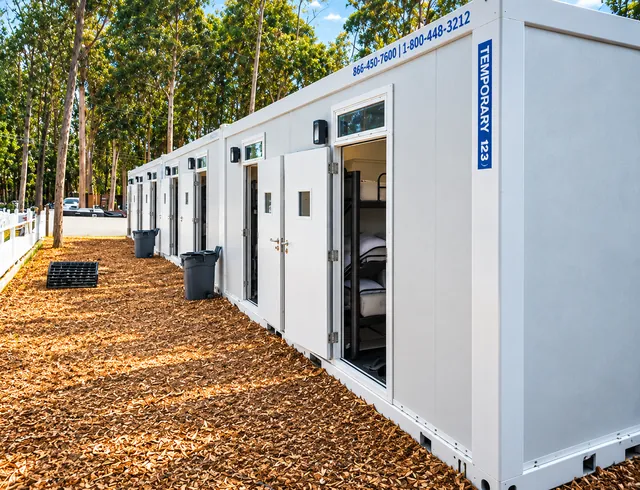
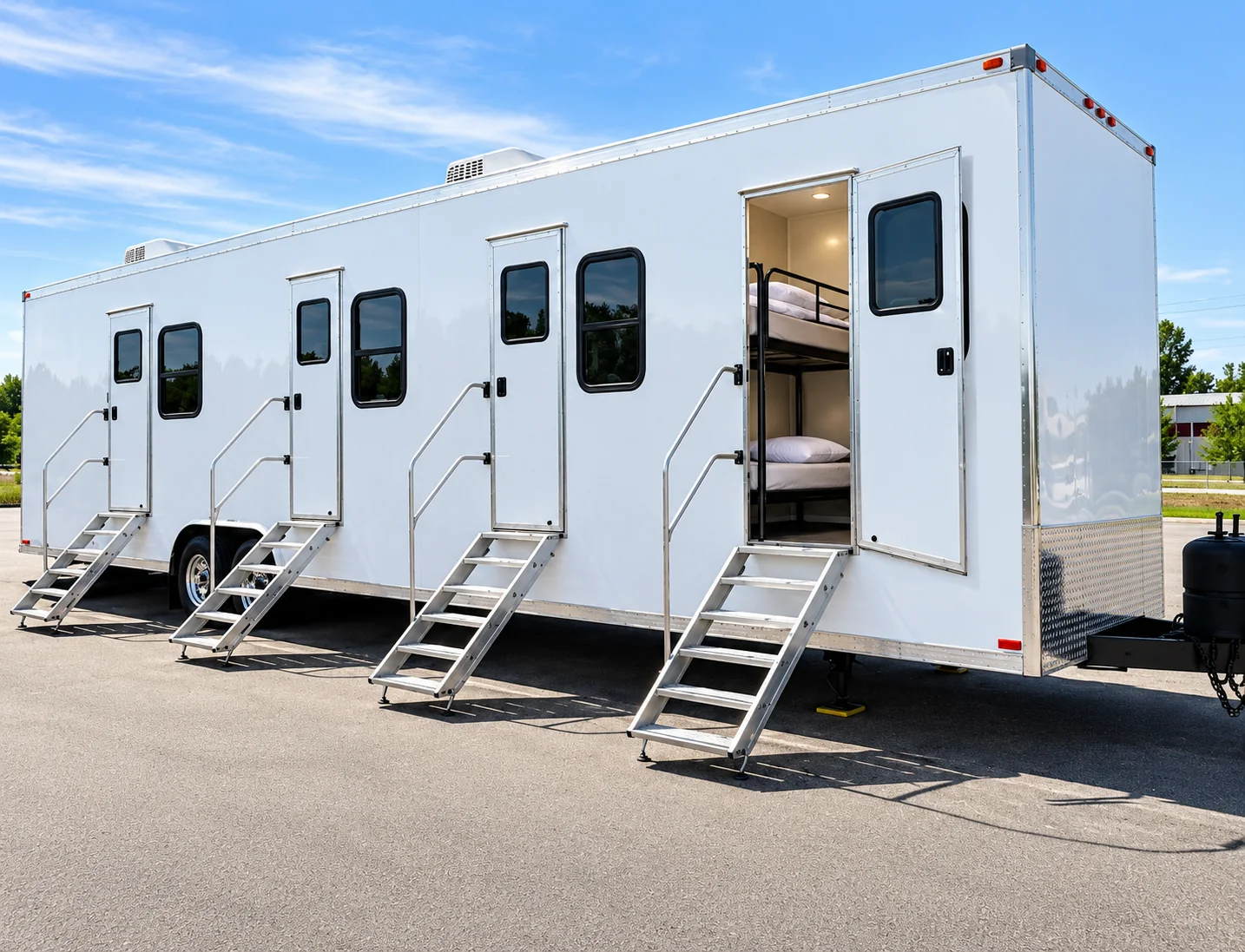
20ft Contractor Accommodation
Bring temporary sleeping accommodation closer to the project. This 20ft contractor option supports crew lodging plans for construction assignments, remote work, and extended field operations.
View model details ↗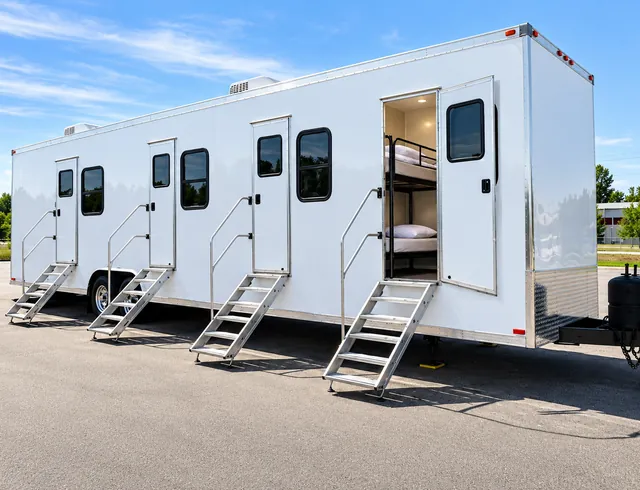
20ft VIP Accommodation
Arrange temporary accommodation for visiting project leads, production personnel, or staff staying at the site. Specify the room arrangement and furnishings that matter for the assignment.
View model details ↗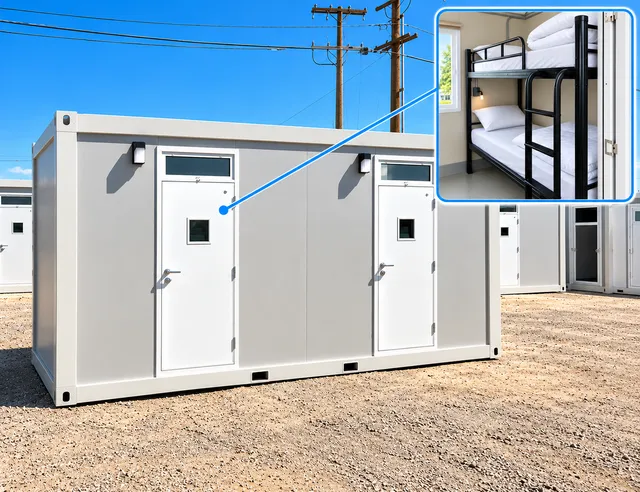
2-Stall Sleeper Trailer
Plan separate sleeping areas for a small crew or assigned staff. The 2-stall sleeper option can form part of a temporary camp without committing to a large shared sleeping hall.
View model details ↗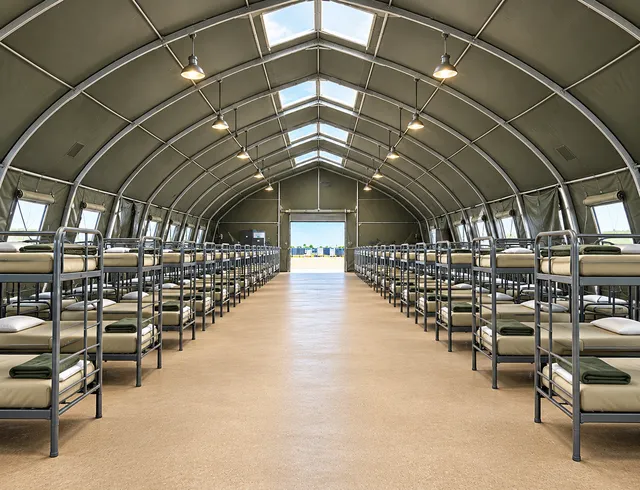
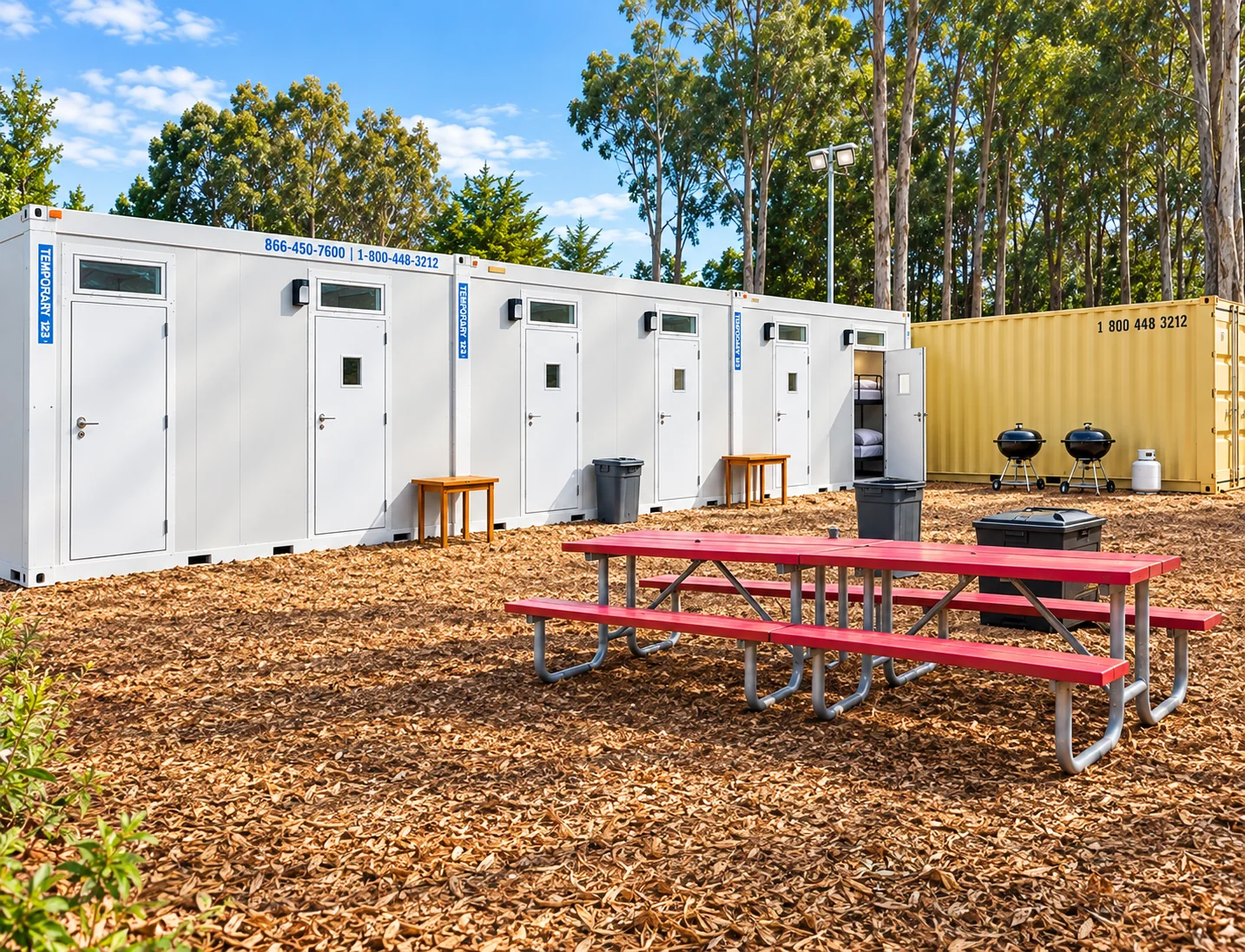
Temporary Sleeping Facilities
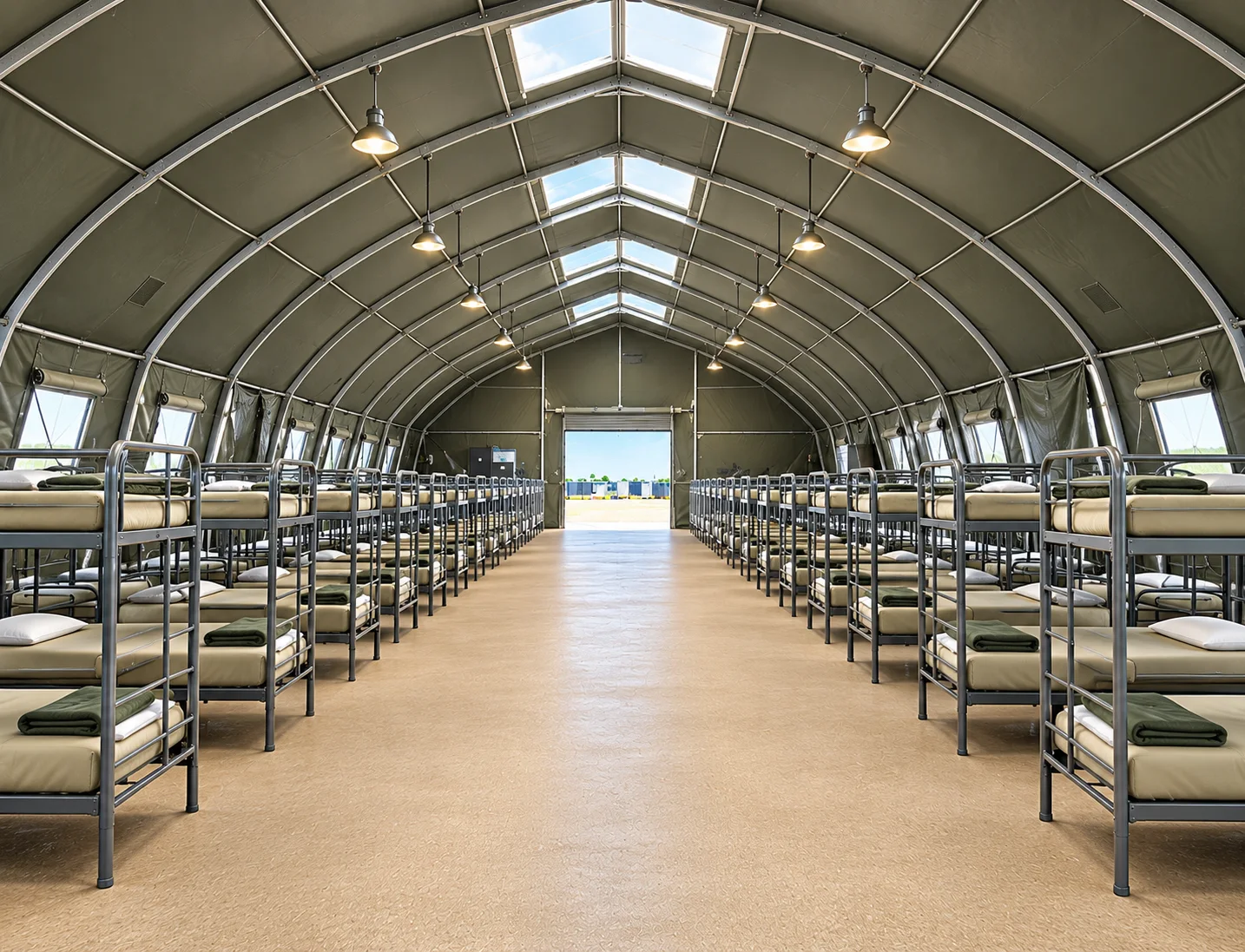
Create a shared sleeping area for a larger temporary workforce. Bunkhouse-style sleeping facilities help organize crew accommodation alongside a separate kitchen, dining area, and hygiene facilities.
View model details ↗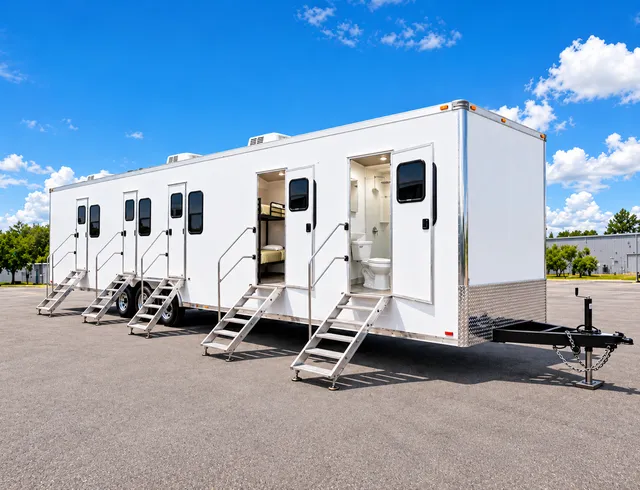
Office, Sleeper, Shower & Restroom Trailer
Bring working, resting, and personal-care functions into one crew-support location. This combination trailer is an option for projects that need more than a stand-alone office or sleeping unit.
View model details ↗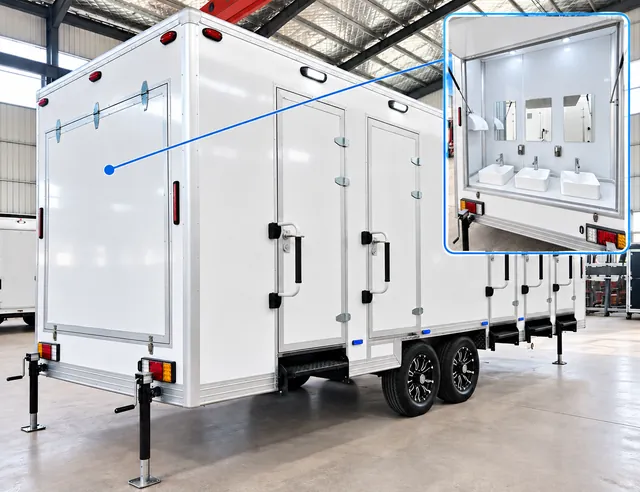
20ft Shower Trailer, 5 Stalls with Handwashing Sink
Add five shower stalls and a handwashing sink in a nominal 20ft shower trailer. Plan temporary bathing facilities for workforce accommodation, building repairs, or extended field operations around shower schedules, water supply, and wastewater service.
View model details ↗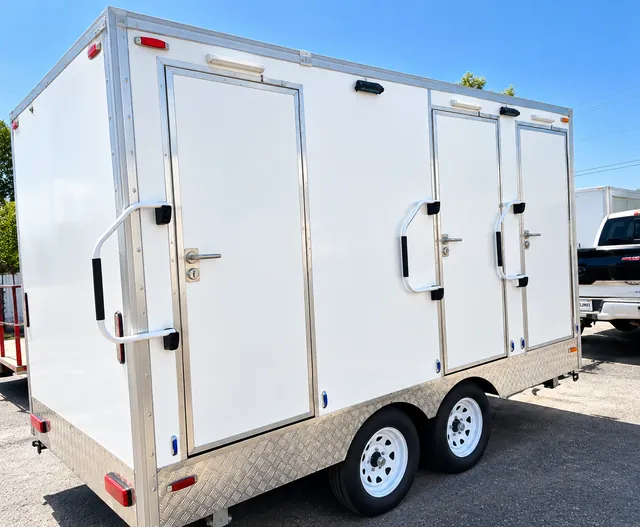
13ft Luxury Shower-Restroom Combination Trailer, 3 Stalls
Provide shower and restroom facilities together in a nominal 13ft trailer with three individual combination stalls. This configuration gives a smaller temporary site one facility to consider for both daily washing and bathroom access.
View model details ↗
Boise County emergency services: site and access planning
Horseshoe Bend's emergency, utility, and continuity settings includes Boise County emergency services. County crews coordinate fire, medical, and river response across a rural area. Response planning separates sleeping areas from command posts, equipment, and public access so the camp does not interfere with the incident. A project team reviewing temporary accommodation would start with the approved site, delivery route, work window, and the number of people who need to stay nearby. That early review keeps the camp plan tied to the work rather than to a generic unit count.
Notus community events: workforce and shift planning
Notus community events is one of the local settings tied to Notus's visitor, event, and hospitality settings. Local gatherings and schools shape the community calendar. Visitors, vendors, and seasonal staff tend to arrive in a short window, which can compress parking, deliveries, and shift changes. A project team reviewing temporary accommodation would start with the approved site, delivery route, work window, and the number of people who need to stay nearby. That early review keeps the camp plan tied to the work rather than to a generic unit count.
City Hall, police, and municipal service continuity
Fruitland City Hall and the Fruitland Police Department provide the civic services that residents rely on every day. Administrative transitions, facility repairs, and public-safety staffing changes can require temporary support from outside the city. Public buildings also host meetings, records, and utility business that must continue during construction or a service interruption. Those services need to remain available even when a building or system is being repaired. That review should include rental dates, peak crew count, utility connections, and the inspections required before occupancy.
Payette Joint School District facilities and summer work
Payette Joint School District operates schools and support facilities serving students across the city. Summer break is often when maintenance, roofing, flooring, and mechanical projects are scheduled, with contractors working around limited access and school events. A project team may need temporary rest space and a secure staging area without using classrooms or student areas. The camp brief should also record the expected occupancy, shift pattern, delivery window, and the site contact who can approve utility connections.
Weiser River Trail seasonal maintenance crews
The Weiser River Trail's length and rural setting mean seasonal maintenance can involve clearing, surface repair, signage, and structure checks across multiple segments. A trail crew may work from a moving base, returning to the same staging area at night. Spring runoff, summer heat, and fall weather can compress the work window and make daily travel from a distant town impractical. Confirm the delivery path and staging area separately from the sleeping layout so large units do not block active operations.
Compare sleeper and man camp configurations.
Start with how many people need to sleep on site, how rooms should be assigned, and whether the assignment needs private or shared accommodation. Then plan showers, restrooms, laundry, dining, power, and water as one camp layout for Eagle.
Scroll across the table to compare configurations.
| Model | Sleeping layout | Typical project role | Planning note | Starting at |
|---|---|---|---|---|
| 20ft Contractor Accommodation | Bunk-room configuration | Crew accommodation on construction, utility, and remote assignments | Separate entry doors; confirm beds and room assignment | $2,195/month on extended terms |
| 20ft VIP Accommodation | Private-room configuration | Project leads, visiting specialists, and supervisory staff | Confirm room privacy, furnishings, and bed arrangement | $2,195/month on extended terms |
| 2-Stall Sleeper Trailer | Two sleeping areas | Smaller crews or assigned staff within a larger camp | Sleeping areas, not necessarily two beds; confirm layout | Configuration quote |
| Temporary Sleeping Facilities | Shared bunkhouse hall | Larger temporary workforce requiring a central sleeping building | Coordinate dining, showers, restrooms, and laundry nearby | Configuration quote |
Sleeping capacity is confirmed per selected unit and room plan; model names do not guarantee a bed count. Temporary sleeping facilities can be paired with a mobile kitchen, shower, restroom, and laundry plan where the camp brief requires them.
Eagle planning review and private development projects
Eagle's Planning and Zoning process reviews residential, commercial, and hillside development proposals through public hearings and staff reports. Approved projects can move into construction at different times, bringing builders, site crews, and specialty trades into the city. Infill sites and sloped parcels may have limited room for staging, parking, and deliveries, which can make temporary worker accommodation a separate planning question from the job site itself. A contractor working through a long build-out may need a base that does not depend on short-term rental availability.
Portable workforce housing could be considered only after the property owner confirms that temporary units are allowed and a suitable placement area exists. The camp should avoid protected slopes, drainage paths, and required parking, with delivery routes reviewed for narrow roads and tight turns. Showers, restrooms, handwashing, and laundry can be sized to the crew, while power and wastewater connections need early review. Local approvals and inspections should be settled before a unit is scheduled.
Local background sources
Eagle Public Library programs and visiting presenters
The Eagle Public Library offers classes, author talks, children's programs, and community gatherings that can bring presenters and support staff into the city. Most visits are short, but a multi-day workshop, traveling exhibit, or facility project can create a small accommodation need. When the library is also hosting public programming, any temporary units or deliveries must stay clear of entrances, parking, and quiet study areas. The library's event calendar is the best starting point for confirming dates and space use.
A mancamp trailer could be reviewed for an approved staff or presenter assignment if the city identifies a suitable site and confirms that overnight accommodation is allowed. The plan should address restroom and handwashing access, power, delivery timing, and noise near the library. Laundry may be useful for a longer program, while a small dining or common area can reduce trips away from the venue. Library staff should approve the layout and operating hours before arrival.
Local background sources
Compare sleeper and camp facilities.
Starting monthly rates for sleeper trailers and supporting facilities in Eagle. Review the equipment details and camp requirements with our team.
| Configuration | Starting monthly rate | Model |
|---|---|---|
| 20ft Contractor Accommodation | Starting at $2,195 / month on extended terms | Review model details ↗ |
| 20ft VIP Accommodation | Starting at $2,195 / month on extended terms | Review model details ↗ |
| 2-Stall Sleeper Trailer | Configuration quote | Review model details ↗ |
| Temporary Sleeping Facilities | Configuration quote | Review model details ↗ |
| Office, Sleeper, Shower & Restroom Trailer | Configuration quote | Review model details ↗ |
Supporting facility starting prices
| Facility | Configuration | Starting monthly rate |
|---|---|---|
| 20ft Shower Trailer, 5 Stalls with Handwashing Sink | Shower Trailers | Starting at $3,995 / month |
| 13ft Luxury Shower-Restroom Combination Trailer, 3 Stalls | Shower & Restroom Combinations | Starting at $2,495 / month |
| 22ft Luxury Shower-Restroom Combination Trailer, 6 Stalls | Shower & Restroom Combinations | Starting at $4,995 / month |
| Handwashing Sink Trailer | Handwashing Facilities | Starting at $2,995 / month |
Starting prices reflect the lowest published rate for the selected configuration, typically on extended terms. Short-term rates, delivery, setup, site work, taxes, minimum duration, and current availability are confirmed in the project quote.
Need help now? Call 888 385-5513 for 24/7 support and current availability.
Agriculture and food processing: workforce and shift planning
Agriculture and food processing shows how Greenleaf's construction, energy, and industrial settings can concentrate demand. Farms and processors support a seasonal and shift workforce. Contractor schedules can move with weather, materials, and plant windows, so accommodation has to follow the actual work plan. A project team reviewing temporary accommodation would start with the approved site, delivery route, work window, and the number of people who need to stay nearby. That early review keeps the camp plan tied to the work rather than to a generic unit count.
Canyon County emergency services: workforce and shift planning
Work tied to Canyon County emergency services falls within Melba's emergency, utility, and continuity settings. County crews coordinate fire, medical, and winter response. Response planning separates sleeping areas from command posts, equipment, and public access so the camp does not interfere with the incident. A project team reviewing temporary accommodation would start with the approved site, delivery route, work window, and the number of people who need to stay nearby. That early review keeps the camp plan tied to the work rather than to a generic unit count.
Grand View agriculture and dairy work: site and access planning
A crew looking at Grand View agriculture and dairy work would be working within Grand View's construction, energy, and industrial settings. That work follows harvest, weather, and project schedules rather than a fixed office calendar. Contractor schedules can move with weather, materials, and plant windows, so accommodation has to follow the actual work plan. A project team reviewing temporary accommodation would start with the approved site, delivery route, work window, and the number of people who need to stay nearby. That early review keeps the camp plan tied to the work rather than to a generic unit count.
Idaho Power restoration crews and high-desert outages
Idaho Power operates the transmission and distribution system serving Mountain Home and the surrounding region, including hydroelectric resources on the Snake River system. High winds, winter storms, and equipment failures can require line crews and support personnel to work extended shifts across a wide service area. A temporary sleeper trailer could give an approved crew a place to rest closer to the work instead of commuting long distances. Confirm the delivery path and staging area separately from the sleeping layout so large units do not block active operations.
Midvale agriculture and ranch work: site and access planning
A crew looking at Midvale agriculture and ranch work would be working within Midvale's construction, energy, and industrial settings. That work follows harvest, weather, and project schedules rather than a fixed office calendar. Contractor schedules can move with weather, materials, and plant windows, so accommodation has to follow the actual work plan. A project team reviewing temporary accommodation would start with the approved site, delivery route, work window, and the number of people who need to stay nearby. That early review keeps the camp plan tied to the work rather than to a generic unit count.
Idaho Power storm restoration and line crews
Idaho Power maintains the distribution and transmission system serving Eagle and the wider Treasure Valley. Winter storms, high winds, and equipment failures can bring line crews, vegetation teams, and support staff into the area for extended restoration work. Because the work moves along circuits and neighborhoods, a fixed hotel base can add unnecessary travel at the start and end of each shift. A temporary camp can keep a defined crew closer to the affected area while the restoration plan changes.
A remote basecamp could be reviewed for an approved utility assignment when the property owner and utility identify a staging yard. The plan should confirm parking for bucket trucks and personal vehicles, fueling, power, water, wastewater, and a safe walking route to the sleeping units. Showers, restrooms, and laundry are practical for crews working wet, cold shifts, and handwashing should be available before meals. A short-notice restoration can also be reviewed as an emergency remote mancamp, subject to availability and site readiness.
Local background sources
Eagle City Hall programs and holiday event weekends
Eagle City Hall and nearby public spaces host holiday programs, community meetings, and city-supported celebrations listed on the municipal calendar. These events can require traffic control, temporary lighting, vendor coordination, and staff working before and after public hours. A small production or support team may need to stay in Eagle for several days when the program overlaps with a busy Treasure Valley hotel calendar. The city's event listings are the starting point for confirming which facilities and streets are involved.
A temporary sleeper trailer could support an approved event crew when the city or property owner identifies a suitable staging area. Confirm power, water, restroom access, and a route that does not conflict with parade or pedestrian traffic. Laundry and handwashing are useful for staff working multiple event days, and quiet hours should be written into the site plan. The camp should be reviewed as event support, not as public accommodation. A remote lodging trailer can be considered when the assignment is short and the site can support a camp layout.
Local background sources
Chinden Boulevard craft-beverage and small-business corridor
Chinden Boulevard runs through Garden City as a commercial corridor with taprooms, restaurants, shops, and small production businesses. Weekend promotions and seasonal events can stretch staffing across late closes and early deliveries. Employees may live across the Treasure Valley, and the trip between a late shift and the next opening can be impractical during a busy weekend. That review should include rental dates, peak crew count, utility connections, and the inspections required before occupancy.
Warehouse, logistics and shift-work housing
Meridian’s position along I-84 supports warehouses, distribution centers, and logistics operations that depend on early, late, and overnight shifts. A temporary labor surge, peak shipping season, or facility start-up can bring workers into the area faster than local housing can absorb. Sleeper trailers could provide an approved temporary accommodation option close to the employment site.
Idaho Power crews and outage response near Star
Idaho Power crews maintain and restore electric service across the Treasure Valley, including Star and nearby communities. Storm response and planned utility work can require crews to stage equipment, coordinate switching, and remain available for long shifts. Access and parking are often the first constraints at a suburban site. Planned maintenance can be as demanding as storm restoration, and both can require crews to stay in the area for several days.
Harvest and commuter crews: workforce and shift planning
Any review of Harvest and commuter crews touches Marsing's seasonal, remote, and shift workforce patterns. Harvest and Treasure Valley commuting shape housing demand. Workers often arrive for a defined harvest, recreation season, or construction window when local lodging is limited. A project team reviewing temporary accommodation would start with the approved site, delivery route, work window, and the number of people who need to stay nearby. That early review keeps the camp plan tied to the work rather than to a generic unit count.
Placerville recreation and construction: workforce and shift planning
Placerville recreation and construction shows how Placerville's construction, energy, and industrial settings can concentrate demand. That work follows harvest, weather, and project schedules rather than a fixed office calendar. Contractor schedules can move with weather, materials, and plant windows, so accommodation has to follow the actual work plan. A project team reviewing temporary accommodation would start with the approved site, delivery route, work window, and the number of people who need to stay nearby. That early review keeps the camp plan tied to the work rather than to a generic unit count.
Boise County emergency services: workforce and shift planning
Work tied to Boise County emergency services falls within Idaho City's emergency, utility, and continuity settings. Response teams may need to stay close when roads close or an incident runs overnight. Response planning separates sleeping areas from command posts, equipment, and public access so the camp does not interfere with the incident. A project team reviewing temporary accommodation would start with the approved site, delivery route, work window, and the number of people who need to stay nearby. That early review keeps the camp plan tied to the work rather than to a generic unit count.
St. Luke's regional clinical and support workforce
St. Luke's Health System provides care across the Treasure Valley, and its regional facilities draw clinicians, technicians, and support staff from a wide area. Renovation, equipment installation, or a temporary staffing surge can bring visiting teams to Eagle and nearby communities for multi-week assignments. Shift schedules can make a long commute impractical, especially when staff need to rest between clinical rotations. A defined accommodation plan can help the campus and its contractors manage that pressure.
A temporary sleeper trailer could support an approved staffing or construction assignment when the health system and property owner approve the placement. The plan should protect patient privacy, emergency access, and staff parking, and it should confirm power, water, wastewater, restrooms, and showers. Laundry for scrubs or workwear and a separate handwashing point are practical additions for contract teams. A remote lodging trailer can be considered when the assignment is temporary and the site can support a camp layout.
Local background sources
Eagle leaf recycling and seasonal public-works crews
Eagle's fall leaf-recycling operations are a seasonal public-works task that can involve collection crews, equipment operators, and temporary staff working across neighborhoods. The city publishes program details and pickup guidance for residents, and the work window can shift with weather and leaf volume. A short, intense season can make it difficult to staff from outside the immediate area without a place to stay. Crews may start early and work through wet, cold conditions to keep routes on schedule.
A temporary sleeper trailer could support an approved seasonal crew when the city identifies a suitable staging location. The site should be reviewed for truck access, turning space, power, water, restrooms, and handwashing, with sleeping units kept away from active loading areas. Showers and laundry help workers manage cold-weather gear across consecutive shifts. A remote bunkhouse or smaller sleeper layout can be matched to the actual crew count rather than the full seasonal roster.
Local background sources
Ada County wildfire response & recovery staging
Ada County Emergency Management coordinates preparedness, response, and recovery across Boise and the surrounding county, including wildfire and severe-weather hazards. A prolonged incident can bring mutual-aid crews, utility line teams, and recovery contractors into the area after local lodging is committed. Incident managers may need a controlled staging location where those crews can rest between operational periods.
Kuna City Hall and municipal service teams
Kuna City Hall houses administration, planning, public works, and other municipal functions that keep the city running. Seasonal projects, special events, and infrastructure maintenance can add temporary staff or contractor support to the city's regular workforce. Those teams need parking, access, and a clear reporting location, especially when work spans early mornings or weekends. The city's departments are the starting point for confirming which services and sites are involved. That review should include rental dates, peak crew count, utility connections, and the inspections required before occupancy.
Saint Alphonsus Nampa hospital expansion
Saint Alphonsus has announced a Nampa expansion of approximately 254,000 square feet, including a seven-story tower, a vertical expansion, and 64 additional medical, surgical, and intensive-care beds. The announcement scheduled a June 2026 groundbreaking and a fall 2028 completion, with utility relocation work beginning earlier. A project of that length can bring general contractors, specialty trades, and commissioning teams into the area.
Wilder School District: workforce and shift planning
Local work around Wilder School District connects to Wilder's healthcare, education, and public institutions. The district anchors family and staff routines in town. Staff, contractors, and visiting teams may need short-term accommodation during projects, peak periods, or facility work. A project team reviewing temporary accommodation would start with the approved site, delivery route, work window, and the number of people who need to stay nearby. That early review keeps the camp plan tied to the work rather than to a generic unit count.
Owyhee County Fair and the Homedale show grounds
The Owyhee County Fair in Homedale brings livestock exhibitors, rodeo fans, vendors, and support crews together for a concentrated run of events. Barns, show rings, and parking areas operate on a schedule that can start before sunrise and end after dark. Traveling exhibitors and contract staff may need accommodation close to the fairgrounds when local rooms are full. That review should include rental dates, peak crew count, utility connections, and the inspections required before occupancy.
New Plymouth community events: workforce and shift planning
New Plymouth community events is one of the local settings tied to New Plymouth's visitor, event, and hospitality settings. Local gatherings and schools shape the community calendar. Visitors, vendors, and seasonal staff tend to arrive in a short window, which can compress parking, deliveries, and shift changes. A project team reviewing temporary accommodation would start with the approved site, delivery route, work window, and the number of people who need to stay nearby. That early review keeps the camp plan tied to the work rather than to a generic unit count.
Plan around the Eagle address.
A project in Eagle starts with the same practical questions: how many people need to sleep on site, how the units can reach their approved placement, and how power, water, and wastewater will connect.
- Scope the crew and schedule
Confirm how many people need accommodation, the shift pattern, and how long the camp must operate.
- Review the sleeping and support layout
Match private, shared, or bunkhouse sleeping units to the occupancy, then plan showers, restrooms, laundry, and handwashing.
- Review the site
Confirm access, approved placement, power, potable water, wastewater, and any local approvals before delivery.
- Coordinate deployment
Schedule delivery, setup, and handover around mobilization dates and site readiness.
- Plan the transition
Adjust unit counts or demobilize as the project phases change, with the rental team informed in advance.
Eagle community celebrations and Veterans Breakfast
The City of Eagle publishes a community events calendar that includes seasonal celebrations, classes, and an annual Veterans Breakfast at the Eagle Senior Center. These gatherings bring vendors, performers, volunteers, and city staff together for a defined window. When a multi-day program draws production or support crews from outside Ada County, organizers may need accommodation close to the venue rather than scattered hotel rooms. A temporary camp can also give the event team a single place to stage equipment and reset between sessions.
A remote mancamp facility could be reviewed for an approved event assignment on private or city-approved land, with parking, quiet hours, and delivery access confirmed first. Showers, restrooms, laundry, and handwashing should be sized to the same crew, and the site should stay clear of public programming and emergency access. The organizer should also confirm insurance, site control, and any park or street-use conditions before positioning units. A compact layout can be planned around the event schedule rather than added after load-in begins.
Local background sources
Eagle High School and West Ada facility work
Eagle High School is part of the West Ada School District, which operates a large network of schools across the Treasure Valley. Campus maintenance, modernization, and event support can bring contractors onto school property during breaks or after hours. Athletic events and community programs also create short staffing peaks. Work around a school has to protect student circulation, bus routes, and secure areas even when classes are not in session. The district's facilities and security teams set the rules for site access and delivery windows.
Remote crew accommodation could be reviewed for a defined district project when the school approves a placement away from play areas and public entrances. Background-check requirements, delivery hours, and separation from bus loops should be confirmed first. Sleeping units may be paired with restrooms, handwashing, showers, and laundry for a multi-week crew. A remote bunkhouse can give the project a defined capacity, but the district remains the authority on what is permitted on campus.
Local background sources
Middleton community events and city park programming
The City of Middleton publishes community events and park information for residents, and those gatherings can bring vendors, performers, volunteers, and public-works staff together for a defined window. A multi-day festival or civic program may draw a production crew from outside Canyon County, while local hotels are limited. Organizers should confirm which parks, streets, and city facilities are involved before assuming that overnight staff can be accommodated nearby. The city calendar is the starting point for that review.
City Park programs and seasonal leaf collection
Emmett City Park and other public spaces host recreation programs, community events, and seasonal maintenance work. Fall leaf collection and park cleanup add temporary labor to the public-works schedule, while summer programs can bring instructors, volunteers, and event staff into the city. These roles are often short-term and may attract workers from outside the immediate area. A small, flexible accommodation plan can help a department cover the peak without committing to permanent housing.
Sunnyslope Wine Trail harvest and regional agritourism
The Sunnyslope Wine Trail's September Wine Month program lists harvest-related winery events, vineyard activities, food, and live music. The trail is a regional destination, and participating wineries may sit outside Caldwell city limits, so each site's jurisdiction and access should be checked before planning accommodation. Vineyard and hospitality teams working a compressed harvest or event calendar might review temporary sleeper trailers when an employer identifies a specific housing gap.
Idaho-Oregon border travel and Parma hospitality
Parma's location on the Idaho-Oregon line puts it on a practical route for farm suppliers, commuters, and travelers moving between the Treasure Valley and eastern Oregon. Local businesses may see short peaks when harvest crews, utility teams, or regional events pass through. Those peaks can leave limited lodging for a crew that needs to stay several nights. A short-term camp plan can be sized to the number of rooms the crew actually needs.
Crouch community events and Payette River recreation: site and access planning
Planning around Crouch community events and Payette River recreation reflects Crouch's visitor, event, and hospitality settings. Local organizers, vendors, and out-of-town crews often overlap during the same short season. Visitors, vendors, and seasonal staff tend to arrive in a short window, which can compress parking, deliveries, and shift changes. A project team reviewing temporary accommodation would start with the approved site, delivery route, work window, and the number of people who need to stay nearby. That early review keeps the camp plan tied to the work rather than to a generic unit count.
Eagle Fire Protection District response coverage
The Eagle Fire Protection District provides fire and emergency response across the city and surrounding areas, with mutual-aid relationships that can bring additional crews during a major incident. Wildland-urban interface conditions, winter weather, and structure fires can require extended operational periods. When responders or repair contractors must remain in the area, incident managers may need a controlled place for them to rest between shifts. The district's coverage area includes residential neighborhoods, foothills access, and the SH-16 corridor.
An emergency portable sleeper trailer could support a defined response assignment when the fire district or incident command approves the location. The camp should be separate from apparatus movement, smoke, and active operations, with generator power, potable water, wastewater, restrooms, and showers confirmed. Sleeping areas need quiet and reliable heat or cooling, while handwashing and laundry help crews rotate cleanly between operational periods. The site plan should be coordinated with the district before anything is delivered.
Local background sources
SH-16 corridor construction from 2025 to 2027
The Idaho Transportation Department lists SH-16 construction with a corridor timeline extending from 2025 to 2027. The project is a dated planning reference, not a statement that work is active on any particular day. Highway construction can bring grading, paving, bridge, and traffic-control crews into the Eagle area for months at a time. When shifts start before dawn or run through the night, nearby temporary accommodation can reduce travel and keep the workforce close to changing work zones.
A remote bunkbed trailer can support a compact trade crew that does not need a full sleeping hall, while larger units may fit a bigger contractor group. The camp plan should be separate from the work zone and confirm approved placement, delivery access, power, water, wastewater, showers, restrooms, and laundry. Traffic control and haul routes need review so camp vehicles do not conflict with construction movements. Current schedules and closures should always be confirmed with ITD before mobilization.
Local background sources
Eagle workforce housing rental FAQs.
How much does temporary workforce housing cost in Eagle?
Sleeper trailer accommodation starts at $2,195 per month on extended terms. Short-term rates, delivery, setup, site work, taxes, minimum duration, and the complete camp scope are confirmed in the final quote.
Can sleeper trailers be delivered to a Eagle site?
Share the Eagle address, desired start date, crew count, placement area, and access conditions. The team confirms availability and a workable delivery schedule in the quote; this page does not publish a fixed arrival time.
What supporting facilities should be planned?
Showers, restrooms, laundry, handwashing, and dining facilities can be reviewed with the sleeping layout. The right mix depends on occupancy, shift patterns, and how long the crew will be on site.
Are man camps available for remote Idaho projects?
Remote workforce housing can combine sleeping units with showers, restrooms, laundry, and handwashing facilities. Share the site location, expected occupancy, utility plan, and duration so the camp components and delivery path can be reviewed together.
What should I prepare for a Ada County site?
Bring the address, approved placement area, delivery access, electrical supply, potable water and wastewater arrangements, crew count, shift schedule, dates, and site contact. Confirm any applicable permit and inspection requirements before dispatch.
House the Eagle crew.
Share the site, dates, crew count, and camp needs. We’ll review the sleeper trailer and supporting facility plan for your Idaho project.