Man camp and sleeper trailer rentals for Lewiston project crews.
East Idaho Equipment Rental coordinates temporary workforce housing in Lewiston for port, paper, transportation, construction, healthcare, and emergency-response operations. Sleeper trailers and basecamp units can support crews working through a shutdown, a seasonal peak, or a multi-week project. Call 888 385-5513 for 24/7 support and emergency deployment coordination. Showers, restrooms, laundry, and handwashing stations can be planned as one site layout.
Explore Lewiston workforce projects ↓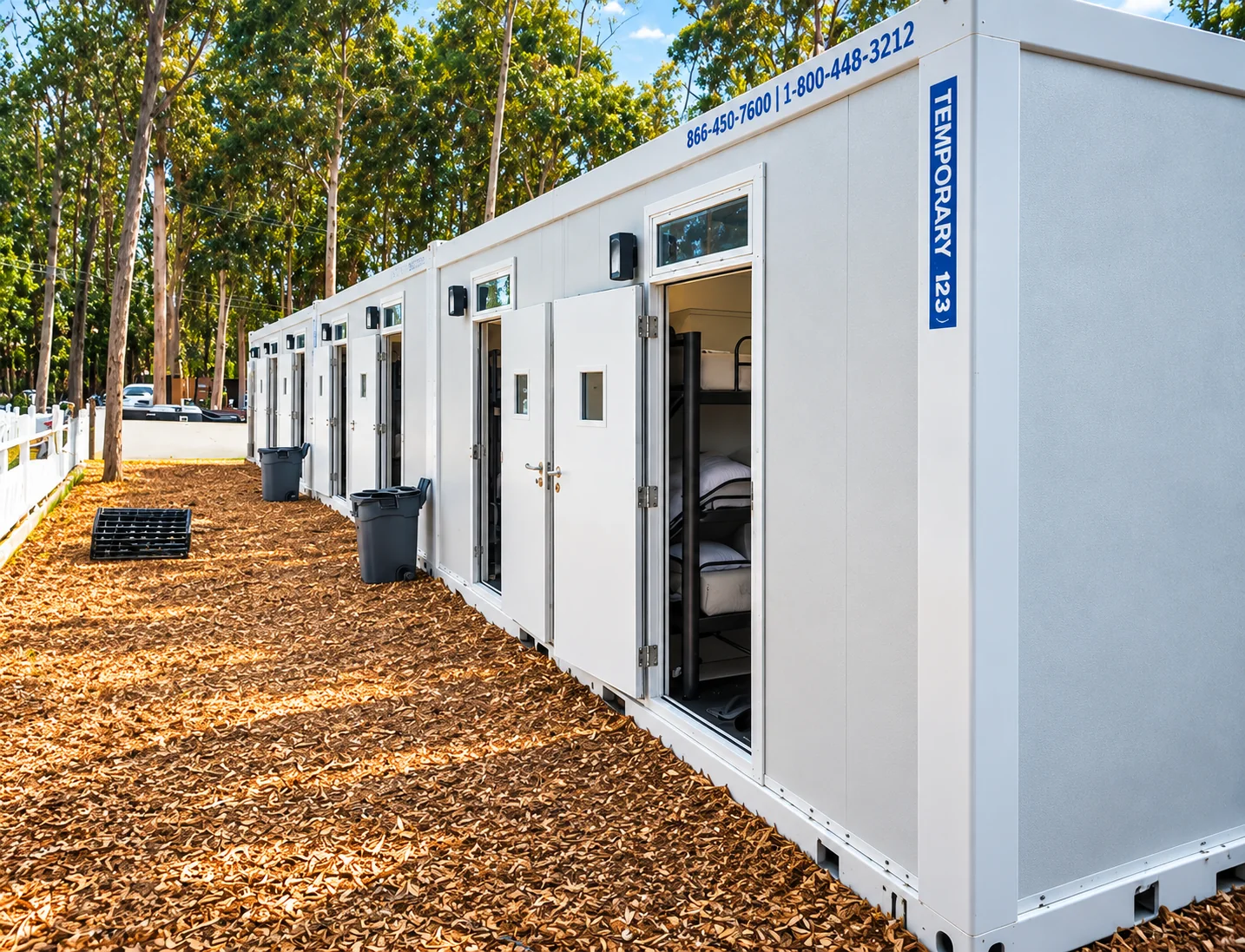
- Sleeper trailer starting price
- Starting at $2,195/month · extended term
- Delivery planning
- Delivery schedule confirmed in your quote
A camp plan for Lewiston.
Start with the sleeping layout, then connect the shower, restroom, laundry, and handwashing facilities needed at the site in Nez Perce County.
20ft Contractor Accommodation
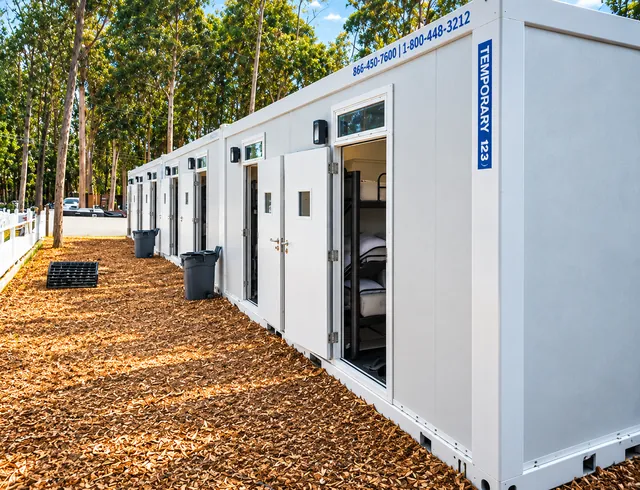
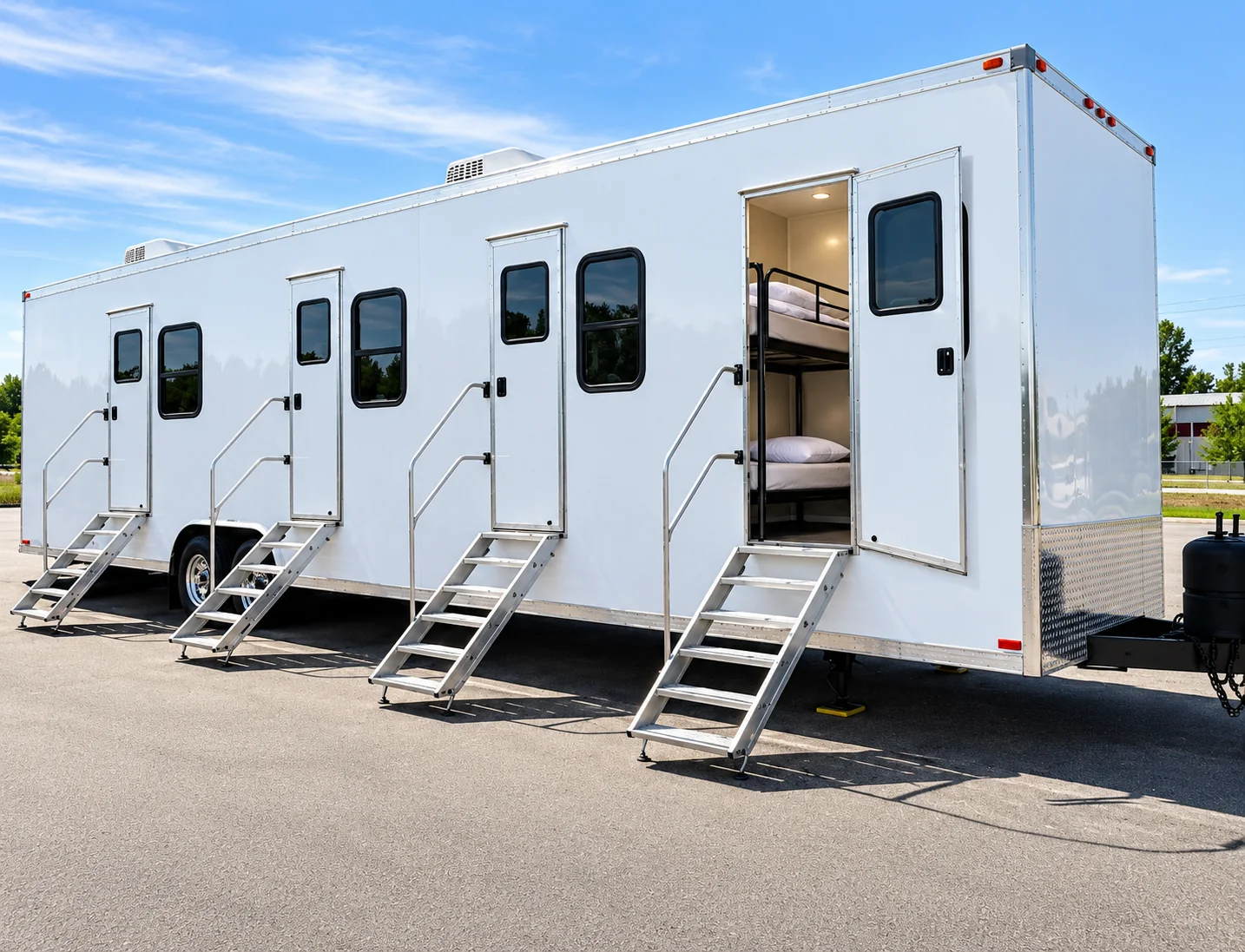
Bring temporary sleeping accommodation closer to the project. This 20ft contractor option supports crew lodging plans for construction assignments, remote work, and extended field operations.
View model details ↗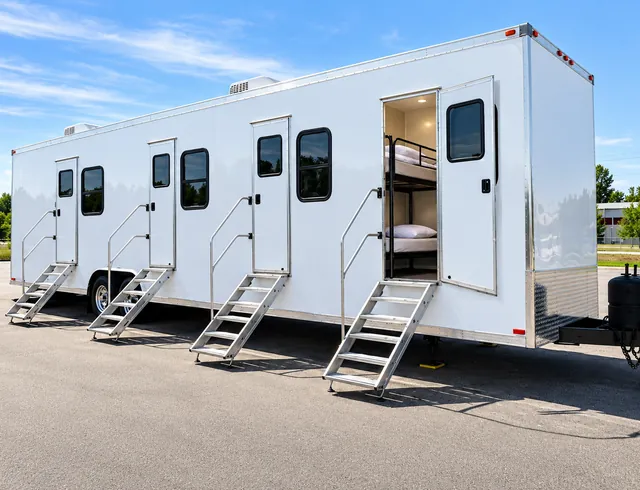
20ft VIP Accommodation
Arrange temporary accommodation for visiting project leads, production personnel, or staff staying at the site. Specify the room arrangement and furnishings that matter for the assignment.
View model details ↗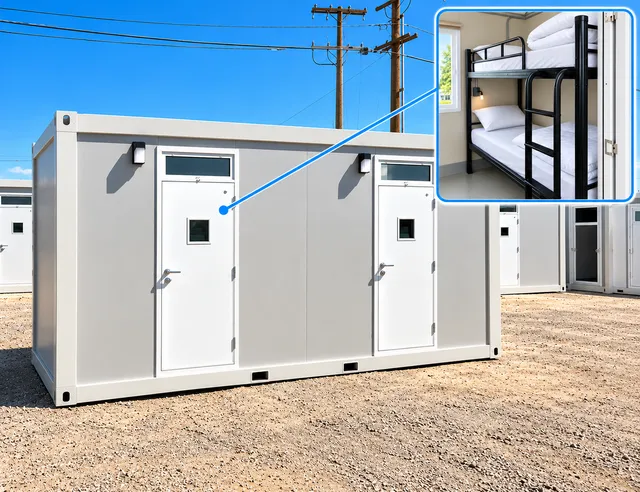
2-Stall Sleeper Trailer
Plan separate sleeping areas for a small crew or assigned staff. The 2-stall sleeper option can form part of a temporary camp without committing to a large shared sleeping hall.
View model details ↗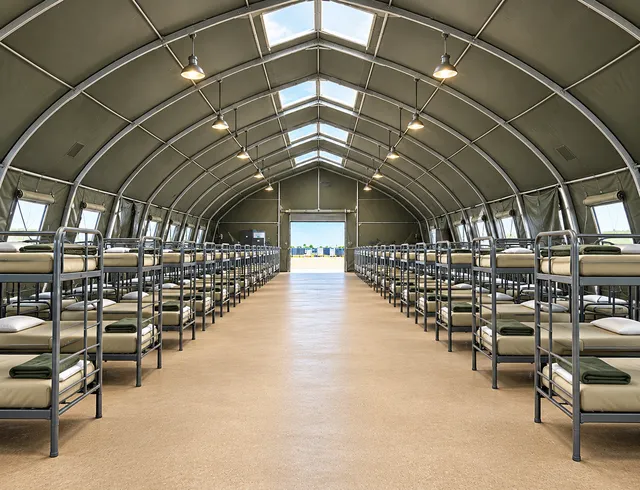
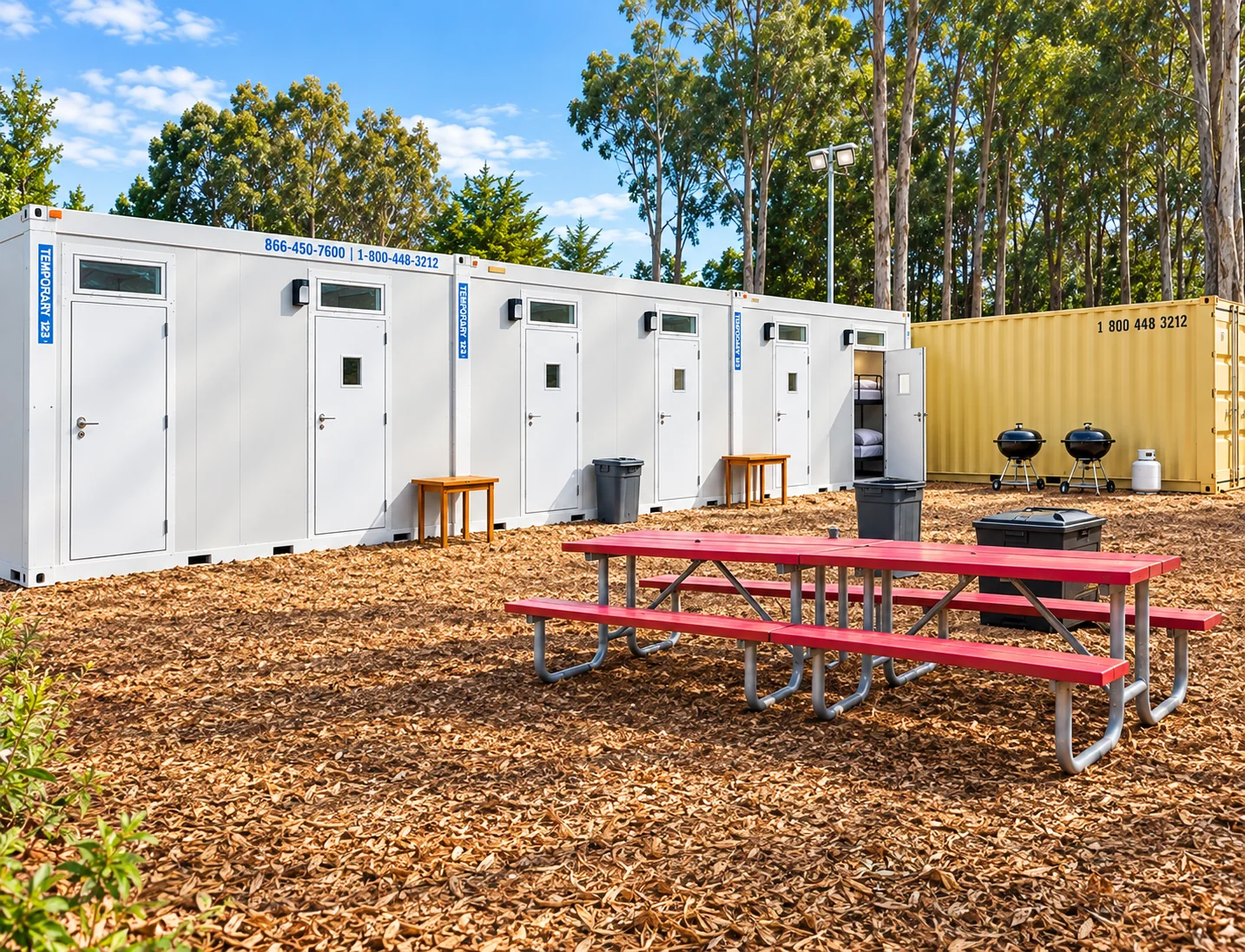
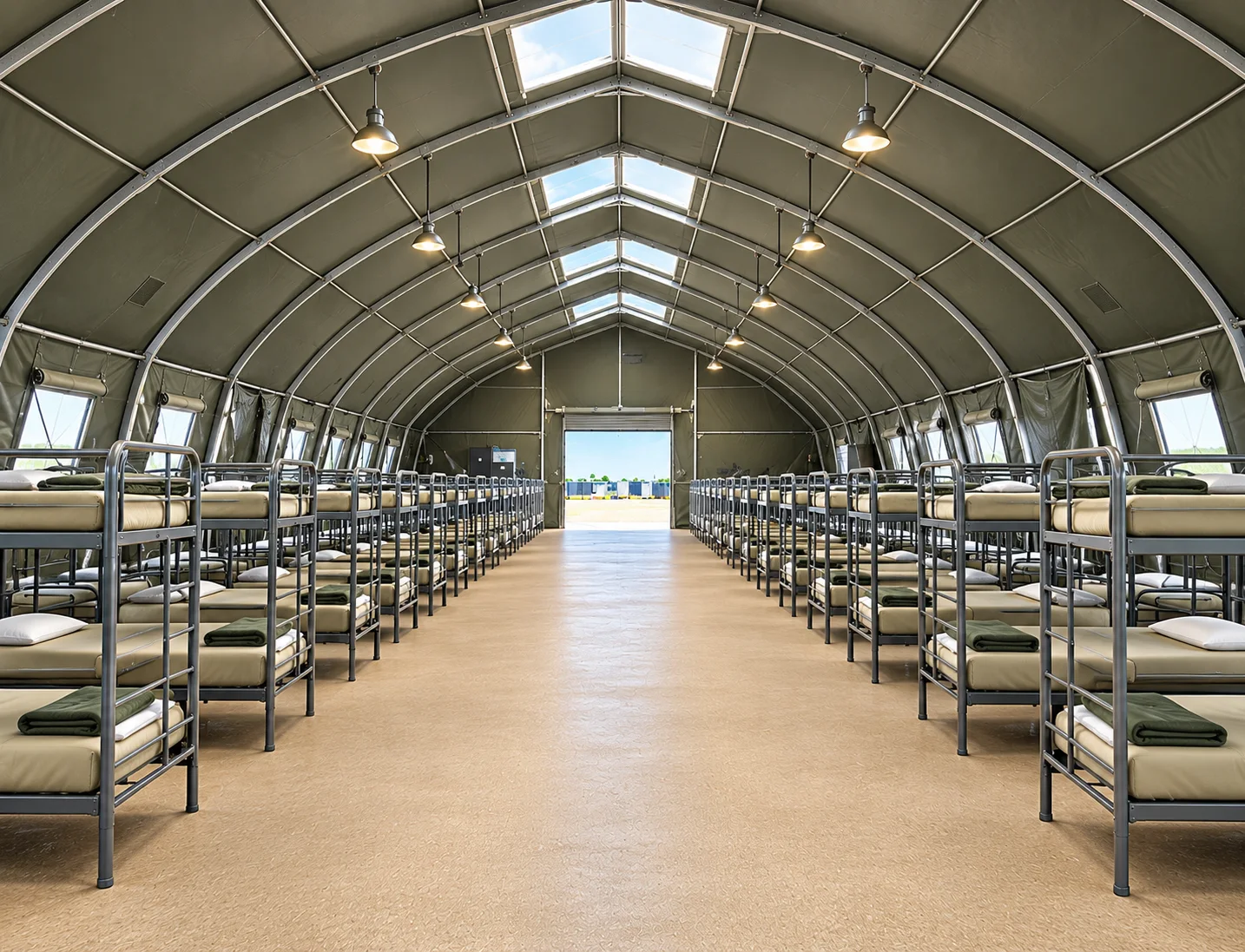
Temporary Sleeping Facilities
Create a shared sleeping area for a larger temporary workforce. Bunkhouse-style sleeping facilities help organize crew accommodation alongside a separate kitchen, dining area, and hygiene facilities.
View model details ↗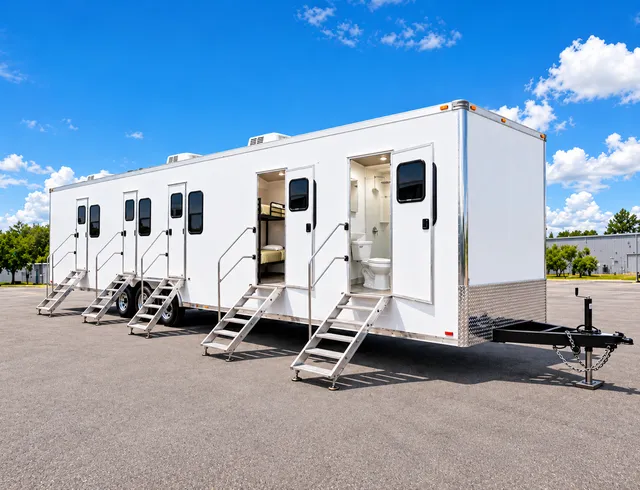
Office, Sleeper, Shower & Restroom Trailer
Bring working, resting, and personal-care functions into one crew-support location. This combination trailer is an option for projects that need more than a stand-alone office or sleeping unit.
View model details ↗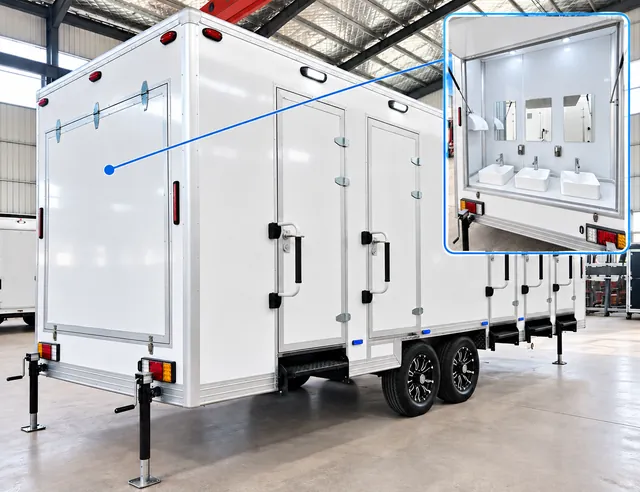
20ft Shower Trailer, 5 Stalls with Handwashing Sink
Add five shower stalls and a handwashing sink in a nominal 20ft shower trailer. Plan temporary bathing facilities for workforce accommodation, building repairs, or extended field operations around shower schedules, water supply, and wastewater service.
View model details ↗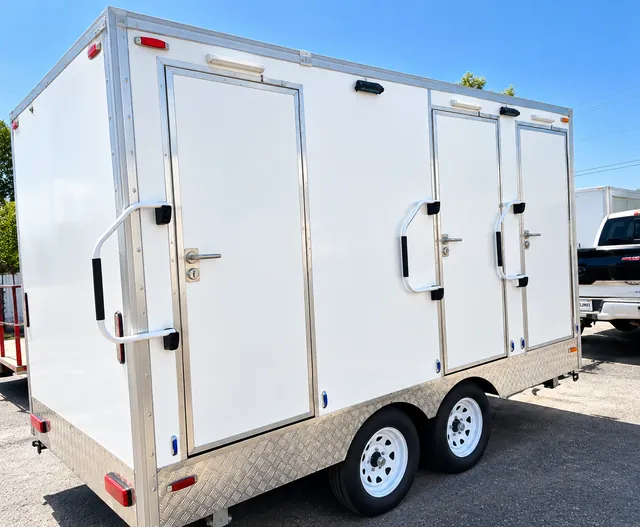
13ft Luxury Shower-Restroom Combination Trailer, 3 Stalls
Provide shower and restroom facilities together in a nominal 13ft trailer with three individual combination stalls. This configuration gives a smaller temporary site one facility to consider for both daily washing and bathroom access.
View model details ↗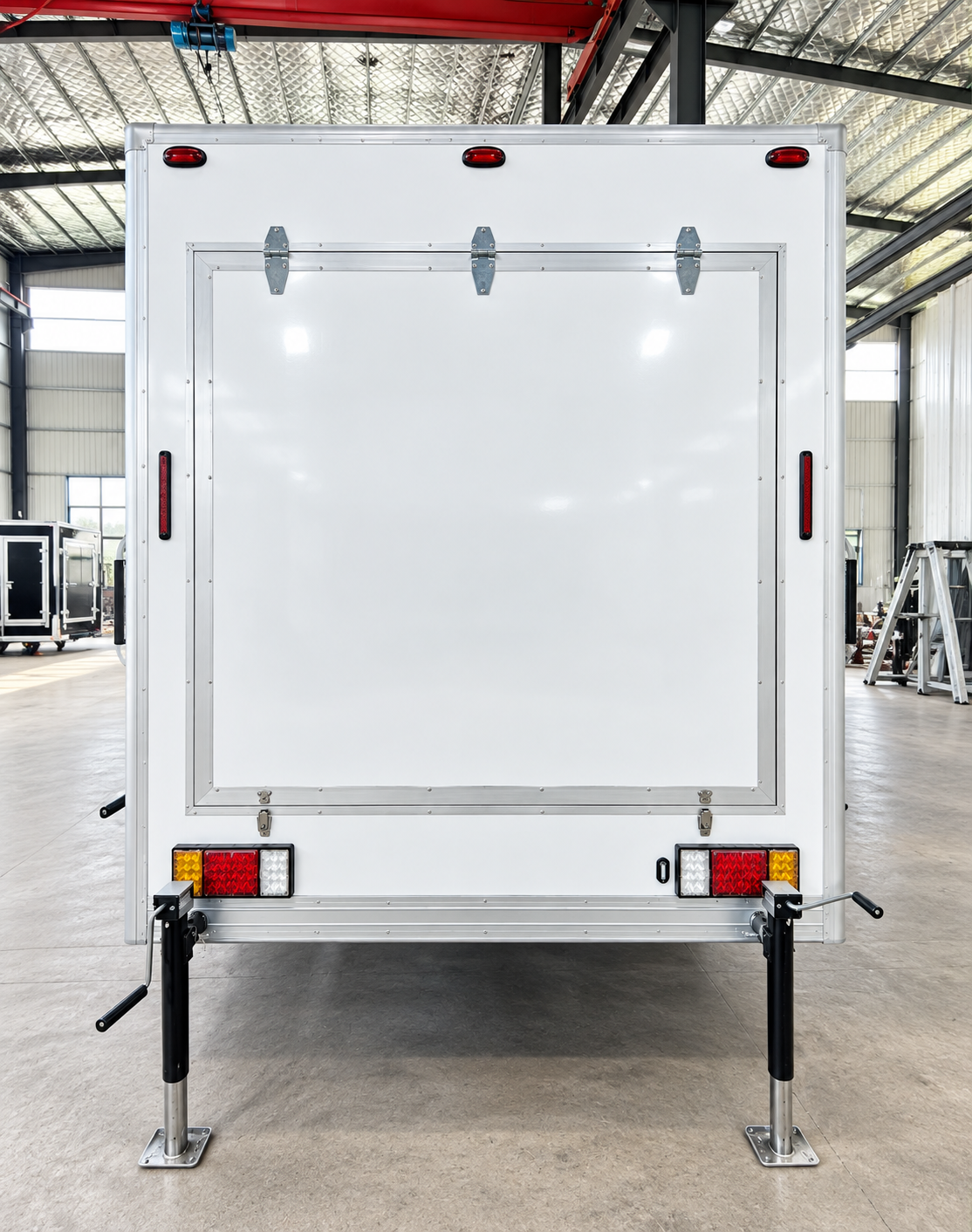
Lapwai School District facilities and visiting teams
Lapwai School District serves the city and surrounding reservation communities, with campuses that host classes, athletics, and community programs. Facility projects and seasonal activities can bring contractors, officials, and visiting teams into Lapwai for short assignments. Work often has to fit around the school calendar. Athletic seasons and community programs can also bring visiting teams and officials for multi-day events. The district's calendar should be checked before scheduling deliveries. The camp brief should also record the expected occupancy, shift pattern, delivery window, and the site contact who can approve utility connections.

City of Genesee public services: site and access planning
For Genesee, City of Genesee public services sits inside a broader pattern of healthcare, education, and public institutions. City crews maintain water, streets, and community facilities. Staff, contractors, and visiting teams may need short-term accommodation during projects, peak periods, or facility work. A project team reviewing temporary accommodation would start with the approved site, delivery route, work window, and the number of people who need to stay nearby. That early review keeps the camp plan tied to the work rather than to a generic unit count.
City of Culdesac public services: site and access planning
For Culdesac, City of Culdesac public services sits inside a broader pattern of healthcare, education, and public institutions. Staff and contractors may need short-term accommodation during facility projects or peak periods. Staff, contractors, and visiting teams may need short-term accommodation during projects, peak periods, or facility work. A project team reviewing temporary accommodation would start with the approved site, delivery route, work window, and the number of people who need to stay nearby. That early review keeps the camp plan tied to the work rather than to a generic unit count.
Palouse grain and legume harvest logistics
Potlatch sits in the Palouse agricultural region, where wheat, barley, peas, lentils, and other crops move through a short harvest window. Truck drivers, combine operators, seed and chemical suppliers, and repair technicians may work long days across several counties. When the harvest is compressed by weather, crews can need accommodation closer to the fields than the nearest hotel. The final scope should distinguish temporary accommodation from permanent housing and identify the date the camp will be removed.
Onaway timber and Palouse agriculture: workforce and shift planning
Onaway timber and Palouse agriculture shows how Onaway's construction, energy, and industrial settings can concentrate demand. That work follows harvest, weather, and project schedules rather than a fixed office calendar. Contractor schedules can move with weather, materials, and plant windows, so accommodation has to follow the actual work plan. A project team reviewing temporary accommodation would start with the approved site, delivery route, work window, and the number of people who need to stay nearby. That early review keeps the camp plan tied to the work rather than to a generic unit count.
Harvest and ranch crews: workforce and shift planning
Any review of Harvest and ranch crews touches Nezperce's seasonal, remote, and shift workforce patterns. Housing demand rises when local lodging is full or the job site is outside town. Workers often arrive for a defined harvest, recreation season, or construction window when local lodging is limited. A project team reviewing temporary accommodation would start with the approved site, delivery route, work window, and the number of people who need to stay nearby. That early review keeps the camp plan tied to the work rather than to a generic unit count.
Compare sleeper and man camp configurations.
Start with how many people need to sleep on site, how rooms should be assigned, and whether the assignment needs private or shared accommodation. Then plan showers, restrooms, laundry, dining, power, and water as one camp layout for Lewiston.
Scroll across the table to compare configurations.
| Model | Sleeping layout | Typical project role | Planning note | Starting at |
|---|---|---|---|---|
| 20ft Contractor Accommodation | Bunk-room configuration | Crew accommodation on construction, utility, and remote assignments | Separate entry doors; confirm beds and room assignment | $2,195/month on extended terms |
| 20ft VIP Accommodation | Private-room configuration | Project leads, visiting specialists, and supervisory staff | Confirm room privacy, furnishings, and bed arrangement | $2,195/month on extended terms |
| 2-Stall Sleeper Trailer | Two sleeping areas | Smaller crews or assigned staff within a larger camp | Sleeping areas, not necessarily two beds; confirm layout | Configuration quote |
| Temporary Sleeping Facilities | Shared bunkhouse hall | Larger temporary workforce requiring a central sleeping building | Coordinate dining, showers, restrooms, and laundry nearby | Configuration quote |
Sleeping capacity is confirmed per selected unit and room plan; model names do not guarantee a bed count. Temporary sleeping facilities can be paired with a mobile kitchen, shower, restroom, and laundry plan where the camp brief requires them.
Lewis-Clark Terminal harvest truck traffic
The Port of Lewiston says its Lewis-Clark Terminal serves approximately 3,000 growers and unloads an average of more than 375 trucks per day during harvest. That seasonal peak concentrates drivers, terminal staff, repair crews, and equipment traffic into a short period. A sleeper trailer could support an approved seasonal or maintenance crew near the terminal if local lodging is impractical, but the Port has not reported a temporary-housing need or a specific worker count.
Harvest camp planning should account for early starts, long queues, dust, and heavy vehicle movement. Confirm where a trailer can be placed away from truck lanes and whether power, water, and wastewater connections are available. Restrooms and handwashing are essential for a crew working around agricultural loads, and showers or laundry help when shifts run back-to-back. A dining plan can reduce meal-time trips during the busiest days. For planning purposes, emergency workforce housing can be compared with the other sleeping configurations before a unit is selected.
Local background sources
Hells Gate State Park seasonal visitor operations
Hells Gate State Park sits along the Snake River in Lewiston and offers year-round camping, boat moorage, trails, a boat launch, and a swimming beach. The park’s recreation season and waterfront events can bring maintenance, marina, and event staff into the area on a seasonal basis. A sleeper trailer could support an approved seasonal or project crew near the park when staff housing is limited, subject to park approval and the site’s operating rules.
Riverfront placements need special attention to flood elevation, wind, and public access. Confirm the approved pad, delivery route, power source, potable water, and wastewater plan before positioning units, and keep sleeping areas away from boat launch traffic. Showers, restrooms, and laundry are practical for staff working around water and weather, while a dining arrangement can reduce repeated trips into town. If commercial lodging is full or distant, a remote basecamp may be the more practical camp option.
Local background sources
Compare sleeper and camp facilities.
Starting monthly rates for sleeper trailers and supporting facilities in Lewiston. Review the equipment details and camp requirements with our team.
| Configuration | Starting monthly rate | Model |
|---|---|---|
| 20ft Contractor Accommodation | Starting at $2,195 / month on extended terms | Review model details ↗ |
| 20ft VIP Accommodation | Starting at $2,195 / month on extended terms | Review model details ↗ |
| 2-Stall Sleeper Trailer | Configuration quote | Review model details ↗ |
| Temporary Sleeping Facilities | Configuration quote | Review model details ↗ |
| Office, Sleeper, Shower & Restroom Trailer | Configuration quote | Review model details ↗ |
Supporting facility starting prices
| Facility | Configuration | Starting monthly rate |
|---|---|---|
| 20ft Shower Trailer, 5 Stalls with Handwashing Sink | Shower Trailers | Starting at $3,995 / month |
| 13ft Luxury Shower-Restroom Combination Trailer, 3 Stalls | Shower & Restroom Combinations | Starting at $2,495 / month |
| 22ft Luxury Shower-Restroom Combination Trailer, 6 Stalls | Shower & Restroom Combinations | Starting at $4,995 / month |
| Handwashing Sink Trailer | Handwashing Facilities | Starting at $2,995 / month |
Starting prices reflect the lowest published rate for the selected configuration, typically on extended terms. Short-term rates, delivery, setup, site work, taxes, minimum duration, and current availability are confirmed in the project quote.
Need help now? Call 888 385-5513 for 24/7 support and current availability.
Port of Lewiston Confluence Riverfront Phase 2
The Port of Lewiston says Phase 1 of its Confluence Riverfront project, including a cruise dock, access road, bus turnaround, parking, walkways, landscaping, and lighting, was completed in 2025. Its listed Phase 2 concepts include an RV park, transient dock, green space, and renovation of an on-site building, and the Port says it is seeking a design-build team. The timing and final scope of Phase 2 should be confirmed with the Port.
A riverfront construction phase could bring a design-build crew to Lewiston for a multi-month assignment. A sleeper trailer or small man camp could be reviewed once the Port and contractor define the work area and approve a placement. Delivery access, flood elevation, utility connections, and separation from public riverfront use all need early attention. Showers, restrooms, laundry, and a meal plan can support a crew working through the season. Remote crew accommodation should be planned with delivery access, power, water, wastewater, and local approvals.
Local background sources
Lewiston High Reservoir rupture recovery lessons
The City of Lewiston reports that a reservoir rupture in January 2023 released about three million gallons, caused localized flooding, and led to an emergency declaration and a boil-water order. The city isolated the reservoir and later restored it. The incident is history rather than a current emergency, but it shows how quickly a utility failure can require repair crews, temporary facilities, and a staging plan in a residential area.
A sleeper trailer could support a defined utility or recovery assignment if the city and contractor identify a need and approve a placement. Camp planning should keep units out of flooded or excavated ground, confirm power and water separately from the damaged system, and provide handwashing and restroom access before crews enter affected areas. Showers and laundry help crews return home clean after long restoration shifts. A short-notice requirement can be reviewed as an emergency remote mancamp, subject to availability and site readiness. An emergency portable sleeper trailer can be reviewed when commercial lodging is full or distant.
Local background sources
Juliaetta community events: workforce and shift planning
Juliaetta community events is one of the local settings tied to Juliaetta's visitor, event, and hospitality settings. Local gatherings and Clearwater River recreation shape the calendar. Visitors, vendors, and seasonal staff tend to arrive in a short window, which can compress parking, deliveries, and shift changes. A project team reviewing temporary accommodation would start with the approved site, delivery route, work window, and the number of people who need to stay nearby. That early review keeps the camp plan tied to the work rather than to a generic unit count.
Harvest and ranch crews: site and access planning
Harvest and ranch crews is a useful entry point into Winchester's seasonal, remote, and shift workforce patterns. Housing demand rises when local lodging is full or the job site is outside town. Workers often arrive for a defined harvest, recreation season, or construction window when local lodging is limited. A project team reviewing temporary accommodation would start with the approved site, delivery route, work window, and the number of people who need to stay nearby. That early review keeps the camp plan tied to the work rather than to a generic unit count.
Cottonwood school and public services: site and access planning
For Cottonwood, Cottonwood school and public services sits inside a broader pattern of healthcare, education, and public institutions. School and city crews support the community. Staff, contractors, and visiting teams may need short-term accommodation during projects, peak periods, or facility work. A project team reviewing temporary accommodation would start with the approved site, delivery route, work window, and the number of people who need to stay nearby. That early review keeps the camp plan tied to the work rather than to a generic unit count.
Bovill timber and Palouse agriculture: site and access planning
A crew looking at Bovill timber and Palouse agriculture would be working within Bovill's construction, energy, and industrial settings. That work follows harvest, weather, and project schedules rather than a fixed office calendar. Contractor schedules can move with weather, materials, and plant windows, so accommodation has to follow the actual work plan. A project team reviewing temporary accommodation would start with the approved site, delivery route, work window, and the number of people who need to stay nearby. That early review keeps the camp plan tied to the work rather than to a generic unit count.
St. Joseph Regional Medical Center contractor support
St. Joseph Regional Medical Center lists its address at 415 6th Street in Lewiston and describes emergency care, imaging, cancer care, and primary care services. A regional hospital operates continuously, so construction, maintenance, and visiting clinical work often has to fit around patient care. A sleeper trailer could support an approved contractor or visiting team working on a defined hospital project, but the hospital has not published a current housing requirement and any placement would need its approval.
Hospital-adjacent camps need careful attention to noise, lighting, traffic, and privacy. Sleeping units should be positioned away from ambulance routes and patient areas, with deliveries scheduled around peak hours. Restroom, shower, and laundry capacity should be sized for the crew and kept separate from hospital facilities. Confirm infection-control expectations, parking, security screening, and contractor access rules before bringing any unit on site. A remote bunkhouse gives the project team a defined accommodation scope to price and schedule.
Local background sources
Lewiston Roundup rodeo week operations
The Lewiston Roundup publishes a schedule with multiple rodeo performances and a parade through downtown Lewiston. Rodeo week concentrates vendors, contestants, production staff, and visitors into a short window, and the crews supporting the event often work long days around the arena and parade route. A sleeper trailer or small man camp could support an approved event or vendor team when local lodging is fully committed, provided the organizer and venue approve the placement.
Event camps need a clear separation between sleeping areas and public circulation, plus a plan for late-night returns and early call times. Confirm where units can be delivered without blocking the parade route, arena access, or emergency lanes, and whether temporary power and water are available. Restroom and handwashing capacity should be sized for the crew, with showers or laundry added when the assignment spans several days. The same need can be scoped as a remote bunkbed trailer when the site is approved and the duration is defined.
Local background sources
Kendrick timber and agriculture: workforce and shift planning
Kendrick timber and agriculture shows how Kendrick's construction, energy, and industrial settings can concentrate demand. That work follows harvest, weather, and project schedules rather than a fixed office calendar. Contractor schedules can move with weather, materials, and plant windows, so accommodation has to follow the actual work plan. A project team reviewing temporary accommodation would start with the approved site, delivery route, work window, and the number of people who need to stay nearby. That early review keeps the camp plan tied to the work rather than to a generic unit count.
Reubens agriculture and ranch work: site and access planning
A crew looking at Reubens agriculture and ranch work would be working within Reubens's construction, energy, and industrial settings. That work follows harvest, weather, and project schedules rather than a fixed office calendar. Contractor schedules can move with weather, materials, and plant windows, so accommodation has to follow the actual work plan. A project team reviewing temporary accommodation would start with the approved site, delivery route, work window, and the number of people who need to stay nearby. That early review keeps the camp plan tied to the work rather than to a generic unit count.
Schweitzer Engineering Laboratories circuit-board factory
Schweitzer Engineering Laboratories announced its Moscow printed-circuit-board factory in 2020, broke ground in 2021, and reported in 2023 that fabrication had begun. The facility supports electronics manufacturing that depends on specialized equipment, clean processes, and technical staff. Construction and commissioning of that kind of plant can bring contractors, engineers, and equipment vendors into Moscow for weeks at a time, often alongside existing operations. Utility capacity, winter access, and surface conditions deserve a separate check when the camp will operate through a shoulder season.
Elk River community events and timber recreation: workforce and shift planning
Elk River community events and timber recreation is one of the local settings tied to Elk River's visitor, event, and hospitality settings. Local organizers, vendors, and out-of-town crews often overlap during the same short season. Visitors, vendors, and seasonal staff tend to arrive in a short window, which can compress parking, deliveries, and shift changes. A project team reviewing temporary accommodation would start with the approved site, delivery route, work window, and the number of people who need to stay nearby. That early review keeps the camp plan tied to the work rather than to a generic unit count.
Kamiah Valley agriculture and equipment work
Kamiah Valley farms and ranches produce hay, grain, and livestock, with seasonal work that follows weather and market timing. Equipment repair, fencing, irrigation, and harvest crews may need to stay near the valley rather than commute from a larger town. Access to fields, shop areas, and water sources should be reviewed first. The final scope should distinguish temporary accommodation from permanent housing and identify the date the camp will be removed.
Weippe timber and agriculture: site and access planning
A crew looking at Weippe timber and agriculture would be working within Weippe's construction, energy, and industrial settings. That work follows harvest, weather, and project schedules rather than a fixed office calendar. Contractor schedules can move with weather, materials, and plant windows, so accommodation has to follow the actual work plan. A project team reviewing temporary accommodation would start with the approved site, delivery route, work window, and the number of people who need to stay nearby. That early review keeps the camp plan tied to the work rather than to a generic unit count.
Plan around the Lewiston address.
A project in Lewiston starts with the same practical questions: how many people need to sleep on site, how the units can reach their approved placement, and how power, water, and wastewater will connect.
- Scope the crew and schedule
Confirm how many people need accommodation, the shift pattern, and how long the camp must operate.
- Review the sleeping and support layout
Match private, shared, or bunkhouse sleeping units to the occupancy, then plan showers, restrooms, laundry, and handwashing.
- Review the site
Confirm access, approved placement, power, potable water, wastewater, and any local approvals before delivery.
- Coordinate deployment
Schedule delivery, setup, and handover around mobilization dates and site readiness.
- Plan the transition
Adjust unit counts or demobilize as the project phases change, with the rental team informed in advance.
Confluence Riverfront cruise-season operations
The Port of Lewiston reports that the American Jazz made its inaugural docking at the new Confluence Riverfront dock in April 2025, bringing cruise passengers into the community. Cruise calls create recurring visitor operations, including ground handling, provisioning, and maintenance work around the dock. A sleeper trailer could support an approved seasonal or event crew when local lodging is tight, but staffing levels and workforce accommodation needs are not published.
A dock-adjacent camp should be planned around passenger arrival times, security, and public access rather than a construction schedule. Confirm the approved placement area, delivery route, power, and water, and keep sleeping units away from the gangway and bus turnaround. Restrooms and handwashing should be available for staff, with laundry useful for crew uniforms and towels. Coordinate any food service with the Port and cruise operator so it does not conflict with vessel provisioning. A remote lodging trailer can be considered when the assignment is temporary and the site can support a camp layout.
Local background sources
LC State Schweitzer Career & Technical Education Center
Lewis-Clark State College reports that its 86,000-square-foot, $27 million Schweitzer Career & Technical Education Center opened in 2021 and houses seven technical and industrial programs. The center connects regional students with trades and technical careers, and it can also host industry training and visiting instructors. The college has not reported a current temporary-housing need, but a sleeper trailer could support an approved cohort or instructor group when a program runs intensively.
A training-related camp should be planned around class hours, parking, and campus access rather than a construction schedule. Confirm whether participants need private or shared sleeping arrangements, how many arrive per session, and whether meals will be provided on campus or through a catered meal plan. Restroom, shower, and laundry capacity should match the program length, and the camp should be positioned so participants can reach classrooms without crossing service areas. When daily commuting is impractical, a mancamp trailer can keep the crew close to the site instead of relying on daily commutes.
Local background sources
Troy timber and Palouse agriculture: site and access planning
A crew looking at Troy timber and Palouse agriculture would be working within Troy's construction, energy, and industrial settings. Timber, grain, and ranch work support a dispersed workforce. Contractor schedules can move with weather, materials, and plant windows, so accommodation has to follow the actual work plan. A project team reviewing temporary accommodation would start with the approved site, delivery route, work window, and the number of people who need to stay nearby. That early review keeps the camp plan tied to the work rather than to a generic unit count.
City of Craigmont public services: site and access planning
For Craigmont, City of Craigmont public services sits inside a broader pattern of healthcare, education, and public institutions. City crews maintain water, streets, and community facilities. Staff, contractors, and visiting teams may need short-term accommodation during projects, peak periods, or facility work. A project team reviewing temporary accommodation would start with the approved site, delivery route, work window, and the number of people who need to stay nearby. That early review keeps the camp plan tied to the work rather than to a generic unit count.
Peck community events and Clearwater River recreation: workforce and shift planning
Peck community events and Clearwater River recreation is one of the local settings tied to Peck's visitor, event, and hospitality settings. Local organizers, vendors, and out-of-town crews often overlap during the same short season. Visitors, vendors, and seasonal staff tend to arrive in a short window, which can compress parking, deliveries, and shift changes. A project team reviewing temporary accommodation would start with the approved site, delivery route, work window, and the number of people who need to stay nearby. That early review keeps the camp plan tied to the work rather than to a generic unit count.
Kooskia school and public services: workforce and shift planning
Local work around Kooskia school and public services connects to Kooskia's healthcare, education, and public institutions. School and city crews support the community. Staff, contractors, and visiting teams may need short-term accommodation during projects, peak periods, or facility work. A project team reviewing temporary accommodation would start with the approved site, delivery route, work window, and the number of people who need to stay nearby. That early review keeps the camp plan tied to the work rather than to a generic unit count.
Camas Prairie timber harvest and hauling crews
Timber and forest-products work remain part of the Grangeville economy, with private and public forestland surrounding the Camas Prairie. Harvest, hauling, and mill operations can bring contractors into the area for weeks at a time, often on schedules that start before daylight. Housing near the work can reduce long drives on mountain roads and keep equipment operators available for changing weather windows. Utility capacity, winter access, and surface conditions deserve a separate check when the camp will operate through a shoulder season.
Idaho County emergency services: site and access planning
Stites's emergency, utility, and continuity settings includes Idaho County emergency services. Response teams may need to stay close when roads close or an incident runs overnight. Response planning separates sleeping areas from command posts, equipment, and public access so the camp does not interfere with the incident. A project team reviewing temporary accommodation would start with the approved site, delivery route, work window, and the number of people who need to stay nearby. That early review keeps the camp plan tied to the work rather than to a generic unit count.
Lower Lewiston Port of Entry renovation
An Idaho Transportation Department notice says the Lower Lewiston Port of Entry on U.S. 12/U.S. 95, about one mile east of Lewiston, closed for renovation to improve commercial-vehicle access and add public restrooms. The notice expected reopening early the following year, with no exact date, and did not report contractor housing needs. The project is a useful example of how highway and port infrastructure work can bring crews into the Lewiston area.
A sleeper trailer could support an approved contractor crew during a defined renovation, subject to ITD and site approval. Confirm the current schedule and reopening status before planning around the project. Camp logistics should account for commercial truck traffic, gate access, and secure parking. Restroom and handwashing facilities are basic requirements, and showers or laundry become relevant when the crew stays through multiple work weeks. The camp brief can treat this as portable workforce housing, sized to the peak crew count and shift pattern.
Local background sources
Main Street underground utility planning
Lewiston has identified aging water, sewer, and stormwater infrastructure downtown, including water pipes installed in 1910 and sewer pipes dating to the 1930s. The city’s project FAQ described construction as conditional on bond approval, with a proposed 2026–2028 timeframe; the bond outcome and current schedule were not verified here, so the work should be treated as planning-stage rather than an active project.
If a downtown utility project advances, a construction crew may need accommodation within walking or short-drive distance of the work zone. A sleeper trailer or compact man camp could be reviewed with the contractor and city once the schedule is confirmed. Parking, delivery access, and pedestrian routing will be tight downtown, and restroom, handwashing, and laundry capacity should be planned before mobilization rather than added after the first shift. A temporary sleeper trailer can supplement the approved housing plan without committing the project to permanent units. A remote mancamp facility can supplement an approved housing plan for a defined project term.
Local background sources
Idaho County emergency services: workforce and shift planning
Work tied to Idaho County emergency services falls within Ferdinand's emergency, utility, and continuity settings. Response teams may need to stay close when roads close or an incident runs overnight. Response planning separates sleeping areas from command posts, equipment, and public access so the camp does not interfere with the incident. A project team reviewing temporary accommodation would start with the approved site, delivery route, work window, and the number of people who need to stay nearby. That early review keeps the camp plan tied to the work rather than to a generic unit count.
City of Deary public services: workforce and shift planning
Local work around City of Deary public services connects to Deary's healthcare, education, and public institutions. City crews maintain water, streets, and community facilities. Staff, contractors, and visiting teams may need short-term accommodation during projects, peak periods, or facility work. A project team reviewing temporary accommodation would start with the approved site, delivery route, work window, and the number of people who need to stay nearby. That early review keeps the camp plan tied to the work rather than to a generic unit count.
Orofino School District facilities and seasonal projects
Orofino School District 171 operates schools and support facilities serving the city and nearby communities. Summer modernization, roof work, and equipment projects can bring contractors onto campuses when students are away. District staff also manage ongoing maintenance and transportation needs that may require temporary help. That review should include rental dates, peak crew count, utility connections, and the inspections required before occupancy.
Tensed agriculture and timber work: workforce and shift planning
Tensed agriculture and timber work shows how Tensed's construction, energy, and industrial settings can concentrate demand. That work follows harvest, weather, and project schedules rather than a fixed office calendar. Contractor schedules can move with weather, materials, and plant windows, so accommodation has to follow the actual work plan. A project team reviewing temporary accommodation would start with the approved site, delivery route, work window, and the number of people who need to stay nearby. That early review keeps the camp plan tied to the work rather than to a generic unit count.
Seasonal ranch and recreation crews: workforce and shift planning
Any review of Seasonal ranch and recreation crews touches White Bird's seasonal, remote, and shift workforce patterns. Housing demand rises when local lodging is full or the job site is outside town. Workers often arrive for a defined harvest, recreation season, or construction window when local lodging is limited. A project team reviewing temporary accommodation would start with the approved site, delivery route, work window, and the number of people who need to stay nearby. That early review keeps the camp plan tied to the work rather than to a generic unit count.
Seasonal timber and recreation crews: site and access planning
Seasonal timber and recreation crews is a useful entry point into Pierce's seasonal, remote, and shift workforce patterns. Timber projects and outdoor seasons shape housing demand. Workers often arrive for a defined harvest, recreation season, or construction window when local lodging is limited. A project team reviewing temporary accommodation would start with the approved site, delivery route, work window, and the number of people who need to stay nearby. That early review keeps the camp plan tied to the work rather than to a generic unit count.
Lewiston workforce housing rental FAQs.
How much does temporary workforce housing cost in Lewiston?
Sleeper trailer accommodation starts at $2,195 per month on extended terms. Short-term rates, delivery, setup, site work, taxes, minimum duration, and the complete camp scope are confirmed in the final quote.
Can sleeper trailers be delivered to a Lewiston site?
Share the Lewiston address, desired start date, crew count, placement area, and access conditions. The team confirms availability and a workable delivery schedule in the quote; this page does not publish a fixed arrival time.
What supporting facilities should be planned?
Showers, restrooms, laundry, handwashing, and dining facilities can be reviewed with the sleeping layout. The right mix depends on occupancy, shift patterns, and how long the crew will be on site.
Are man camps available for remote Idaho projects?
Remote workforce housing can combine sleeping units with showers, restrooms, laundry, and handwashing facilities. Share the site location, expected occupancy, utility plan, and duration so the camp components and delivery path can be reviewed together.
What should I prepare for a Nez Perce County site?
Bring the address, approved placement area, delivery access, electrical supply, potable water and wastewater arrangements, crew count, shift schedule, dates, and site contact. Confirm any applicable permit and inspection requirements before dispatch.
House the Lewiston crew.
Share the site, dates, crew count, and camp needs. We’ll review the sleeper trailer and supporting facility plan for your Idaho project.