Temporary workforce housing and man camp rentals in Post Falls.
East Idaho Equipment Rental plans temporary workforce housing in Post Falls for construction, manufacturing, logistics, healthcare, and public projects. Sleeper trailers and basecamp accommodation can be placed around the approved site with power, water, and access reviewed up front. Call 888 385-5513 for 24/7 support and emergency deployment coordination. Showers, restrooms, laundry, and handwashing stations can support the full camp.
Explore Post Falls workforce projects ↓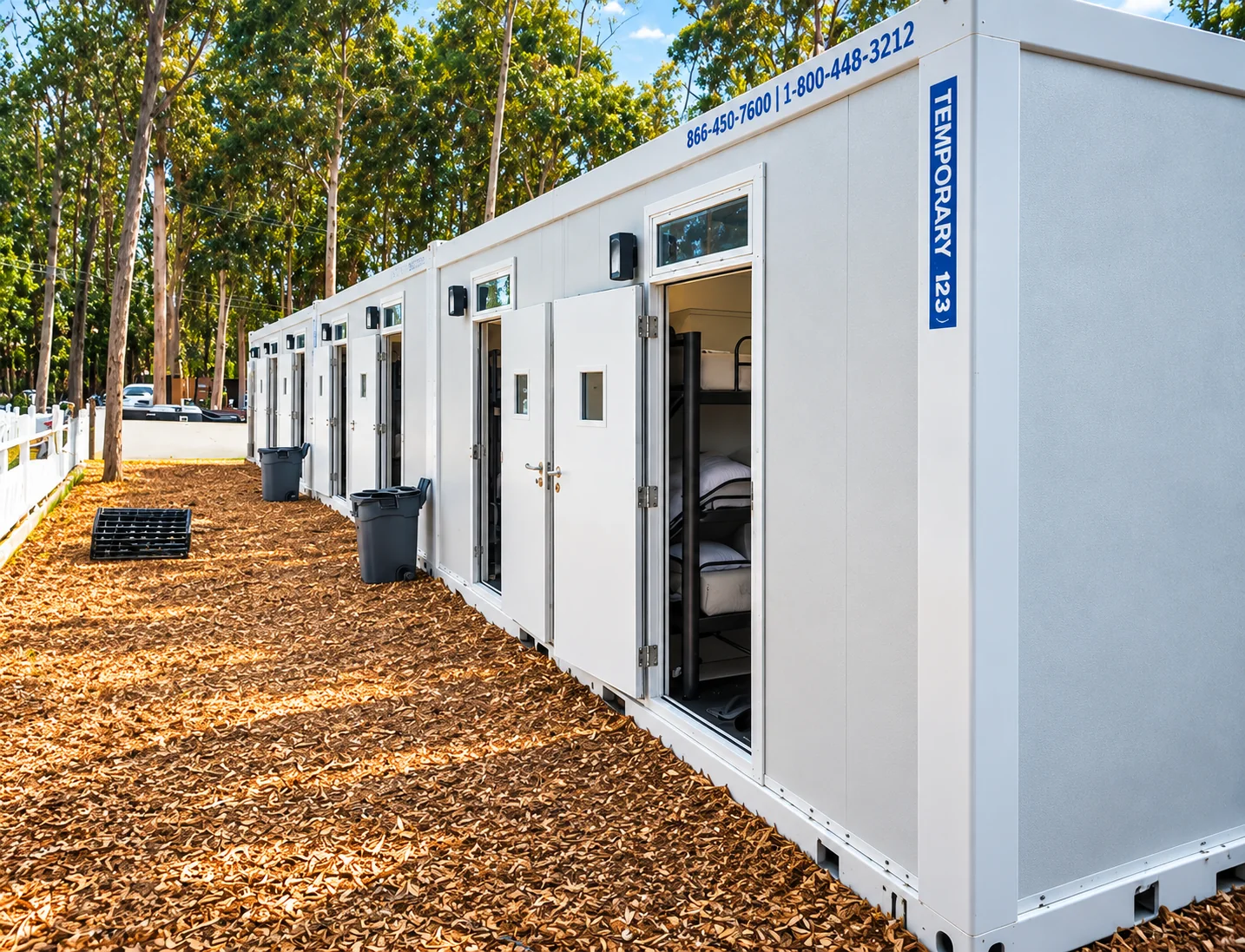
- Sleeper trailer starting price
- Starting at $2,195/month · extended term
- Delivery planning
- Delivery schedule confirmed in your quote
A camp plan for Post Falls.
Start with the sleeping layout, then connect the shower, restroom, laundry, and handwashing facilities needed at the site in Kootenai County.
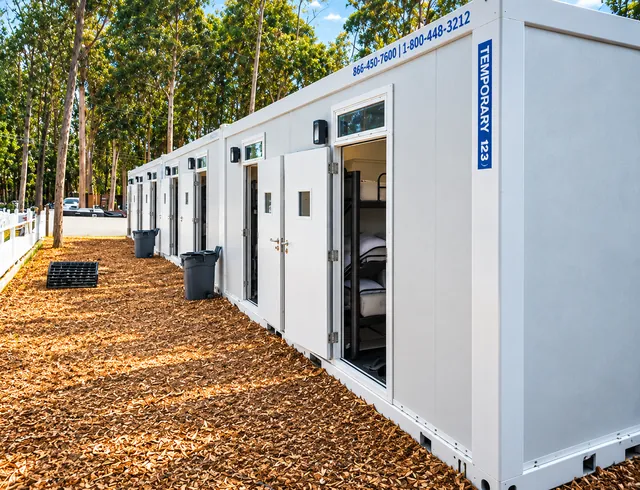
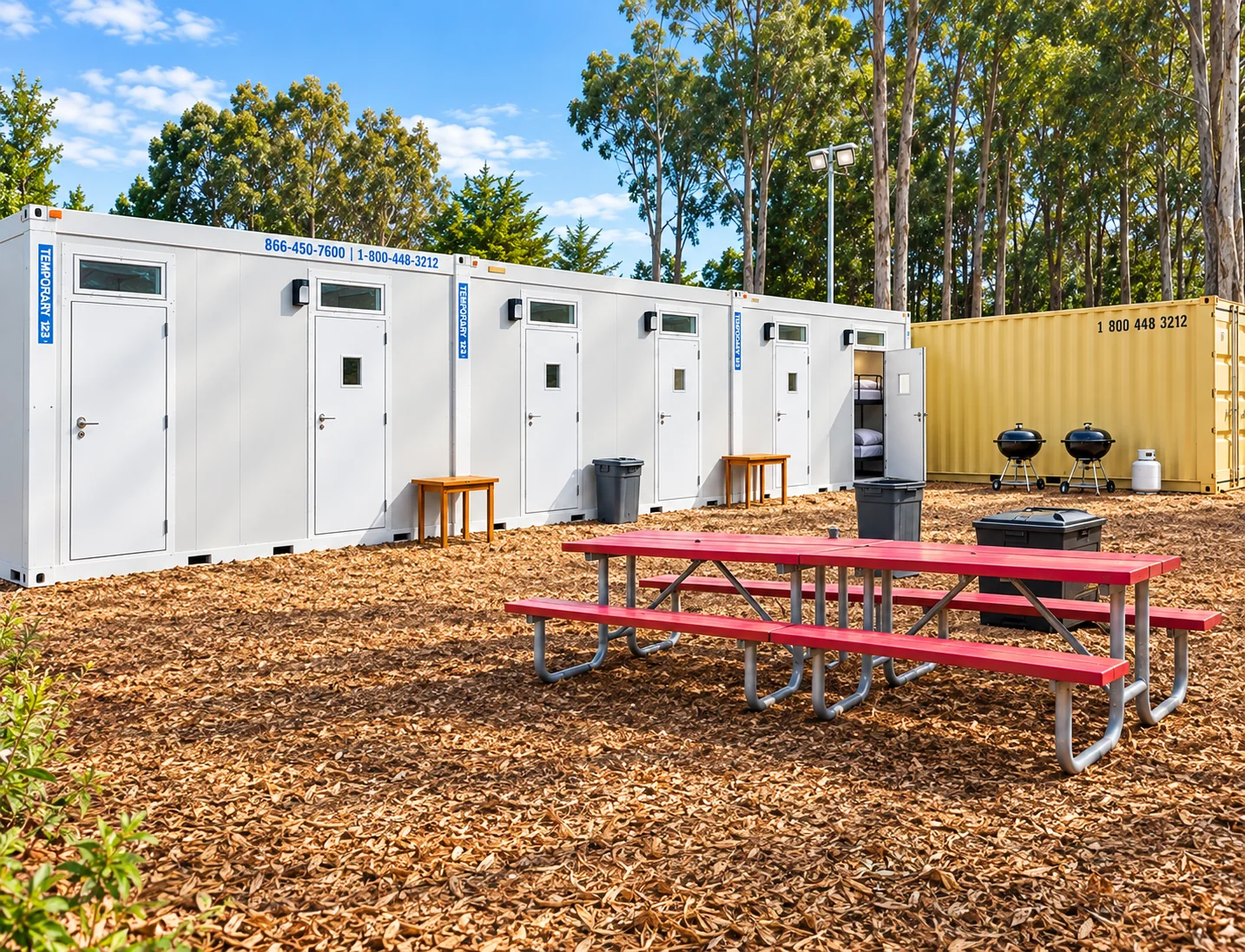
20ft Contractor Accommodation
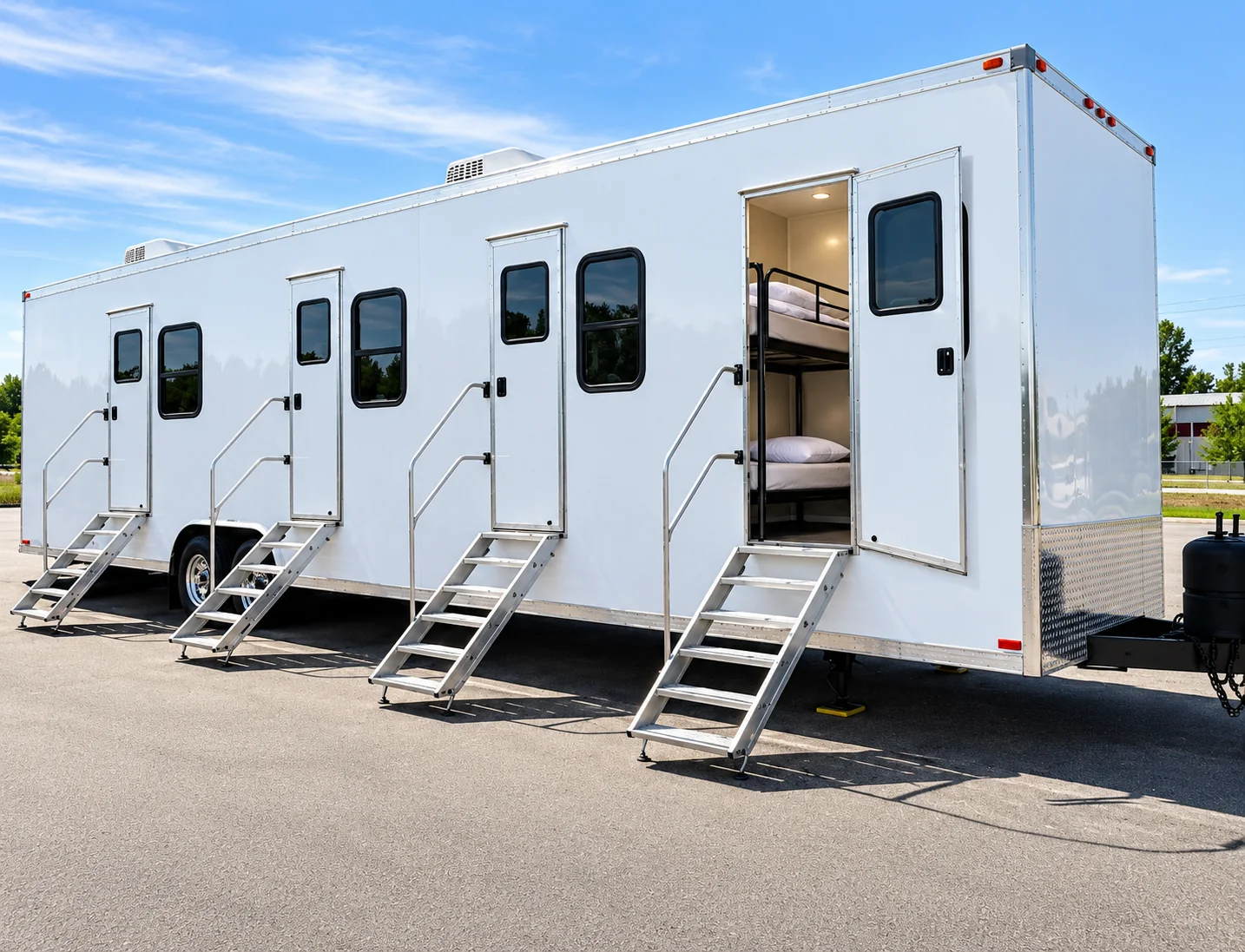
Bring temporary sleeping accommodation closer to the project. This 20ft contractor option supports crew lodging plans for construction assignments, remote work, and extended field operations.
View model details ↗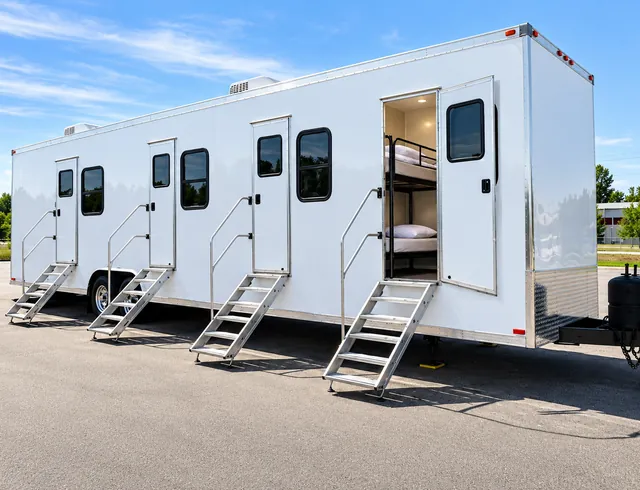
20ft VIP Accommodation
Arrange temporary accommodation for visiting project leads, production personnel, or staff staying at the site. Specify the room arrangement and furnishings that matter for the assignment.
View model details ↗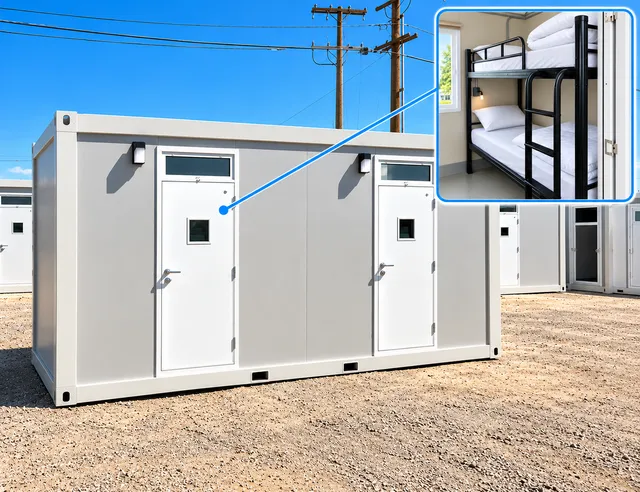
2-Stall Sleeper Trailer
Plan separate sleeping areas for a small crew or assigned staff. The 2-stall sleeper option can form part of a temporary camp without committing to a large shared sleeping hall.
View model details ↗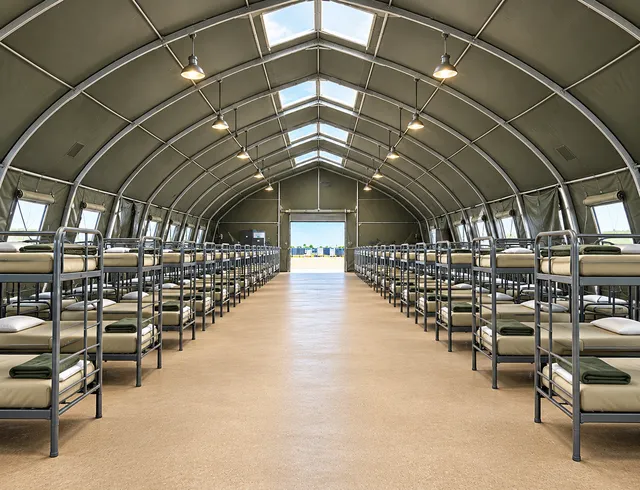
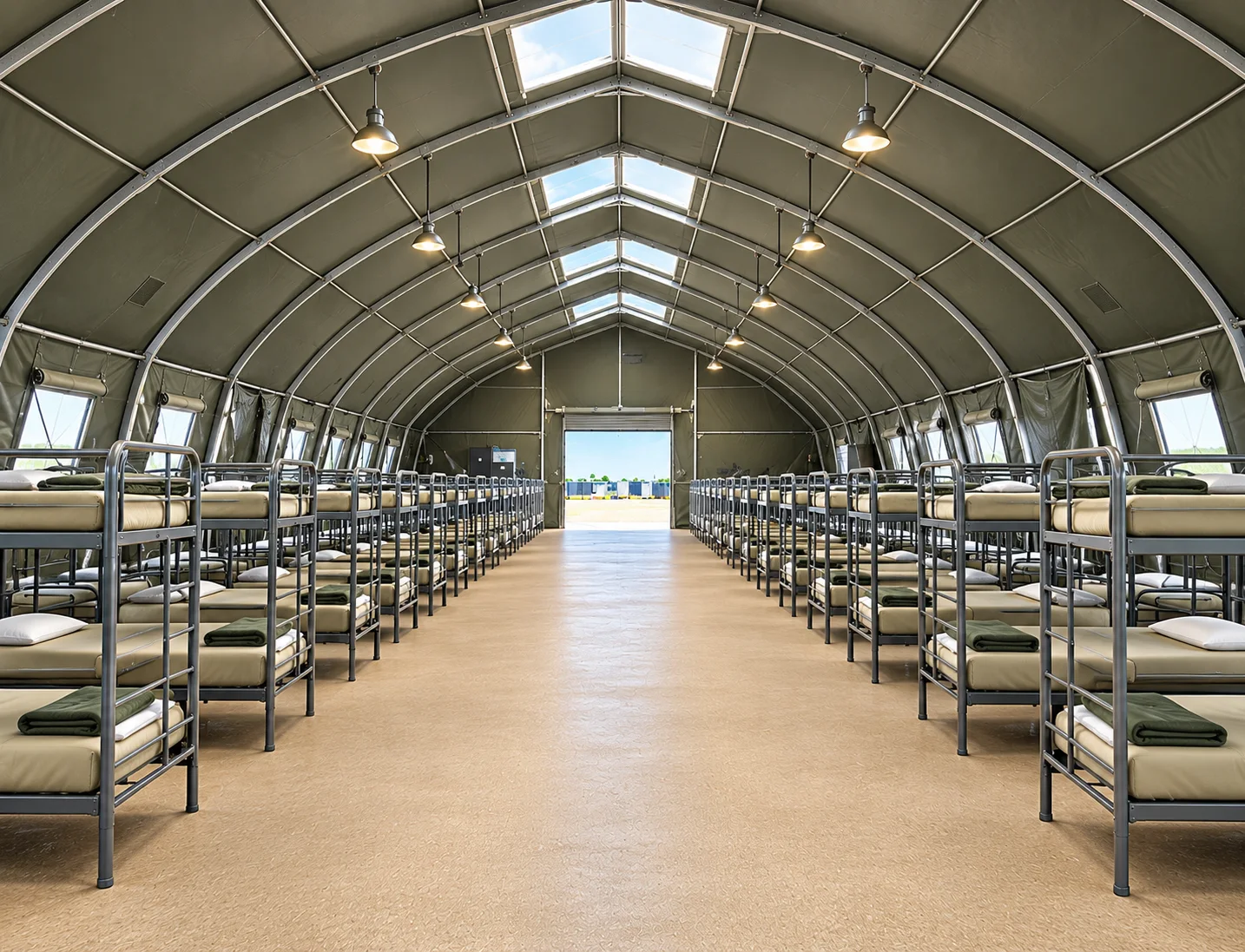
Temporary Sleeping Facilities
Create a shared sleeping area for a larger temporary workforce. Bunkhouse-style sleeping facilities help organize crew accommodation alongside a separate kitchen, dining area, and hygiene facilities.
View model details ↗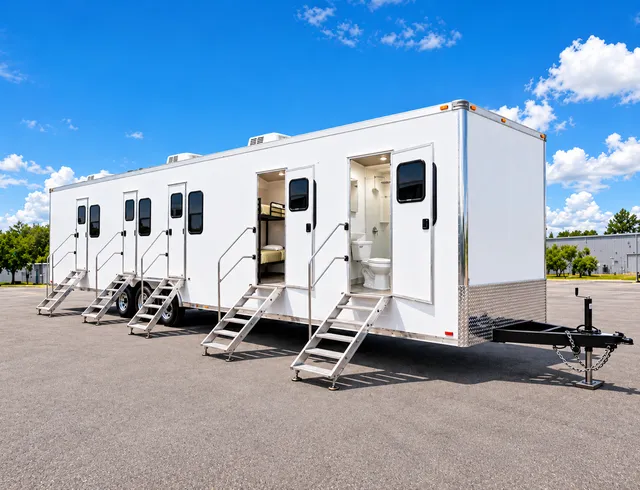
Office, Sleeper, Shower & Restroom Trailer
Bring working, resting, and personal-care functions into one crew-support location. This combination trailer is an option for projects that need more than a stand-alone office or sleeping unit.
View model details ↗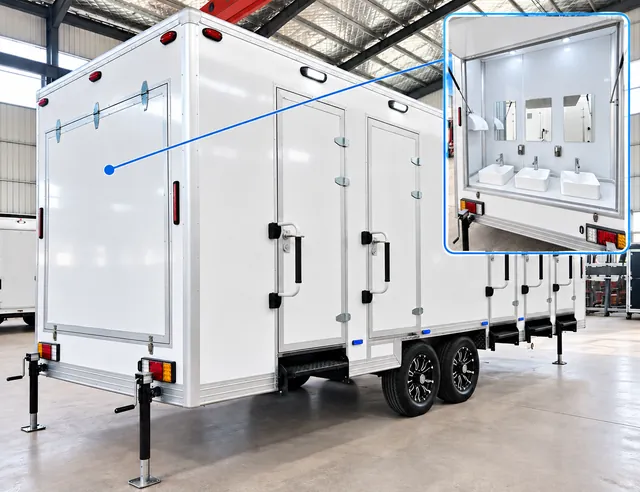
20ft Shower Trailer, 5 Stalls with Handwashing Sink
Add five shower stalls and a handwashing sink in a nominal 20ft shower trailer. Plan temporary bathing facilities for workforce accommodation, building repairs, or extended field operations around shower schedules, water supply, and wastewater service.
View model details ↗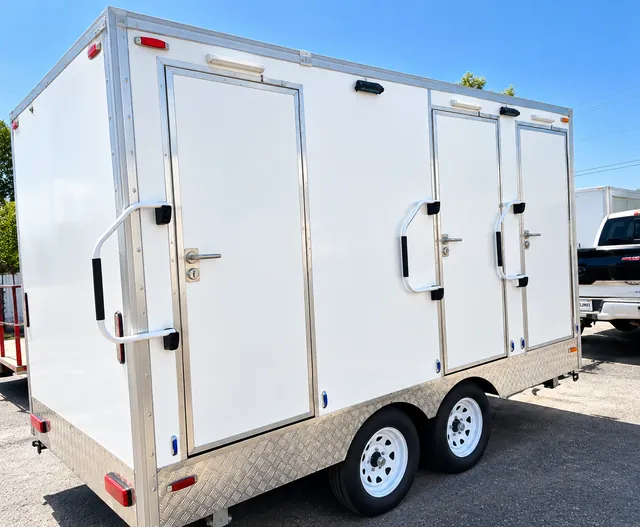
13ft Luxury Shower-Restroom Combination Trailer, 3 Stalls
Provide shower and restroom facilities together in a nominal 13ft trailer with three individual combination stalls. This configuration gives a smaller temporary site one facility to consider for both daily washing and bathroom access.
View model details ↗
Kootenai County public services: workforce and shift planning
Local work around Kootenai County public services connects to Dalton Gardens's healthcare, education, and public institutions. County and city crews serve the area. Staff, contractors, and visiting teams may need short-term accommodation during projects, peak periods, or facility work. A project team reviewing temporary accommodation would start with the approved site, delivery route, work window, and the number of people who need to stay nearby. That early review keeps the camp plan tied to the work rather than to a generic unit count.
Kootenai County emergency services: workforce and shift planning
Work tied to Kootenai County emergency services falls within Hayden Lake's emergency, utility, and continuity settings. County crews coordinate fire, medical, and winter response. Response planning separates sleeping areas from command posts, equipment, and public access so the camp does not interfere with the incident. A project team reviewing temporary accommodation would start with the approved site, delivery route, work window, and the number of people who need to stay nearby. That early review keeps the camp plan tied to the work rather than to a generic unit count.
City of Fernan Lake Village public services: workforce and shift planning
Local work around City of Fernan Lake Village public services connects to Fernan Lake Village's healthcare, education, and public institutions. Staff and contractors may need short-term accommodation during facility projects or peak periods. Staff, contractors, and visiting teams may need short-term accommodation during projects, peak periods, or facility work. A project team reviewing temporary accommodation would start with the approved site, delivery route, work window, and the number of people who need to stay nearby. That early review keeps the camp plan tied to the work rather than to a generic unit count.
Kellogg school and public services: site and access planning
For Pinehurst, Kellogg school and public services sits inside a broader pattern of healthcare, education, and public institutions. Regional schools and city crews serve the Silver Valley. Staff, contractors, and visiting teams may need short-term accommodation during projects, peak periods, or facility work. A project team reviewing temporary accommodation would start with the approved site, delivery route, work window, and the number of people who need to stay nearby. That early review keeps the camp plan tied to the work rather than to a generic unit count.
City of Smelterville public services: site and access planning
For Smelterville, City of Smelterville public services sits inside a broader pattern of healthcare, education, and public institutions. City crews maintain water, streets, and community facilities. Staff, contractors, and visiting teams may need short-term accommodation during projects, peak periods, or facility work. A project team reviewing temporary accommodation would start with the approved site, delivery route, work window, and the number of people who need to stay nearby. That early review keeps the camp plan tied to the work rather than to a generic unit count.
Compare sleeper and man camp configurations.
Start with how many people need to sleep on site, how rooms should be assigned, and whether the assignment needs private or shared accommodation. Then plan showers, restrooms, laundry, dining, power, and water as one camp layout for Post Falls.
Scroll across the table to compare configurations.
| Model | Sleeping layout | Typical project role | Planning note | Starting at |
|---|---|---|---|---|
| 20ft Contractor Accommodation | Bunk-room configuration | Crew accommodation on construction, utility, and remote assignments | Separate entry doors; confirm beds and room assignment | $2,195/month on extended terms |
| 20ft VIP Accommodation | Private-room configuration | Project leads, visiting specialists, and supervisory staff | Confirm room privacy, furnishings, and bed arrangement | $2,195/month on extended terms |
| 2-Stall Sleeper Trailer | Two sleeping areas | Smaller crews or assigned staff within a larger camp | Sleeping areas, not necessarily two beds; confirm layout | Configuration quote |
| Temporary Sleeping Facilities | Shared bunkhouse hall | Larger temporary workforce requiring a central sleeping building | Coordinate dining, showers, restrooms, and laundry nearby | Configuration quote |
Sleeping capacity is confirmed per selected unit and room plan; model names do not guarantee a bed count. Temporary sleeping facilities can be paired with a mobile kitchen, shower, restroom, and laundry plan where the camp brief requires them.
Falls Park and the Avista Dam visitor area
Falls Park gives visitors observation decks over the Spokane River and the Avista hydro plant and dam, with spring runoff drawing crowds. Maintenance, vegetation, and visitor-site work can bring contractors and seasonal staff to the park for concentrated periods. A sleeper trailer could support a crew assigned to a nearby project when local lodging is impractical, provided the city and utility approve the staging area.
Delivery access, parking, power, and whether the park can accommodate an overnight unit without affecting public use are the first questions. Showers and restrooms should be planned as part of the crew’s daily routine rather than assumed to be available on site. Confirm the park schedule and any Avista requirements before booking. A temporary sleeper trailer can supplement the approved housing plan without committing the project to permanent units.
Local background sources
Kootenai County emergency staging and Know Your Zone
Kootenai County’s Office of Emergency Management coordinates preparedness, response, and recovery across the county, and its Know Your Zone tool gives location-based evacuation guidance using Ready, Set, Go levels. Post Falls responders and utility crews may need to stage outside an active incident area. A sleeper trailer can support a defined response or recovery assignment, but it should never be presented as public evacuation shelter.
The incident plan should identify a safe, approved staging site with room for delivery vehicles and a clear route in and out. Restrooms, handwashing, and shower capacity need to be planned for the crew’s shift length, along with power for lighting and communications. Confirm the county’s current guidance and the site owner’s authorization before positioning units. Remote crew accommodation should be planned with delivery access, power, water, wastewater, and local approvals.
Local background sources
Compare sleeper and camp facilities.
Starting monthly rates for sleeper trailers and supporting facilities in Post Falls. Review the equipment details and camp requirements with our team.
| Configuration | Starting monthly rate | Model |
|---|---|---|
| 20ft Contractor Accommodation | Starting at $2,195 / month on extended terms | Review model details ↗ |
| 20ft VIP Accommodation | Starting at $2,195 / month on extended terms | Review model details ↗ |
| 2-Stall Sleeper Trailer | Configuration quote | Review model details ↗ |
| Temporary Sleeping Facilities | Configuration quote | Review model details ↗ |
| Office, Sleeper, Shower & Restroom Trailer | Configuration quote | Review model details ↗ |
Supporting facility starting prices
| Facility | Configuration | Starting monthly rate |
|---|---|---|
| 20ft Shower Trailer, 5 Stalls with Handwashing Sink | Shower Trailers | Starting at $3,995 / month |
| 13ft Luxury Shower-Restroom Combination Trailer, 3 Stalls | Shower & Restroom Combinations | Starting at $2,495 / month |
| 22ft Luxury Shower-Restroom Combination Trailer, 6 Stalls | Shower & Restroom Combinations | Starting at $4,995 / month |
| Handwashing Sink Trailer | Handwashing Facilities | Starting at $2,995 / month |
Starting prices reflect the lowest published rate for the selected configuration, typically on extended terms. Short-term rates, delivery, setup, site work, taxes, minimum duration, and current availability are confirmed in the project quote.
Need help now? Call 888 385-5513 for 24/7 support and current availability.
Seasonal recreation and commuter crews: workforce and shift planning
Any review of Seasonal recreation and commuter crews touches Spirit Lake's seasonal, remote, and shift workforce patterns. Recreation seasons and commutes to Coeur d'Alene shape demand. Workers often arrive for a defined harvest, recreation season, or construction window when local lodging is limited. A project team reviewing temporary accommodation would start with the approved site, delivery route, work window, and the number of people who need to stay nearby. That early review keeps the camp plan tied to the work rather than to a generic unit count.
Harrison lake recreation and construction: site and access planning
A crew looking at Harrison lake recreation and construction would be working within Harrison's construction, energy, and industrial settings. That work follows harvest, weather, and project schedules rather than a fixed office calendar. Contractor schedules can move with weather, materials, and plant windows, so accommodation has to follow the actual work plan. A project team reviewing temporary accommodation would start with the approved site, delivery route, work window, and the number of people who need to stay nearby. That early review keeps the camp plan tied to the work rather than to a generic unit count.
Tensed agriculture and timber work: workforce and shift planning
Tensed agriculture and timber work shows how Tensed's construction, energy, and industrial settings can concentrate demand. That work follows harvest, weather, and project schedules rather than a fixed office calendar. Contractor schedules can move with weather, materials, and plant windows, so accommodation has to follow the actual work plan. A project team reviewing temporary accommodation would start with the approved site, delivery route, work window, and the number of people who need to stay nearby. That early review keeps the camp plan tied to the work rather than to a generic unit count.
Bonner County emergency services: site and access planning
Dover's emergency, utility, and continuity settings includes Bonner County emergency services. County crews coordinate fire, medical, and winter response around the lake. Response planning separates sleeping areas from command posts, equipment, and public access so the camp does not interfere with the incident. A project team reviewing temporary accommodation would start with the approved site, delivery route, work window, and the number of people who need to stay nearby. That early review keeps the camp plan tied to the work rather than to a generic unit count.
Shoshone Medical Center staffing and project continuity
Shoshone Medical Center describes itself as a 25-bed acute-care facility in Kellogg with emergency services and outpatient care for surrounding communities. A hospital of that size depends on continuous clinical, facilities, and support staffing, and a renovation or equipment project can bring contractors and visiting specialists into the Silver Valley. Those assignments may run across several shifts, making a daily commute from outside the county impractical. The hospital also serves visitors and workers from across the Silver Valley.
NIC Workforce Training Center programs
North Idaho College’s Workforce Training Center at 525 S. Clearwater Loop serves more than 5,000 students annually in healthcare, apprenticeships, transportation, safety, trades, and industry programs. Visiting instructors, trainees, or contractor teams may need short-term accommodation during a concentrated training program or facility project. A sleeper trailer or small man camp could support that assignment when the college and site owner approve it.
Parking, classroom access, and after-hours entry should be part of the plan, along with a quiet location away from loading areas. Restrooms, handwashing, and a dining option can support a cohort staying on a compressed schedule. Confirm the campus’s current policies and the exact dates before booking. A remote lodging trailer can be considered when the assignment is temporary and the site can support a camp layout. A remote bunkbed trailer can support a smaller crew that does not need a full sleeping hall.
Local background sources
I-90/SH-41 interchange reconstruction
The I-90/SH-41 interchange reconstruction in Post Falls replaces the interchange with a single-point urban design and includes bridge, ramp, and pedestrian improvements. ITD’s posted timeline describes construction beginning in 2022 with completion scheduled for fall 2026, so contractors may face multi-season staffing and changing traffic control. A sleeper trailer or man camp could support crews who need to stay near the corridor.
Camp placement should stay outside work zones and maintain clear access for emergency vehicles and material deliveries. Laundry and shower capacity help crews working consecutive shifts, while restrooms and handwashing support the daily routine. Verify current ITD schedules, approved staging areas, and any permit requirements before committing to a site. When daily commuting is impractical, a mancamp trailer can keep the crew close to the site instead of relying on daily commutes.
Local background sources
Seasonal park maintenance staffing
The City of Post Falls has advertised seasonal park maintenance positions that work through the summer across parks and recreation sites. Seasonal staff often need housing that matches a short, defined season rather than a year-long lease. A sleeper trailer or small camp could supplement an approved staffing plan when local housing is not practical.
Plan the unit near the assigned parks without occupying public parking or program space, and confirm power and water access. Showers and laundry help seasonal crews working outdoors, while restrooms and handwashing should be part of the daily routine. Verify current hiring and housing arrangements with the city before making assumptions. Planners often frame this as a remote mancamp facility, with the supporting shower, restroom, laundry, and handwashing plan reviewed at the same time.
Local background sources
Seltice Way rehabilitation and pipeline corridor
Post Falls lists the Seltice Way Rehabilitation and Pipeline Project from McGuire Road to Chase Road, covering sewer force main, reclaimed-water, stormwater, paving, signal, and pedestrian work. The city lists a project duration from June 2026 to fall 2027. A multi-season corridor job can bring crews from outside the area, making temporary accommodation a practical planning question.
A camp layout should separate sleeping units from active construction and keep delivery access clear of lane closures. Showers and laundry are relevant for a crew working through summer heat and shoulder-season weather, and restrooms should be planned rather than borrowed from nearby businesses. Confirm the city’s current schedule and staging requirements before delivery. A remote bunkhouse gives the project team a defined accommodation scope to price and schedule.
Local background sources
City of Hauser public services: site and access planning
For Hauser, City of Hauser public services sits inside a broader pattern of healthcare, education, and public institutions. City crews maintain water, streets, and community facilities. Staff, contractors, and visiting teams may need short-term accommodation during projects, peak periods, or facility work. A project team reviewing temporary accommodation would start with the approved site, delivery route, work window, and the number of people who need to stay nearby. That early review keeps the camp plan tied to the work rather than to a generic unit count.
Hospitality and commuter crews: site and access planning
Hospitality and commuter crews is a useful entry point into State Line's seasonal, remote, and shift workforce patterns. Housing demand rises when local lodging is full or the job site is outside town. Workers often arrive for a defined harvest, recreation season, or construction window when local lodging is limited. A project team reviewing temporary accommodation would start with the approved site, delivery route, work window, and the number of people who need to stay nearby. That early review keeps the camp plan tied to the work rather than to a generic unit count.
Athol community events: site and access planning
Planning around Athol community events reflects Athol's visitor, event, and hospitality settings. Local gatherings and nearby lake recreation shape the calendar. Visitors, vendors, and seasonal staff tend to arrive in a short window, which can compress parking, deliveries, and shift changes. A project team reviewing temporary accommodation would start with the approved site, delivery route, work window, and the number of people who need to stay nearby. That early review keeps the camp plan tied to the work rather than to a generic unit count.
Kootenai County emergency services: site and access planning
Worley's emergency, utility, and continuity settings includes Kootenai County emergency services. Response teams may need to stay close when roads close or an incident runs overnight. Response planning separates sleeping areas from command posts, equipment, and public access so the camp does not interfere with the incident. A project team reviewing temporary accommodation would start with the approved site, delivery route, work window, and the number of people who need to stay nearby. That early review keeps the camp plan tied to the work rather than to a generic unit count.
Wardner mining and reclamation work: workforce and shift planning
Wardner mining and reclamation work shows how Wardner's construction, energy, and industrial settings can concentrate demand. That work follows harvest, weather, and project schedules rather than a fixed office calendar. Contractor schedules can move with weather, materials, and plant windows, so accommodation has to follow the actual work plan. A project team reviewing temporary accommodation would start with the approved site, delivery route, work window, and the number of people who need to stay nearby. That early review keeps the camp plan tied to the work rather than to a generic unit count.
Long Bridge and U.S. 95 corridor continuity planning
The Long Bridge carries U.S. 95 across Lake Pend Oreille and is a critical connection for Sandpoint, Bonner County, and travelers heading north. ITD has documented the bridge's history and began a replacement study in 2025, which is planning work rather than a statement that construction is underway. Any extended closure, inspection, or future replacement would require careful traffic control and coordination with emergency services. Early coordination with the property owner and local jurisdiction can resolve access, noise, lighting, and placement questions before mobilization.
Plan around the Post Falls address.
A project in Post Falls starts with the same practical questions: how many people need to sleep on site, how the units can reach their approved placement, and how power, water, and wastewater will connect.
- Scope the crew and schedule
Confirm how many people need accommodation, the shift pattern, and how long the camp must operate.
- Review the sleeping and support layout
Match private, shared, or bunkhouse sleeping units to the occupancy, then plan showers, restrooms, laundry, and handwashing.
- Review the site
Confirm access, approved placement, power, potable water, wastewater, and any local approvals before delivery.
- Coordinate deployment
Schedule delivery, setup, and handover around mobilization dates and site readiness.
- Plan the transition
Adjust unit counts or demobilize as the project phases change, with the rental team informed in advance.
Rotating crews on the I-90 widening
ITD’s I-90 widening from SH-41 to US-95 began in 2025 and is described as a four-year project with daytime, nighttime, and occasional weekend work. Rotating crews and long shifts can make daily travel to outlying housing impractical. A sleeper trailer or man camp could support a contractor’s approved workforce plan near the corridor.
The placement area should be outside the work zone and large enough for delivery vehicles, parking, and a safe walking route. Laundry and shower capacity are useful for crews on consecutive shifts, and restrooms should be planned for overnight operations. Confirm the current ITD schedule and any staging approvals before delivery. For a crew working away from town, an emergency portable sleeper trailer can reduce daily travel and keep the crew near the work. A remote basecamp can be planned with delivery access, power, water, and wastewater confirmed first.
Local background sources
Prairie Medical Campus construction phases
Kootenai Health describes its Prairie Medical Campus in Post Falls as a 30-acre phased development. Phase one includes a micro-hospital with a 12-room emergency department, imaging, and overnight rooms, plus a three-story medical office building. Construction is described as continuing through 2027. A project of that length can involve multiple contractor groups, making nearby sleeper accommodation worth reviewing.
The camp plan should respect hospital construction security, delivery routes, and noise limits around patient areas. Restrooms and handwashing are basic requirements; showers and laundry may be needed if crews stay through the week. Confirm the approved staging area and utility connections with the project team before positioning units. For planning purposes, emergency workforce housing can be compared with the other sleeping configurations before a unit is selected.
Local background sources
City of Huetter public services: workforce and shift planning
Local work around City of Huetter public services connects to Huetter's healthcare, education, and public institutions. Staff and contractors may need short-term accommodation during facility projects or peak periods. Staff, contractors, and visiting teams may need short-term accommodation during projects, peak periods, or facility work. A project team reviewing temporary accommodation would start with the approved site, delivery route, work window, and the number of people who need to stay nearby. That early review keeps the camp plan tied to the work rather than to a generic unit count.
SH-53 turn lanes and sidewalks between City Park and SH-41
The Idaho Transportation Department reports that the SH-53 corridor in Rathdrum received turn lanes and sidewalks between City Park and SH-41, with work completed in 2024 and 2025. The project improved access and pedestrian connections along a road that carries local traffic toward the state highway network. It is a completed improvement rather than an active construction zone. Utility capacity, winter access, and surface conditions deserve a separate check when the camp will operate through a shoulder season.
Benewah County winter road response and utility restoration
Benewah County’s winter weather can close secondary roads, down trees and power lines, and isolate rural properties around Plummer. County road crews, utility line teams, and emergency responders may work long shifts across a wide service area. When travel back to a distant base is impractical, an approved staging area near the work can keep crews available without taking rooms from residents. Early coordination with the property owner and local jurisdiction can resolve access, noise, lighting, and placement questions before mobilization.
Pend Oreille River recreation season and visitor crews
The Pend Oreille River and nearby lakes support boating, fishing, hunting, and summer recreation that draw visitors through Priest River. Outfitters, marina staff, and seasonal hospitality teams often work early and late shifts during the busiest weeks. When local rentals fill, a work crew may need accommodation closer to the river than the nearest hotel. That review should include rental dates, peak crew count, utility connections, and the inspections required before occupancy.
Ponderay parks and the city community calendar
Ponderay is a small city on the north shore of Lake Pend Oreille, next to Sandpoint, with city parks and community events serving residents and visitors. The city calendar and park facilities are the kind of local gathering points that can bring staff, vendors, and equipment into the same area. A project team planning temporary accommodation should start with the event date, approved location, and access rules. The camp brief should also record the expected occupancy, shift pattern, delivery window, and the site contact who can approve utility connections.
Kootenai community events: site and access planning
Planning around Kootenai community events reflects Kootenai's visitor, event, and hospitality settings. Local gatherings and lake recreation shape the calendar. Visitors, vendors, and seasonal staff tend to arrive in a short window, which can compress parking, deliveries, and shift changes. A project team reviewing temporary accommodation would start with the approved site, delivery route, work window, and the number of people who need to stay nearby. That early review keeps the camp plan tied to the work rather than to a generic unit count.
Post Falls Festival setup at Q’emiln Park
The Post Falls Festival fills Q’emiln Park on the second weekend of July with live music, food vendors, arts and crafts, a parade, and shuttle service. For event organizers and contracted food operators, the temporary layout can mean long setup and service days away from home. A small sleeper trailer or man camp unit could support an approved crew staging plan near the event footprint, subject to the city’s park-use and access requirements.
The camp plan should keep delivery vehicles off pedestrian routes and confirm where event staff can park and rest between shifts. Portable restrooms and handwashing are usually part of the event plan; if the crew stays overnight, add shower and laundry capacity at a separate approved location. Confirm park hours, noise limits, and restoration responsibilities before positioning any unit. A short-notice requirement can be reviewed as an emergency remote mancamp, subject to availability and site readiness.
Local background sources
Water Reclamation Facility and collection-system work
Post Falls’ Water Reclamation Facility treats an average of about 3.5 million gallons a day from Post Falls and Rathdrum. The collection system includes 29 lift stations, 194 miles of gravity sewer, and 28 miles of force main, so repair and maintenance work can involve crews at several locations. A sleeper trailer or small man camp could support an extended utility assignment when staff need to stay near the work.
Plan the camp around the facility’s security and chemical-safety rules, with a placement area that does not block vacuum trucks or deliveries. Showers and laundry are useful for crews working around wastewater infrastructure, and handwashing should be available before meals. Confirm power, water, and wastewater connections with Public Works before delivery. The camp brief can treat this as portable workforce housing, sized to the peak crew count and shift pattern.
Local background sources
Coeur d'Alene Resort hospitality peak
The Coeur d'Alene Resort's careers page features guest-service, banquet, room-attendant, and engineering roles, while the visitor bureau documents a busy summer slate of events and attractions. Seasonal and contract teams can face a housing gap during the peak. Temporary sleeper units could support an approved employee-housing plan if the resort or a contractor identifies the need.
Kootenai County emergency coordination from Hayden
The Kootenai County Office of Emergency Management is based in Hayden and works with public agencies and first responders on preparedness, response, and recovery. Its county-wide role means a local incident can draw staff and equipment into the Hayden area from several jurisdictions. Responders may need rest, sanitation, and a controlled staging location without taking rooms away from residents. Early coordination with the property owner and local jurisdiction can resolve access, noise, lighting, and placement questions before mobilization.
Oldtown timber and border highway work: workforce and shift planning
Oldtown timber and border highway work shows how Oldtown's construction, energy, and industrial settings can concentrate demand. That work follows harvest, weather, and project schedules rather than a fixed office calendar. Contractor schedules can move with weather, materials, and plant windows, so accommodation has to follow the actual work plan. A project team reviewing temporary accommodation would start with the approved site, delivery route, work window, and the number of people who need to stay nearby. That early review keeps the camp plan tied to the work rather than to a generic unit count.
Winter maintenance and remote shift crews
Winter in the St. Maries area can bring snow, ice, and difficult travel on river-corridor and mountain roads. Road crews, utility linemen, and facility maintenance staff may work long shifts to keep routes open and services running. When the work stretches across several days, crews may need accommodation closer to the job. Confirm the delivery path and staging area separately from the sleeping layout so large units do not block active operations.
Post Falls workforce housing rental FAQs.
How much does temporary workforce housing cost in Post Falls?
Sleeper trailer accommodation starts at $2,195 per month on extended terms. Short-term rates, delivery, setup, site work, taxes, minimum duration, and the complete camp scope are confirmed in the final quote.
Can sleeper trailers be delivered to a Post Falls site?
Share the Post Falls address, desired start date, crew count, placement area, and access conditions. The team confirms availability and a workable delivery schedule in the quote; this page does not publish a fixed arrival time.
What supporting facilities should be planned?
Showers, restrooms, laundry, handwashing, and dining facilities can be reviewed with the sleeping layout. The right mix depends on occupancy, shift patterns, and how long the crew will be on site.
Are man camps available for remote Idaho projects?
Remote workforce housing can combine sleeping units with showers, restrooms, laundry, and handwashing facilities. Share the site location, expected occupancy, utility plan, and duration so the camp components and delivery path can be reviewed together.
What should I prepare for a Kootenai County site?
Bring the address, approved placement area, delivery access, electrical supply, potable water and wastewater arrangements, crew count, shift schedule, dates, and site contact. Confirm any applicable permit and inspection requirements before dispatch.
House the Post Falls crew.
Share the site, dates, crew count, and camp needs. We’ll review the sleeper trailer and supporting facility plan for your Idaho project.