Temporary Workforce Housing Rentals in Soda Springs, Idaho
Keep a crew close to the work in Soda Springs with temporary sleeper trailers and man camp facilities from East Idaho Equipment Rental. Whether the need follows construction, an outage, a seasonal peak, or a remote assignment in Caribou County, start with the site, dates, and number of people who need accommodation. Call 888 385-5513 for 24/7 support and emergency deployment coordination. Supporting shower, restroom, laundry, and handwashing facilities can be coordinated with the camp.
Explore Soda Springs workforce projects ↓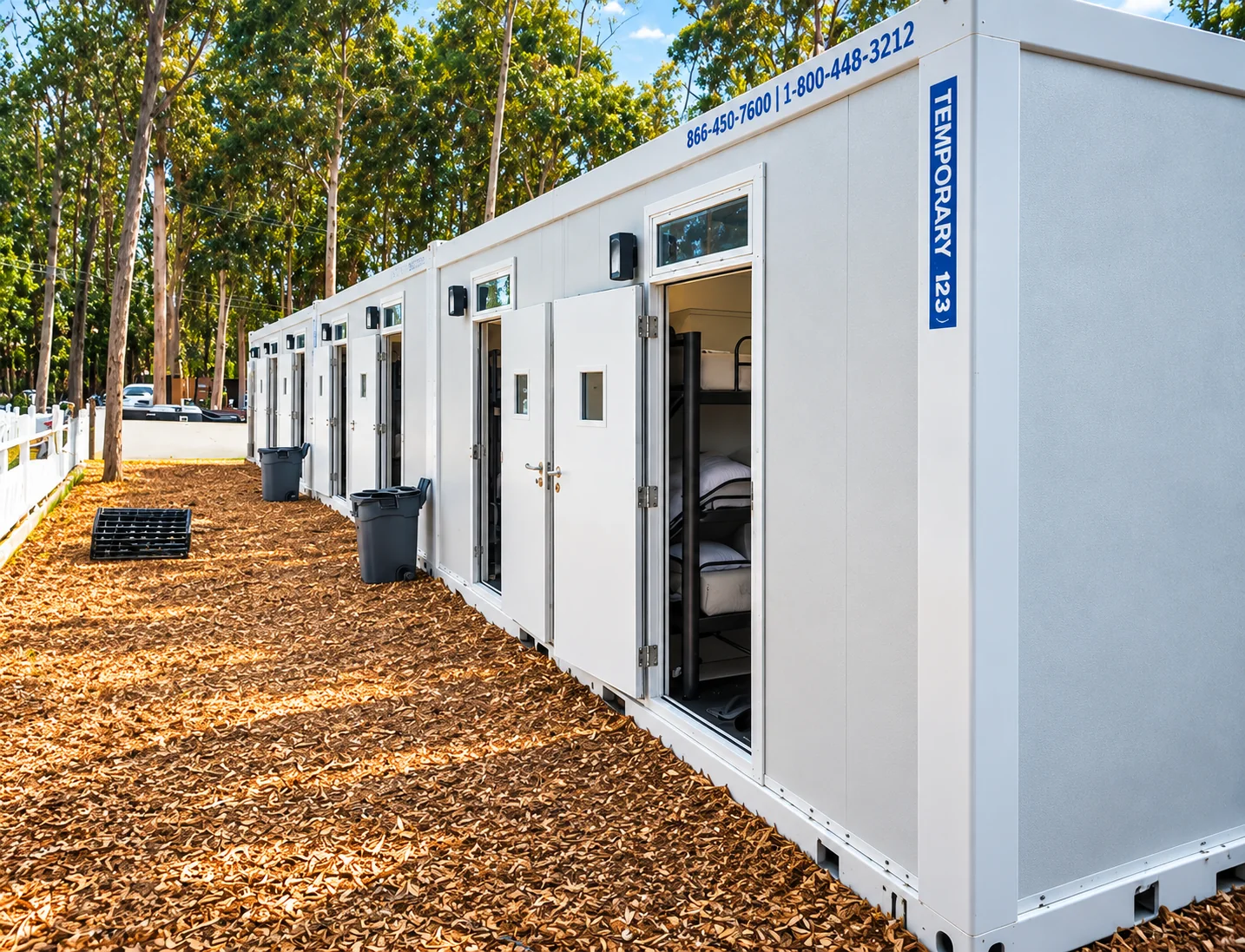
- Sleeper trailer starting price
- Starting at $2,195/month · extended term
- Delivery planning
- Delivery schedule confirmed in your quote
A camp plan for Soda Springs.
Start with the sleeping layout, then connect the shower, restroom, laundry, and handwashing facilities needed at the site in Caribou County.
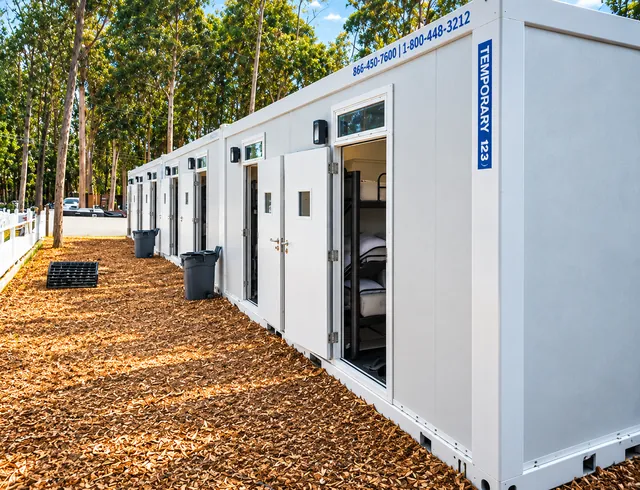
20ft Contractor Accommodation
Bring temporary sleeping accommodation closer to the project. This 20ft contractor option supports crew lodging plans for construction assignments, remote work, and extended field operations.
View model details ↗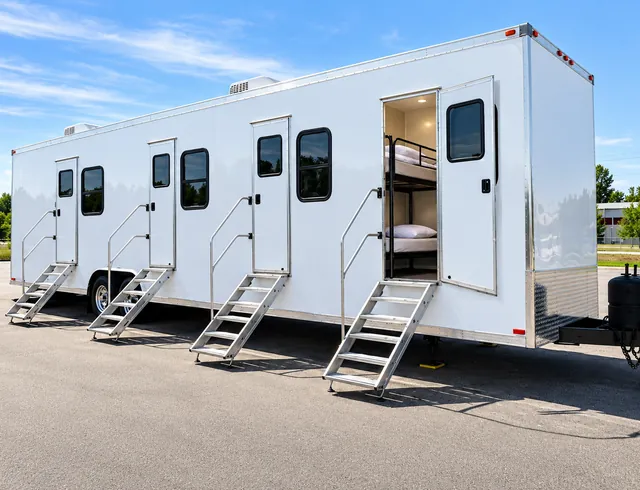
20ft VIP Accommodation
Arrange temporary accommodation for visiting project leads, production personnel, or staff staying at the site. Specify the room arrangement and furnishings that matter for the assignment.
View model details ↗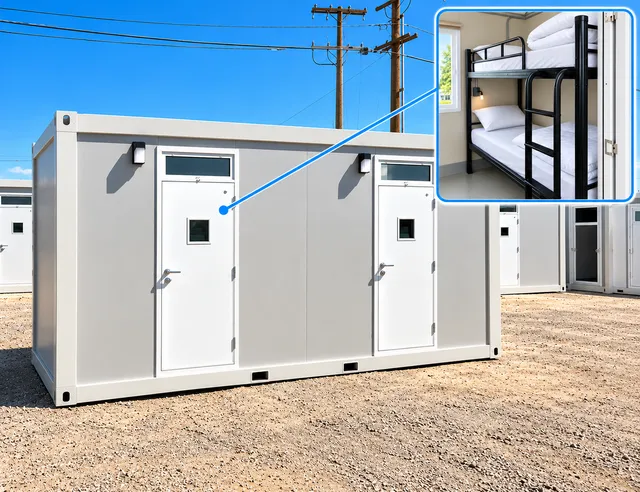
2-Stall Sleeper Trailer
Plan separate sleeping areas for a small crew or assigned staff. The 2-stall sleeper option can form part of a temporary camp without committing to a large shared sleeping hall.
View model details ↗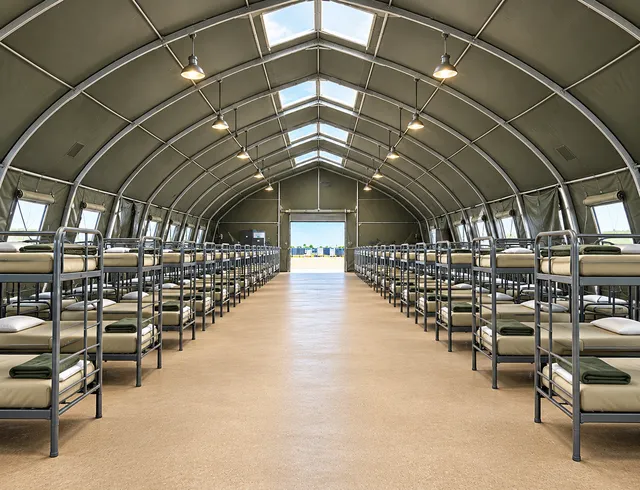
Temporary Sleeping Facilities
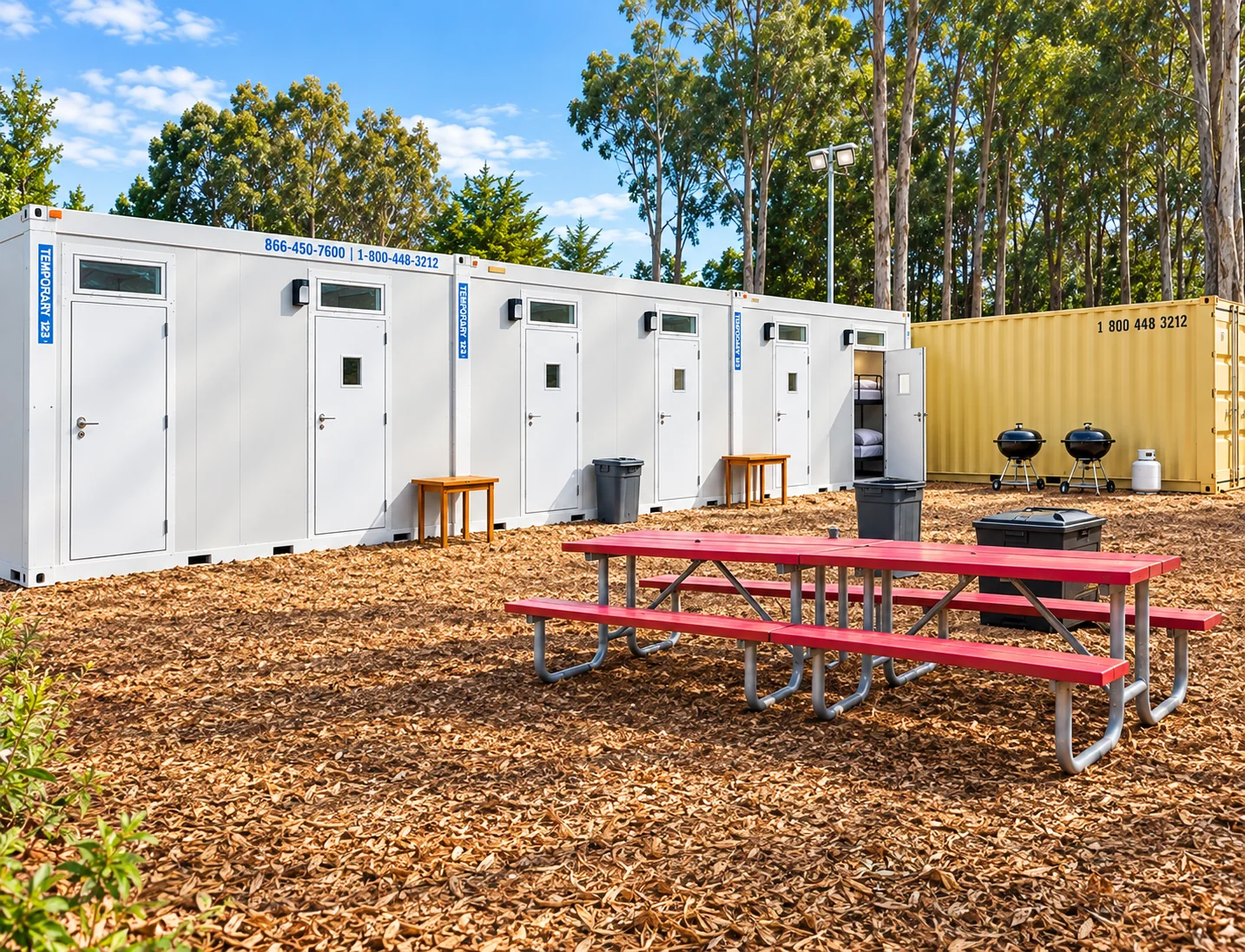
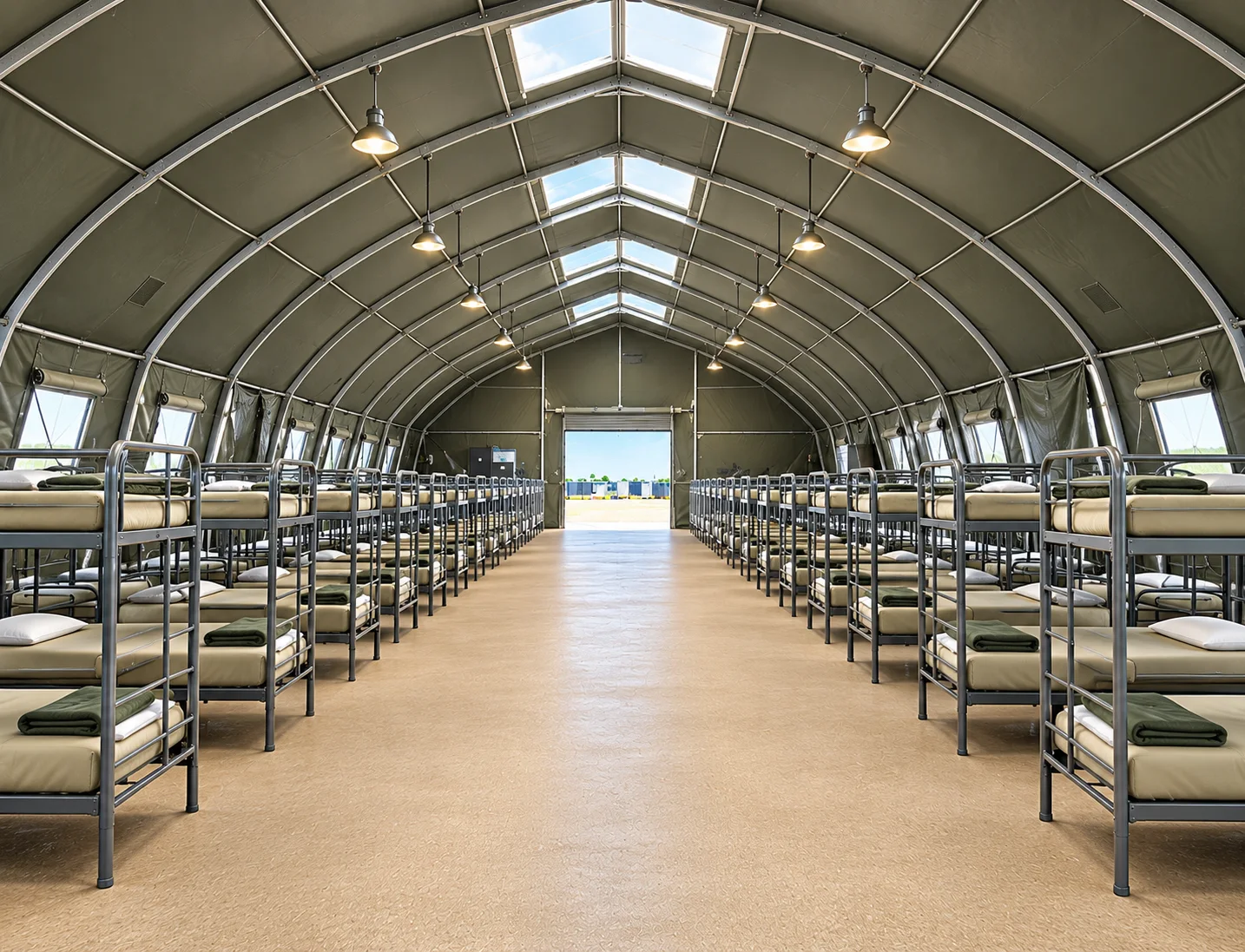
Create a shared sleeping area for a larger temporary workforce. Bunkhouse-style sleeping facilities help organize crew accommodation alongside a separate kitchen, dining area, and hygiene facilities.
View model details ↗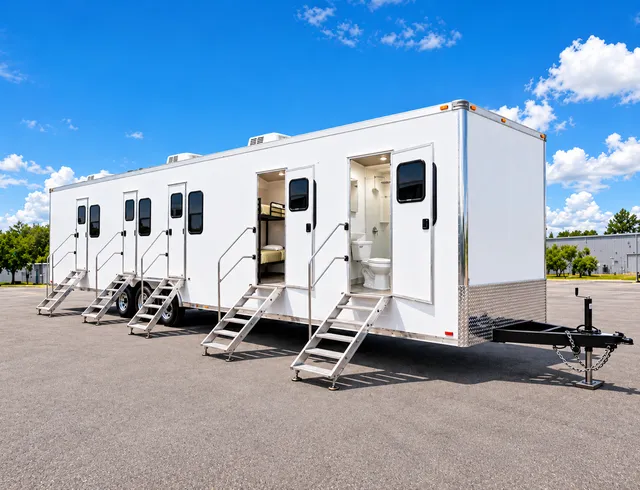
Office, Sleeper, Shower & Restroom Trailer
Bring working, resting, and personal-care functions into one crew-support location. This combination trailer is an option for projects that need more than a stand-alone office or sleeping unit.
View model details ↗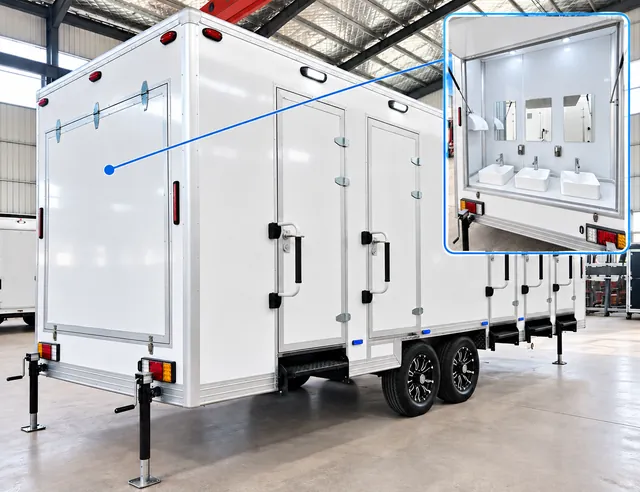
20ft Shower Trailer, 5 Stalls with Handwashing Sink
Add five shower stalls and a handwashing sink in a nominal 20ft shower trailer. Plan temporary bathing facilities for workforce accommodation, building repairs, or extended field operations around shower schedules, water supply, and wastewater service.
View model details ↗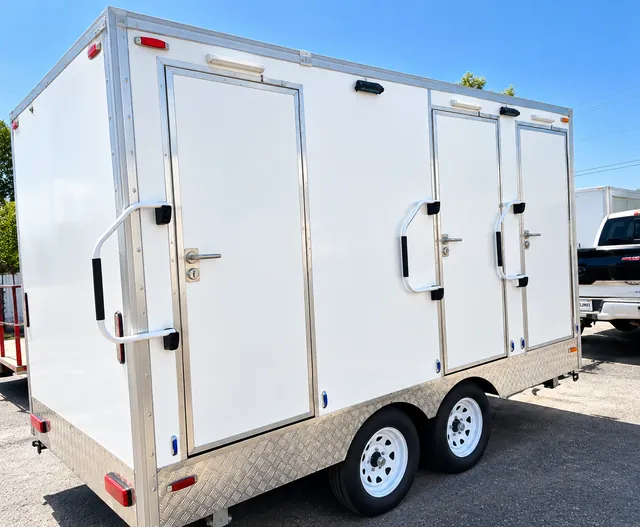
13ft Luxury Shower-Restroom Combination Trailer, 3 Stalls
Provide shower and restroom facilities together in a nominal 13ft trailer with three individual combination stalls. This configuration gives a smaller temporary site one facility to consider for both daily washing and bathroom access.
View model details ↗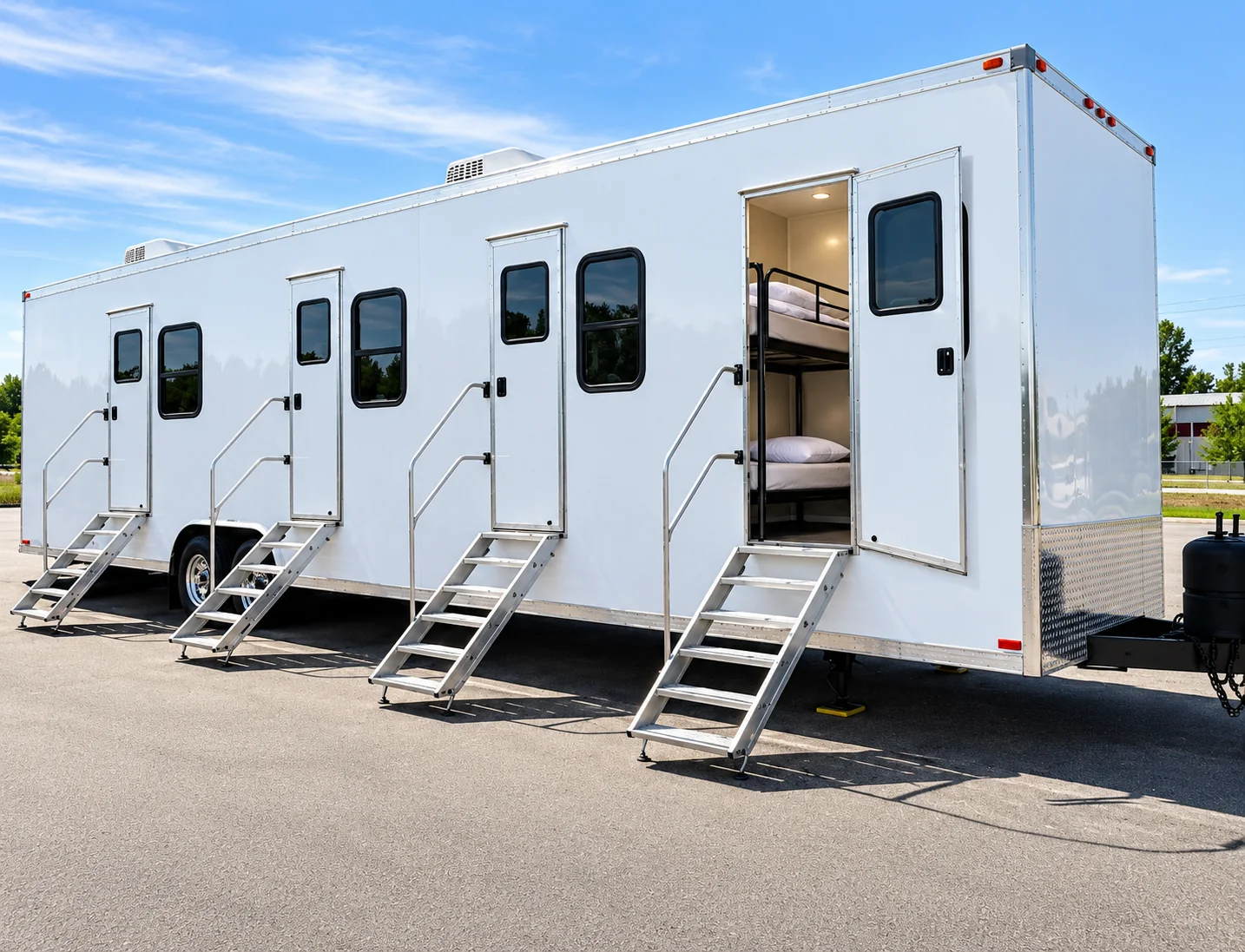
Georgetown community events: workforce and shift planning
Georgetown community events is one of the local settings tied to Georgetown's visitor, event, and hospitality settings. Local gatherings and Bear Lake recreation shape the calendar. Visitors, vendors, and seasonal staff tend to arrive in a short window, which can compress parking, deliveries, and shift changes. A project team reviewing temporary accommodation would start with the approved site, delivery route, work window, and the number of people who need to stay nearby. That early review keeps the camp plan tied to the work rather than to a generic unit count.

Bannock County services and regional coordination
Bannock County provides services that reach Lava Hot Springs, including road maintenance, emergency management, and regional public administration. When a county project or a multi-agency response moves into the area, staff may be assigned for several days and need a base near the work. The county's service area is large, so travel time can become a planning constraint. Those assignments can overlap with local visitor traffic and seasonal road conditions, so arrival and departure timing matters.
City of Franklin public services: workforce and shift planning
Local work around City of Franklin public services connects to Franklin's healthcare, education, and public institutions. City crews maintain water, streets, and community facilities. Staff, contractors, and visiting teams may need short-term accommodation during projects, peak periods, or facility work. A project team reviewing temporary accommodation would start with the approved site, delivery route, work window, and the number of people who need to stay nearby. That early review keeps the camp plan tied to the work rather than to a generic unit count.
Idaho Enterprise and valley-wide communications
The Idaho Enterprise is a long-running local newspaper covering Malad City and the surrounding valley, including public meetings, schools, agriculture, and community events. A small news operation depends on local knowledge and reliable access during storms, road closures, and other disruptions. When a major event or prolonged outage occurs, visiting reporters, technicians, or support staff may need short-term accommodation near town. Confirm the delivery path and staging area separately from the sleeping layout so large units do not block active operations.
Compare sleeper and man camp configurations.
Start with how many people need to sleep on site, how rooms should be assigned, and whether the assignment needs private or shared accommodation. Then plan showers, restrooms, laundry, dining, power, and water as one camp layout for Soda Springs.
Scroll across the table to compare configurations.
| Model | Sleeping layout | Typical project role | Planning note | Starting at |
|---|---|---|---|---|
| 20ft Contractor Accommodation | Bunk-room configuration | Crew accommodation on construction, utility, and remote assignments | Separate entry doors; confirm beds and room assignment | $2,195/month on extended terms |
| 20ft VIP Accommodation | Private-room configuration | Project leads, visiting specialists, and supervisory staff | Confirm room privacy, furnishings, and bed arrangement | $2,195/month on extended terms |
| 2-Stall Sleeper Trailer | Two sleeping areas | Smaller crews or assigned staff within a larger camp | Sleeping areas, not necessarily two beds; confirm layout | Configuration quote |
| Temporary Sleeping Facilities | Shared bunkhouse hall | Larger temporary workforce requiring a central sleeping building | Coordinate dining, showers, restrooms, and laundry nearby | Configuration quote |
Sleeping capacity is confirmed per selected unit and room plan; model names do not guarantee a bed count. Temporary sleeping facilities can be paired with a mobile kitchen, shower, restroom, and laundry plan where the camp brief requires them.
Soda Springs Geyser and downtown visitor crews
Soda Springs is known for its mineral springs and for a downtown geyser that gives visitors a timed reason to stop near the business district. The geyser and nearby spring features sit close to local shops, civic buildings, and the routes travelers use through Caribou County. Event weekends and summer travel can bring additional visitors through the same compact downtown area, where parking and pedestrian access are limited. The camp brief should also record the expected occupancy, shift pattern, delivery window, and the site contact who can approve utility connections.
A temporary sleeper trailer could support an approved event or visitor-services assignment on private or city-approved land, provided the organizer confirms zoning, parking, delivery access, and quiet hours. The camp plan should also address restrooms, handwashing, laundry for uniforms, and a dining area for staff meals. Planners often frame this as a remote mancamp facility, with the supporting shower, restroom, laundry, and handwashing plan reviewed at the same time. A practical next step is to map sleeping units, support facilities, parking, and pedestrian routes against the approved site plan.
Local background sources
Caribou Medical Center staffing and continuity
Caribou Medical Center provides hospital and clinic services in Soda Springs and serves patients from across Caribou County. A rural hospital depends on scheduled staff, visiting specialists, and support teams who may travel through winter conditions to reach the facility. Renovation, equipment replacement, or a temporary staffing gap can create a need for nearby accommodation that does not rely on distant lodging. The camp brief should also record the expected occupancy, shift pattern, delivery window, and the site contact who can approve utility connections.
A temporary sleeper trailer can be considered for an approved hospital assignment when the facility and property owner agree on placement, privacy, and access. The plan should protect patient and emergency routes and confirm power, water, wastewater, restroom, and shower arrangements. Laundry for scrubs or workwear and a separate dining area may also be useful for contract teams staying through a multi-day assignment. A practical next step is to map sleeping units, support facilities, parking, and pedestrian routes against the approved site plan.
Local background sources
Compare sleeper and camp facilities.
Starting monthly rates for sleeper trailers and supporting facilities in Soda Springs. Review the equipment details and camp requirements with our team.
| Configuration | Starting monthly rate | Model |
|---|---|---|
| 20ft Contractor Accommodation | Starting at $2,195 / month on extended terms | Review model details ↗ |
| 20ft VIP Accommodation | Starting at $2,195 / month on extended terms | Review model details ↗ |
| 2-Stall Sleeper Trailer | Configuration quote | Review model details ↗ |
| Temporary Sleeping Facilities | Configuration quote | Review model details ↗ |
| Office, Sleeper, Shower & Restroom Trailer | Configuration quote | Review model details ↗ |
Supporting facility starting prices
| Facility | Configuration | Starting monthly rate |
|---|---|---|
| 20ft Shower Trailer, 5 Stalls with Handwashing Sink | Shower Trailers | Starting at $3,995 / month |
| 13ft Luxury Shower-Restroom Combination Trailer, 3 Stalls | Shower & Restroom Combinations | Starting at $2,495 / month |
| 22ft Luxury Shower-Restroom Combination Trailer, 6 Stalls | Shower & Restroom Combinations | Starting at $4,995 / month |
| Handwashing Sink Trailer | Handwashing Facilities | Starting at $2,995 / month |
Starting prices reflect the lowest published rate for the selected configuration, typically on extended terms. Short-term rates, delivery, setup, site work, taxes, minimum duration, and current availability are confirmed in the project quote.
Need help now? Call 888 385-5513 for 24/7 support and current availability.
Downtown Montpelier community events and summer weekends
Montpelier's community calendar brings residents and visitors downtown for seasonal celebrations, fundraisers, and civic gatherings. Vendors, performers, and event crews may need to arrive early and stay through a weekend. When local lodging is limited by overlapping events, organizers may look for a controlled place to stage equipment and accommodate a defined team. That review should include rental dates, peak crew count, utility connections, and the inspections required before occupancy.
City of Arimo public services: site and access planning
For Arimo, City of Arimo public services sits inside a broader pattern of healthcare, education, and public institutions. Staff and contractors may need short-term accommodation during facility projects or peak periods. Staff, contractors, and visiting teams may need short-term accommodation during projects, peak periods, or facility work. A project team reviewing temporary accommodation would start with the approved site, delivery route, work window, and the number of people who need to stay nearby. That early review keeps the camp plan tied to the work rather than to a generic unit count.
I-15 travel and agriculture: workforce and shift planning
I-15 travel and agriculture shows how McCammon's construction, energy, and industrial settings can concentrate demand. Interstate travel and farms support a commuter workforce. Contractor schedules can move with weather, materials, and plant windows, so accommodation has to follow the actual work plan. A project team reviewing temporary accommodation would start with the approved site, delivery route, work window, and the number of people who need to stay nearby. That early review keeps the camp plan tied to the work rather than to a generic unit count.
I-15 Northgate-to-Fort Hall widening corridor
The Idaho Transportation Department has described additional lanes between the Northgate and Fort Hall interchanges as a safety and capacity response to growing traffic. The corridor extends beyond Pocatello city limits and serves commuters, freight, and the Fort Hall area. A multi-season highway project can bring contractor crews and equipment into the region for extended periods.
Franklin County emergency services: site and access planning
Weston's emergency, utility, and continuity settings includes Franklin County emergency services. Response teams may need to stay close when roads close or an incident runs overnight. Response planning separates sleeping areas from command posts, equipment, and public access so the camp does not interfere with the incident. A project team reviewing temporary accommodation would start with the approved site, delivery route, work window, and the number of people who need to stay nearby. That early review keeps the camp plan tied to the work rather than to a generic unit count.
Industrial shift rotations and remote crew housing
Phosphate and industrial operations in the Soda Springs area can run around the clock, with maintenance, operations, and contractor teams rotating through day and night shifts. For workers who travel from outside Caribou County, the daily commute can be long and weather-dependent, especially when winter storms close regional routes. A defined camp can reduce that travel burden when the employer and site owner approve the arrangement. Early coordination with the property owner and local jurisdiction can resolve access, noise, lighting, and placement questions before mobilization.
A remote lodging trailer can be scoped around the actual shift pattern rather than a standard hotel schedule. The layout should separate quiet sleeping areas from parking and deliveries, with restrooms, showers, laundry, and a dining area sized to the peak crew count. Confirm generator power, fuel, potable water, wastewater, snow removal, and site access before positioning units. The site plan should show where crews will park, how they will reach the work area, and how support facilities will be serviced.
Local background sources
Caribou County winter storm and road-response staging
Soda Springs sits at a high elevation where winter storms can close roads, slow travel, and stretch county response resources across a large rural service area. Caribou County agencies coordinate road clearing, public-safety response, and support for residents who may be isolated by weather. US-30 and State Highway 34 are important regional links, so a closure can affect crews far beyond the city limits. Early coordination with the property owner and local jurisdiction can resolve access, noise, lighting, and placement questions before mobilization.
An emergency portable sleeper trailer can be staged for an approved response assignment when the county identifies a need and confirms a safe placement. Planners should review generator power, fuel, potable water, wastewater, snow removal, and access for service vehicles. Sleeping units can be paired with restrooms, handwashing, laundry for wet gear, and a dining area so responders can rotate through a practical routine without drawing on local facilities. The site plan should show where crews will park, how they will reach the work area, and how support facilities will be serviced.
Local background sources
Paris agriculture and Bear Lake recreation: workforce and shift planning
Paris agriculture and Bear Lake recreation shows how Paris's construction, energy, and industrial settings can concentrate demand. Farms, dairies, and seasonal visitors support a mixed workforce. Contractor schedules can move with weather, materials, and plant windows, so accommodation has to follow the actual work plan. A project team reviewing temporary accommodation would start with the approved site, delivery route, work window, and the number of people who need to stay nearby. That early review keeps the camp plan tied to the work rather than to a generic unit count.
Downey community events: site and access planning
Planning around Downey community events reflects Downey's visitor, event, and hospitality settings. Local gatherings and nearby mountain recreation shape the calendar. Visitors, vendors, and seasonal staff tend to arrive in a short window, which can compress parking, deliveries, and shift changes. A project team reviewing temporary accommodation would start with the approved site, delivery route, work window, and the number of people who need to stay nearby. That early review keeps the camp plan tied to the work rather than to a generic unit count.
Yellowstone Avenue commercial and warehouse buildout
Yellowstone Avenue and the surrounding commercial corridor carry retail, service, and warehouse traffic between Chubbuck and Pocatello. Tenant improvements, parking reconstruction, and utility upgrades can require general contractors and specialty trades to work around operating businesses. The work may be phased to keep storefronts and loading areas open, which can extend the contractor’s time in the area. The final scope should distinguish temporary accommodation from permanent housing and identify the date the camp will be removed.
City water and wastewater repair continuity
Blackfoot operates municipal water and wastewater services that support homes, businesses, and processing operations. Line breaks, pump failures, and treatment repairs can require crews to work extended shifts until service is stable. Repairs may affect several blocks or a single industrial connection, and the city must coordinate traffic control, notices, and public-health precautions while the work proceeds. Confirm the delivery path and staging area separately from the sleeping layout so large units do not block active operations.
City building reviews and industrial site preparation
Soda Springs reviews building, zoning, and site plans through city departments that also manage streets, water, and wastewater. Industrial and commercial projects can require grading, utility extensions, and traffic control before a site is ready for equipment. The city’s compact street network and winter conditions make delivery routing and staging an important part of the planning conversation. The final scope should distinguish temporary accommodation from permanent housing and identify the date the camp will be removed.
A remote mancamp facility can be reviewed for a project-specific assignment on land the owner controls, with the camp kept clear of active construction and public access. Confirm the approved placement, utility connections, restroom and shower access, and laundry plan. If the work affects food service or staff dining, a dining facility can be planned with the temporary accommodation rather than added after crews arrive. Before delivery, confirm the approved placement, delivery route, power, potable water, wastewater, servicing plan, and local approval requirements with the site owner.
Local background sources
Soda Springs schools and civic facilities
Soda Springs schools and city facilities serve a wide rural attendance area, with buses, athletics, and community programs bringing people into town on regular schedules. Facility upgrades, summer maintenance, and event support can overlap with the school year, so work windows often depend on student circulation and public access. The city’s civic buildings and parks add another set of seasonal staffing needs. That review should include rental dates, peak crew count, utility connections, and the inspections required before occupancy.
A remote basecamp can be planned for a defined school or civic project when the district and city approve the location. Delivery routes should stay clear of bus lanes and student areas, and the camp should include restrooms, handwashing, and laundry for crews working across several days. Showers and a dining area can be added if the assignment extends beyond a single shift. The project team should also confirm how the units will be serviced, resupplied, and removed when the assignment ends.
Local background sources
City of Bloomington public services: site and access planning
For Bloomington, City of Bloomington public services sits inside a broader pattern of healthcare, education, and public institutions. Staff and contractors may need short-term accommodation during facility projects or peak periods. Staff, contractors, and visiting teams may need short-term accommodation during projects, peak periods, or facility work. A project team reviewing temporary accommodation would start with the approved site, delivery route, work window, and the number of people who need to stay nearby. That early review keeps the camp plan tied to the work rather than to a generic unit count.
Oxford community events: site and access planning
Planning around Oxford community events reflects Oxford's visitor, event, and hospitality settings. Local organizers, vendors, and out-of-town crews often overlap during the same short season. Visitors, vendors, and seasonal staff tend to arrive in a short window, which can compress parking, deliveries, and shift changes. A project team reviewing temporary accommodation would start with the approved site, delivery route, work window, and the number of people who need to stay nearby. That early review keeps the camp plan tied to the work rather than to a generic unit count.
Commuter and seasonal crews: site and access planning
Commuter and seasonal crews is a useful entry point into Inkom's seasonal, remote, and shift workforce patterns. Pocatello commutes and seasonal work shape housing demand. Workers often arrive for a defined harvest, recreation season, or construction window when local lodging is limited. A project team reviewing temporary accommodation would start with the approved site, delivery route, work window, and the number of people who need to stay nearby. That early review keeps the camp plan tied to the work rather than to a generic unit count.
Irwin recreation and ranch work: workforce and shift planning
Irwin recreation and ranch work shows how Irwin's construction, energy, and industrial settings can concentrate demand. That work follows harvest, weather, and project schedules rather than a fixed office calendar. Contractor schedules can move with weather, materials, and plant windows, so accommodation has to follow the actual work plan. A project team reviewing temporary accommodation would start with the approved site, delivery route, work window, and the number of people who need to stay nearby. That early review keeps the camp plan tied to the work rather than to a generic unit count.
Bingham County agriculture and food processing: workforce and shift planning
Bingham County agriculture and food processing shows how Basalt's construction, energy, and industrial settings can concentrate demand. That work follows harvest, weather, and project schedules rather than a fixed office calendar. Contractor schedules can move with weather, materials, and plant windows, so accommodation has to follow the actual work plan. A project team reviewing temporary accommodation would start with the approved site, delivery route, work window, and the number of people who need to stay nearby. That early review keeps the camp plan tied to the work rather than to a generic unit count.
Plan around the Soda Springs address.
A project in Soda Springs starts with the same practical questions: how many people need to sleep on site, how the units can reach their approved placement, and how power, water, and wastewater will connect.
- Scope the crew and schedule
Confirm how many people need accommodation, the shift pattern, and how long the camp must operate.
- Review the sleeping and support layout
Match private, shared, or bunkhouse sleeping units to the occupancy, then plan showers, restrooms, laundry, and handwashing.
- Review the site
Confirm access, approved placement, power, potable water, wastewater, and any local approvals before delivery.
- Coordinate deployment
Schedule delivery, setup, and handover around mobilization dates and site readiness.
- Plan the transition
Adjust unit counts or demobilize as the project phases change, with the rental team informed in advance.
Winter recreation and visitor-season staffing
Soda Springs is a gateway to public lands and winter recreation in the Caribou-Targhee National Forest and surrounding high country. Seasonal outfitters, maintenance crews, and visitor-services staff may need to stay near trailheads, staging areas, or town while they work through a compressed season. Snowmobile traffic, plowing, and short daylight hours make housing location and vehicle access especially important. Confirm the delivery path and staging area separately from the sleeping layout so large units do not block active operations.
A temporary sleeper trailer can support an approved seasonal assignment when the land manager and property owner confirm the placement. The camp plan should address snow removal, heating, power, potable water, wastewater, and a safe route to the work area. Restrooms, showers, laundry for winter gear, and a dining area can be planned together, with an emergency portable sleeper trailer held as an option if the schedule changes. The rental team can review the unit mix against the crew count, room assignment, and expected duration before the quote is finalized.
Local background sources
Phosphate operations and contractor turnaround planning
The Soda Springs area sits within a phosphate mining and processing corridor that has shaped the local economy for decades. The Conda operation and the Soda Springs plant are regional industrial anchors, and maintenance campaigns can bring specialized contractor crews into Caribou County for defined periods. Those assignments often involve shift rotations, equipment staging, and a need to keep workers close to the site. Utility capacity, winter access, and surface conditions deserve a separate check when the camp will operate through a shoulder season.
A remote bunkbed trailer can be planned for a defined turnaround when the operator approves the location and confirms access, power, water, and wastewater. The camp layout should separate sleeping areas from industrial traffic and include restrooms, showers, laundry for workwear, and a dining area that supports shift changes. Contractors should confirm site safety rules, badge requirements, and delivery windows before mobilizing. A written site-contact and escalation plan helps the camp operate smoothly when shifts change or weather affects access.
Clifton community events: workforce and shift planning
Clifton community events is one of the local settings tied to Clifton's visitor, event, and hospitality settings. Local organizers, vendors, and out-of-town crews often overlap during the same short season. Visitors, vendors, and seasonal staff tend to arrive in a short window, which can compress parking, deliveries, and shift changes. A project team reviewing temporary accommodation would start with the approved site, delivery route, work window, and the number of people who need to stay nearby. That early review keeps the camp plan tied to the work rather than to a generic unit count.
St. Charles agriculture and recreation: site and access planning
A crew looking at St. Charles agriculture and recreation would be working within St. Charles's construction, energy, and industrial settings. That work follows harvest, weather, and project schedules rather than a fixed office calendar. Contractor schedules can move with weather, materials, and plant windows, so accommodation has to follow the actual work plan. A project team reviewing temporary accommodation would start with the approved site, delivery route, work window, and the number of people who need to stay nearby. That early review keeps the camp plan tied to the work rather than to a generic unit count.
Harvest crews and agricultural shift housing
Potato, grain, and hay harvests create short, intense periods when workers and equipment move through the Firth area. Crews may start before daylight, work through weather delays, and stay near the fields until the job is finished. Local lodging is limited, and a daily commute to Idaho Falls or Blackfoot can cut into rest and maintenance time. Early coordination with the property owner and local jurisdiction can resolve access, noise, lighting, and placement questions before mobilization.
Swan Valley recreation and ranch work: workforce and shift planning
Swan Valley recreation and ranch work shows how Swan Valley's construction, energy, and industrial settings can concentrate demand. That work follows harvest, weather, and project schedules rather than a fixed office calendar. Contractor schedules can move with weather, materials, and plant windows, so accommodation has to follow the actual work plan. A project team reviewing temporary accommodation would start with the approved site, delivery route, work window, and the number of people who need to stay nearby. That early review keeps the camp plan tied to the work rather than to a generic unit count.
Municipal water, sewer and power continuity
Soda Springs operates municipal water and wastewater systems that must keep working through winter freeze-ups, equipment failures, and planned repairs. Idaho Power serves the broader region, and a storm or equipment problem can affect homes, businesses, and industrial operations at the same time. When a repair window is compressed, crews may need to stay near the treatment plant, wells, or affected distribution lines. Confirm the delivery path and staging area separately from the sleeping layout so large units do not block active operations.
A remote crew accommodation plan can place sleeping units on an approved city or utility site without committing to permanent housing. Confirm power, potable water, wastewater handling, and safe access before delivery, then size showers, restrooms, handwashing, and laundry to the actual shift count. An emergency remote mancamp can be reviewed when the work is urgent, but the placement still needs local approval and a clear utility plan. The rental team can review the unit mix against the crew count, room assignment, and expected duration before the quote is finalized.
Local background sources
Hooper Springs and Oregon Trail heritage traffic
Hooper Springs Park and the surrounding Oregon Trail landscape give Soda Springs a second visitor anchor beyond the downtown geyser. Heritage travelers, school groups, and regional recreation visitors can arrive in the same weeks, creating short peaks in demand for parking, restrooms, and local services. The city and nearby public lands also host community gatherings that draw people from across Caribou County. That review should include rental dates, peak crew count, utility connections, and the inspections required before occupancy.
A remote basecamp can be reviewed for a defined heritage event or seasonal visitor program when the landowner and city approve the placement. Delivery routes should avoid narrow park access and sensitive trail surfaces, and the layout should include restrooms, handwashing, and laundry for staff who work several consecutive days. Showers and a dining area can be added where the assignment runs beyond a single shift. The project team should also confirm how the units will be serviced, resupplied, and removed when the assignment ends.
Local background sources
Caribou County emergency services: site and access planning
Grace's emergency, utility, and continuity settings includes Caribou County emergency services. County crews coordinate fire, medical, and winter response across a rural area. Response planning separates sleeping areas from command posts, equipment, and public access so the camp does not interfere with the incident. A project team reviewing temporary accommodation would start with the approved site, delivery route, work window, and the number of people who need to stay nearby. That early review keeps the camp plan tied to the work rather than to a generic unit count.
City of Bancroft public services: workforce and shift planning
Local work around City of Bancroft public services connects to Bancroft's healthcare, education, and public institutions. Staff and contractors may need short-term accommodation during facility projects or peak periods. Staff, contractors, and visiting teams may need short-term accommodation during projects, peak periods, or facility work. A project team reviewing temporary accommodation would start with the approved site, delivery route, work window, and the number of people who need to stay nearby. That early review keeps the camp plan tied to the work rather than to a generic unit count.
Preston water, sewer and utility repair continuity
Preston’s municipal water and sewer systems require ongoing repair, replacement, and seasonal maintenance. A main break, pump failure, or planned line replacement can pull city crews and contractors into a concentrated work area for several days. When the job runs around the clock, the people doing the work may need to stay close rather than commute back to another valley. The city’s utility department should confirm the affected streets, shutdown windows, and traffic controls before a camp is proposed.
City of Dayton public services: workforce and shift planning
Local work around City of Dayton public services connects to Dayton's healthcare, education, and public institutions. Staff and contractors may need short-term accommodation during facility projects or peak periods. Staff, contractors, and visiting teams may need short-term accommodation during projects, peak periods, or facility work. A project team reviewing temporary accommodation would start with the approved site, delivery route, work window, and the number of people who need to stay nearby. That early review keeps the camp plan tied to the work rather than to a generic unit count.
Shelley Police and public-safety response staging
The Shelley Police Department is listed among the city’s public-safety services and works alongside Bingham County agencies on local incidents. A prolonged winter storm, structure fire, or traffic incident can bring additional officers, deputies, and support personnel into the area. When the response runs beyond a single shift, incident supervisors may need a controlled place for relief staff to rest away from the public scene. Early coordination with the property owner and local jurisdiction can resolve access, noise, lighting, and placement questions before mobilization.
Youth tournaments and Bonneville school facilities
Bonneville School District 93 serves Ammon and the surrounding Idaho Falls area, and its fields, gyms, and auditoriums host youth tournaments, community programs, and school events. A regional tournament can bring teams, officials, vendors, and family members into the area for several days. When multiple events overlap, nearby hotels may be stretched and event staff may need a separate place to stay. That review should include rental dates, peak crew count, utility connections, and the inspections required before occupancy.
Freedom Celebration production at Snake River Landing
The Melaleuca Freedom Celebration has grown into one of Idaho Falls' largest annual gatherings, with the 2026 event expected to draw more than 220,000 spectators at Snake River Landing. Organizers have said the 2026 program may be the final year at that venue unless a new location is secured. That scale of event requires staging, vendor coordination, security, and cleanup crews working before and after the public arrives.
Soda Springs workforce housing rental FAQs.
How much does temporary workforce housing cost in Soda Springs?
Sleeper trailer accommodation starts at $2,195 per month on extended terms. Short-term rates, delivery, setup, site work, taxes, minimum duration, and the complete camp scope are confirmed in the final quote.
Can sleeper trailers be delivered to a Soda Springs site?
Share the Soda Springs address, desired start date, crew count, placement area, and access conditions. The team confirms availability and a workable delivery schedule in the quote; this page does not publish a fixed arrival time.
What supporting facilities should be planned?
Showers, restrooms, laundry, handwashing, and dining facilities can be reviewed with the sleeping layout. The right mix depends on occupancy, shift patterns, and how long the crew will be on site.
Are man camps available for remote Idaho projects?
Remote workforce housing can combine sleeping units with showers, restrooms, laundry, and handwashing facilities. Share the site location, expected occupancy, utility plan, and duration so the camp components and delivery path can be reviewed together.
What should I prepare for a Caribou County site?
Bring the address, approved placement area, delivery access, electrical supply, potable water and wastewater arrangements, crew count, shift schedule, dates, and site contact. Confirm any applicable permit and inspection requirements before dispatch.
House the Soda Springs crew.
Share the site, dates, crew count, and camp needs. We’ll review the sleeper trailer and supporting facility plan for your Idaho project.